

Rare yellow burbot stuns biologists in NY harbor: 'One-in-a-million catch'
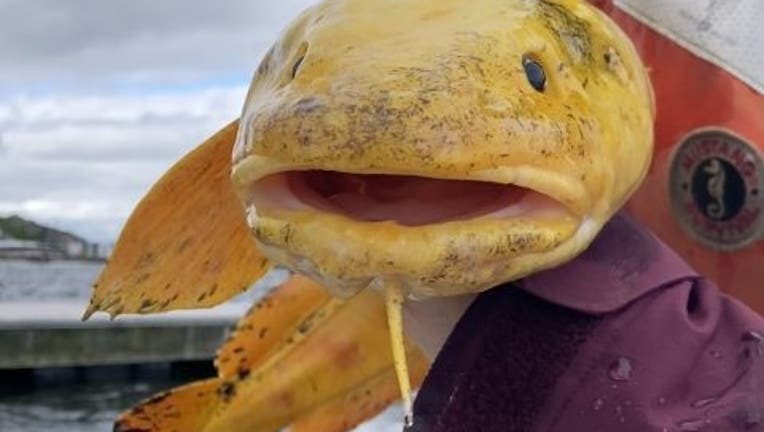
(USFWS)
NEW YORK - In the waters of Oswego Harbor, New York, a recent aquatic survey turned up a catch that biologists are calling "one in a million."
What we know:
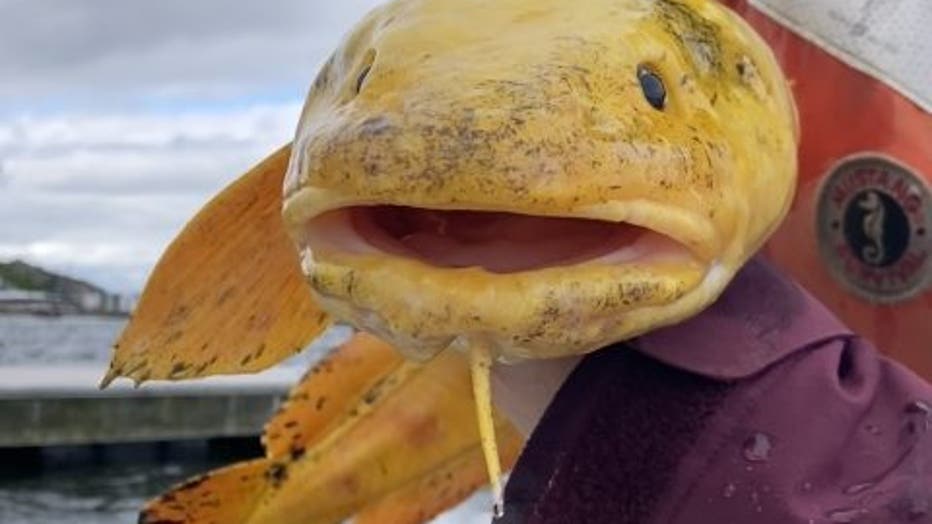
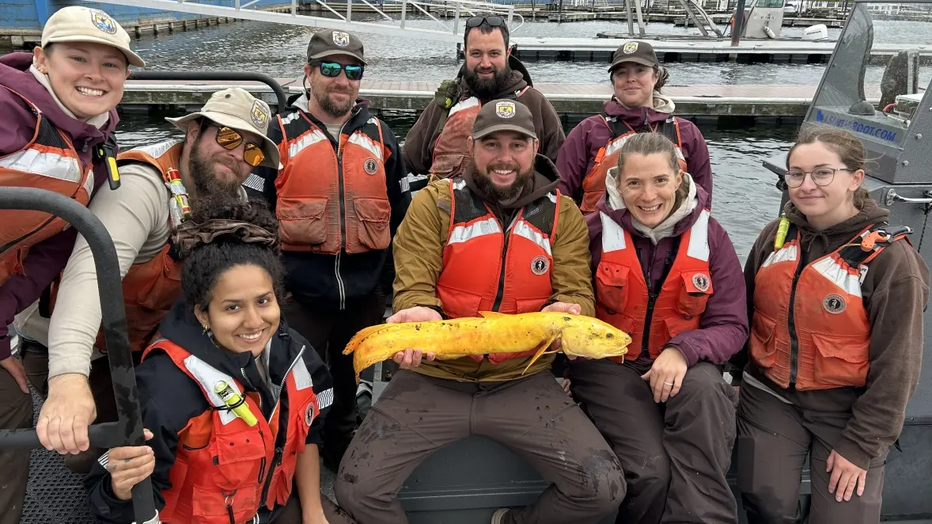
Last month, crews from the U.S. Fish and Wildlife Service (USFWS) pulled a saturated, yellow-orange fish from the water. It was a native burbot exhibiting a highly unusual genetic mutation.
The burbot is a native freshwater species, but experts say you wouldn't normally spot one displaying the bright colors of autumn foliage. This specific fish has a rare biological condition known as xanthochromism, which biologists say is significantly rarer in wild fish than albinism or melanism.
(USFWS)
Dig deeper:
Beyond its color, discovering a burbot in Oswego Harbor is apparently an anomaly in itself.
Burbot populations in the lake are currently extremely low, according to USFWS, which state that this finding marks the first time a burbot has been documented during a fisheries survey in this specific harbor, though local anglers have occasionally reported catches.
The rare find also serves as a ringing endorsement for the USFWS’s Aquatic Invasive Species Early Detection and Monitoring Program, which helps to protect the Great Lakes from ecological threats.
(USFWS)
What's next:
While the catch was a stroke of luck for the survey team, it may also end up being a lucky break for the burbot species.
During processing, fisheries biologists from the United States Geological Survey (USGS) noted that the golden fish was emaciated and appeared to be in poor overall health. The fish was transported to the Cornell University College of Veterinary Medicine for a comprehensive health analysis.
Researchers hope that studying this rare specimen will provide valuable insights into the broader health of burbot populations across the Great Lakes basin, ultimately helping to inform future conservation and management efforts.
The Source: Information from this article was sourced from the U.S. Fish and Wildlife Service.