

US Army delays detonating bomb-making chemicals in small town amid outcry over public safety
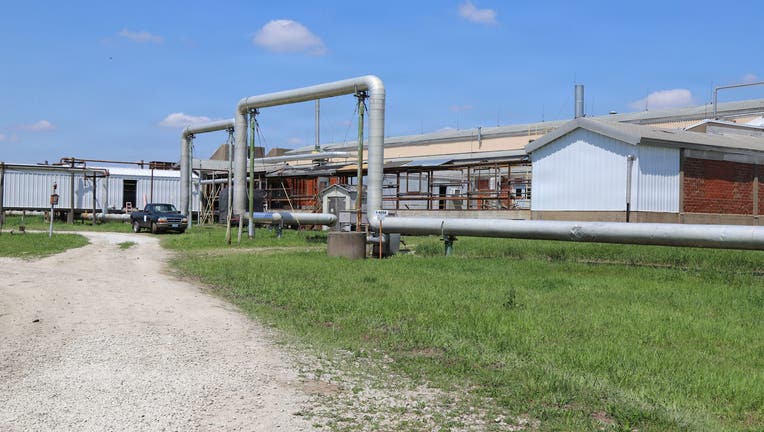
The U.S. Army is delaying Friday’s detonation of several tons of bomb-making chemicals at the Iowa Army Ammunition Plant in southeast Iowa after an outpouring of concerns about health threats. (U.S. Army photo by Shawn Eldridge, U.S. Army Sustainmen
The U.S. Army announced Thursday night that it would delay Friday’s scheduled detonation of bomb-making chemicals discovered in the Iowa Army Ammunition Plant in Middletown, Iowa, after community concerns and a call for delay from the state’s governor.
Big picture view:
Acting Secretary of the Army Adam Telle posted on X that he directed Army Material Command to postpone the planned controlled detonation of barrels of degraded lead azide until Monday.
"This will delay the detonation until the latest possible moment prior to a forecasted temperature drop, which would risk further destabilization of the material," he said.
Iowa Gov. Kim Reynolds, among others, called for the delay. Environmental groups filed a lawsuit earlier in the day asking for an emergency court order to halt the detonation. Their suit claimed the Environmental Protection Agency failed to require the Army to consider safer alternatives and that the Army failed to give adequate notice of its plans.
But the EPA claimed alternatives were considered, but that officials said handling the drums would increase the possibility of an accidental, fatal detonation.
What they're saying:
Reynolds issued a statement Thursday after the delay was announced.
""Earlier today, I spoke with Acting Secretary of the Army Adam Telle and asked him to delay the planned detonation at the Iowa Army Ammunition Plant," she said. "I’m grateful for his decision to do so."
The backstory:
In March, staff at the Iowa Army Ammunition Plant found several dozen barrels containing degraded lead azide housed in bunkers, Telle said. After discussing the situation with EPA, experts and the local community, "it was determined that a controlled detonation was the option that posed the lowest risk to the public in the immediate surrounding area," he said.
Why you should care:
Lead is a neurological toxicant that can harm the brain, nervous system and other organs. It can cause harm if it is swallowed or inhaled, the EPA said.
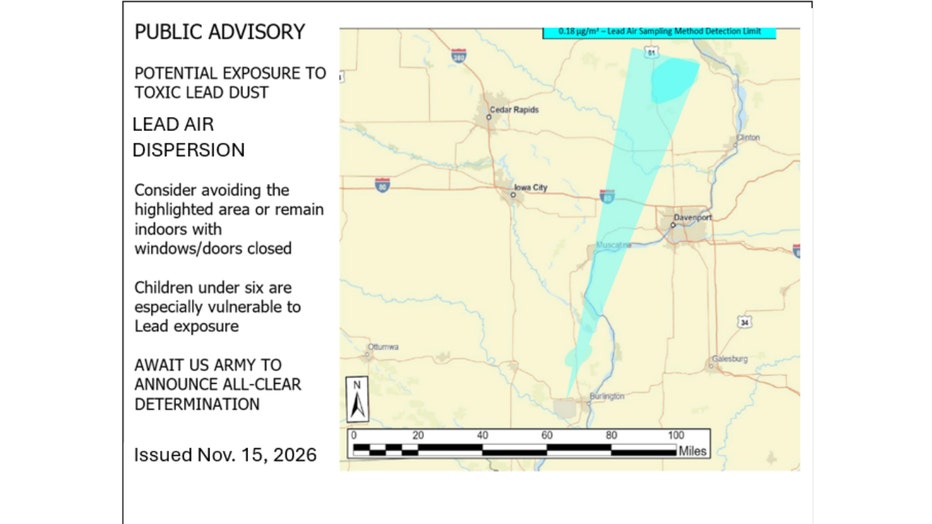
The Iowa Army Ammunition Plant released maps describing the level of toxic lead dust that might be released from their detonation of 68 lead azide barrels. (Photo courtesy of the Iowa Army Ammunition Plant)
The plant issued maps showing areas it asked people to consider avoiding because of the possibility of exposure to toxic lead dust.
"Children under six are especially vulnerable to lead exposure," the maps stated.
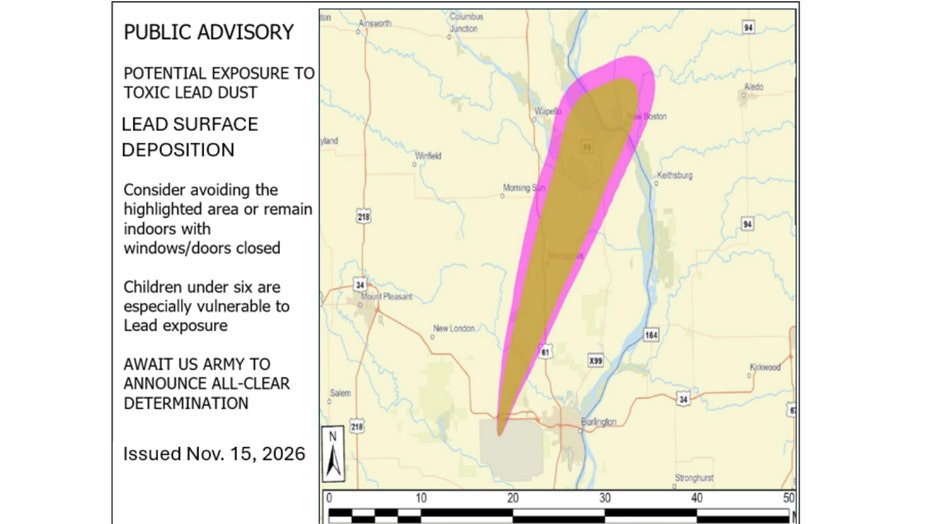
The Iowa Army Ammunition Plant released maps describing the level of toxic lead dust that might be released from their detonation of 68 lead azide barrels. (Photo courtesy of the Iowa Army Ammunition Plant)
With high doses over a short period, people can be subject to lead poisoning and begin to feel sick, Andrew Whelton, an environmental engineering professor at Purdue University who has helped communities recover from chemical disasters, told the Associated Press.
Many schools and businesses in the area were set to be closed on Friday because of the detonation.
The Source: Information for this story came from the Associated Press, Acting Secretary of the Army Adam Telle's X account, the website of Iowa Gov. Kim Reynolds and previous FOX Local reporting. This story was reported from Orlando.