

Everett, WA non-profit launches fund to keep cancer screenings free
WA nonprofit launches fund to keep cancer screenings free
A critical safety net for women's cancer screening in Washington is running dangerously low on funds. Now, one non-profit is stepping in to keep it alive.
EVERETT, Wash. - A 35-year-old state lifeline that provides free breast and cervical cancer screenings to uninsured and underinsured women in Washington is on track to run out of money by December. Now, an Everett-based non-profit has launched a statewide fundraising effort to keep the program alive.
"It’s lifesaving. It's not an option to allow it to end," said Kerri Mallams, executive director of Citrine Health. "It is our mission."
Citrine Health is a non-profit that has served as a prime contractor for the Washington State Department of Health’s "Breast, Cervical and Colon Health Program" for about two decades. Citrine Health officially launched the Washington Health Screening Fund in October to bridge those federal budget gaps and help save lives.
"This is the one that we're fighting for now," said Mallams.
By the numbers:
The new fund will rely on private, tax-deductible donations to cover the steep out-of-pocket costs of preventative screenings across Washington, stepping in to fill a massive gap left by years of federal budget reductions and the loss of a $1 million annual grant from Susan G. Komen.
"There's been a 60% reduction to the point that the program becomes unsustainable," said Mallams. "The work of the program requires people to do it. And there's just not enough to support the program any longer."
A critical need across Washington
The funding crisis hits a state where cancer screening rates already lag far behind the rest of the nation. Nearly 1,000 women die from breast cancer in Washington every year. According to state health data, only 64% of Washington women ages 40 and older received a mammogram between 2021 and 2022, placing the state in the bottom 10 nationwide. Washington also ranks 43rd in the country for cervical cancer screenings.
Meanwhile, more than 400,000 Washingtonians have no health insurance at all, and many more are considered underinsured, meaning high deductibles and out-of-pocket medical expenses often prevent them from seeking preventative care.
Over the life of Citrine Health’s program, Mallams said 8,073 women discovered they had cancer they didn't know they had before walking through the organization's doors. The executive director noted that catching cancer early is often the difference between a minor procedure and a life-threatening diagnosis.
"You can't treat the cancer unless you're diagnosed," Mallams said. "Early detection, where you can find out early and have small, easy treatments, a lumpectomy, perhaps, compared to finding out too late to be able to do anything.

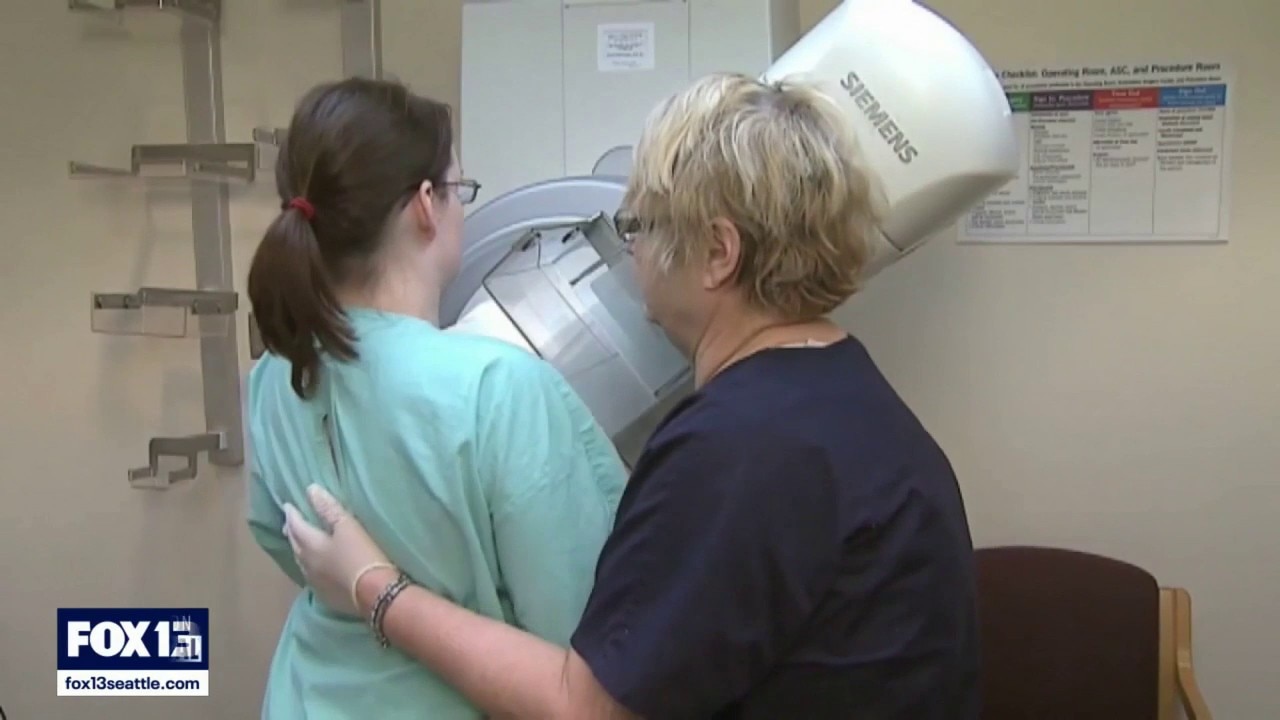
A lady with the help of a nurse gets a free mammogram (Credit: Eduardo Briones/Europa Press via Getty Images)
Bridging the gap statewide
What's next:
Celebrating its 30th anniversary this year, Citrine Health is the only non-profit among the state's prime contractors for the screening program. Because of that status, leadership felt a responsibility to act when federal funds dried up.
"We were like, what do we do? How can we help?" Mallams said. "We felt we were the only group that could make a choice or a decision to start a fund so that women all around the state can still access screenings."
Right now, Mallams says the organization barely has enough funds left to cover basic screenings, though some appointments remain available. As donations come in, the goal is to ensure symptomatic women across Washington can continue getting tested without worrying about the bill.
"A woman's ability to take care of her health should not be restricted due to their inability to afford insurance," said Megan Kalsen, Citrine Health Board President. "These life-saving screenings should be available to any woman who wants them."
What you can do:
Citrine Health currently serves thousands of residents across Island, King, San Juan, Skagit, Snohomish, and Whatcom counties. The non-profit also operates "The Bra Shop" in Everett, which provides post-mastectomy fittings and products for women on Medicaid. The new Washington Health Screening Fund will expand Citrine Health's screening support statewide.
Organizers said the average cost of a single screening is roughly $380, and every dollar donated goes directly toward early detection.
"Help protect their neighbors, their friends. How many people do we all know who don't have health insurance?" said Mallams. "We have to make sure that people have access to screenings."
To learn more about eligibility or to make a tax-deductible donation, visit https://citrinehealth.org/screening-fund/.
MORE NEWS FROM FOX 13 SEATTLE
WA storms force Ocean Shores emergency declaration, threaten urban flooding
First bird flu death hits WA, dairy outbreak spreads
Seattle expands controversial police surveillance camera network amid pushback
Suspect in US Coast Guard murder released from jail on $3M bail
What’s the hype? A look inside new TESO Life store in Tukwila
To get the best local news, weather and sports in Seattle for free, sign up for the daily FOX Seattle Newsletter.
Download the free FOX LOCAL app for mobile in the Apple App Store or Google Play Store for live Seattle news, top stories, weather updates and more local and national news.
The Source: Information in this story came from Citrine Health and FOX 13 Seattle reporting.