

Despite intensive crackdown, voter fraud remains rare, experts say
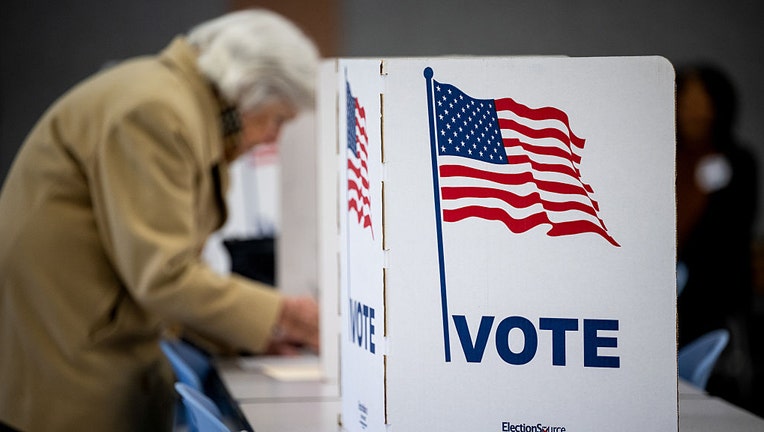
FILE-A voter casts their ballot at a polling station at Chesterbrook Elementary School in McLean, Virginia, US, on Tuesday, Nov. 4, 2025. (Graeme Sloan/Bloomberg via Getty Images)
The Trump administration’s effort to find and prosecute noncitizens illegally on state voter rolls led to roughly 1,600 voter fraud cases and resulted in 160 arrests.
Homeland Security Investigations senior official Matthew Millhollin shared the arrest data at a joint press briefing with the Department of Justice and the U.S. Postal Service about DOJ charges against a Utah postal worker for throwing out over 300 mail ballots during the state's June primary.
RELATED: Trump loses 21st straight court fight over state voter rolls
The Associated Press reported that during the same briefing, Acting Deputy Attorney General Trent McCotter said the Justice Department charged 70 people since the start of the administration with "unlawful voting and registration offenses."
This data was released six weeks before the November midterm elections and it offers a rare status update on a plan that has redirected federal resources and workers to search for corruption in elections at the behest of President Donald Trump.
Experts say voter fraud rare
Dig deeper:
The numbers released at Tuesday’s briefing fall short of the hundreds of thousands of noncitizen voters that President Donald Trump and the Department of Homeland Security have previously implied were on the voting rolls.
Data also represents a small portion of the nation's over 200 million active registered voters, emphasizing what former election officials and election law experts told The Associated Press is a proven fact: Voter fraud, including voting by noncitizens, is rare.
RELATED: Postal Service won't send mail ballots to states that don't release voter lists: report
"They have tried to manufacture evidence of widespread noncitizen voting, and every time they do, their numbers are incredibly small, even when they’re overstated," David Becker, a former U.S. Justice Department attorney who leads the nonprofit Center for Election Innovation and Research told the AP.
Ahead of the midterm election, Trump has taken action to attempt to suppress noncitizen voting, something he alleges is widespread and tainting elections nationwide. However, research from the Fair Elections Center reveals it’s rare.
He signed two election-related executive orders designed in part to address the issue, both of which are tied up in legal challenges. He also has pressured states to use a federal voter database that has been blocked by a federal judge for violating Americans’ privacy and tried to get legislators to pass a documentary proof of citizenship bill.
Citing a federal whistleblower’s report, the Department of Homeland Security in August enforced a group of U.S. Citizenship and Immigration Services employees to transition to a full-time probe of state voter rolls.
What does the law state?
Big picture view:
A 1996 U.S. law makes it illegal for noncitizens to vote in elections for president or members of Congress. Violators can be fined and imprisoned for up to a year. They can also be deported.
The law notes that when individuals register to vote, they confirm under penalty of perjury that they are U.S. citizens. Federal law requires states to maintain their voter rolls and remove anyone who is ineligible, a process that could identify immigrants living in the U.S. illegally.
No state constitutions allow noncitizens to vote, and many states have laws that forbid noncitizens from voting for state offices like governor or attorney general. However, some cities in California, Maryland and Vermont, and Washington, D.C, do allow voting by noncitizens in some local elections, including school board and city council.
The Source: Information for this story was provided by the Fair Elections Center and The Associated Press, which cites data from the Department of Homeland Security and comments from a voting expert.