

Tulalip Tribe to open clinic to help fight against opioid addiction

Tulalip Tribe to open methadone clinic to help with opioid epidemic in Snohomish County
As studies show that medication-assisted treatment of opioid addiction can slash the risk of overdose deaths in half, the Tulalip Tribe plans to open its own clinic capable of treating 150 people.
TULALIP, Wash. - For the last decade, families in Snohomish County suffered nearly 20% of all heroin deaths in our state despite making up only 10% of Washington’s entire population.
This summer, the county has seen overdoses spike nearly 300% in less than a month’s time.
As studies show that medication-assisted treatment of opioid addiction can slash the risk of overdose deaths in half, the Tulalip Tribe plans to open its own clinic capable of treating 150 people.
However, labor shortages could mean a November opening may be pushed back if critical employees are not hired in time.
The landscaping is nearly complete outside. Except for odds and ends inside, the facility tucked behind Quil Ceda Creek Casino is all but ready for patients.
Tulalip Tribe Vice Chair Misty Napeahi says her community, like so many others, has been plagued by opioids and overdose. What began as a crisis with heroin years ago then moved to prescription pills. Today, it’s illicit fentanyl.
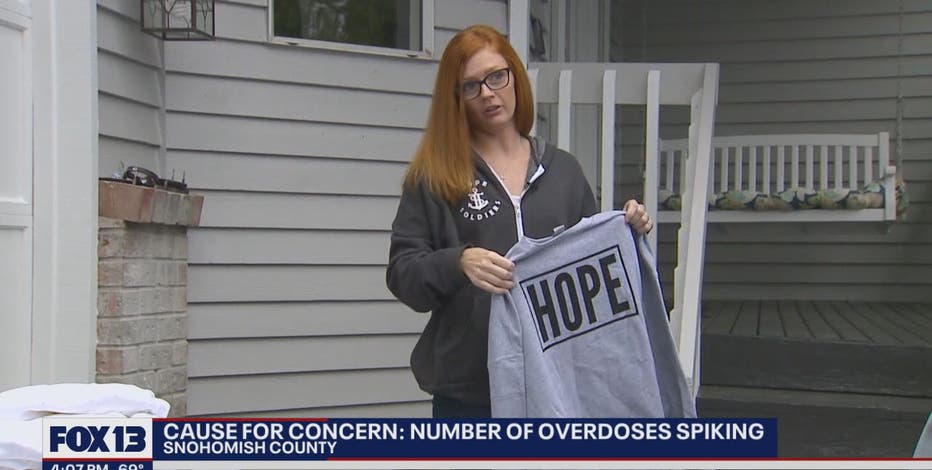
Number of fentanyl overdoses spiking in the north Sound
Fentanyl again is proving to be a serious public safety crisis with a rash of overdoses in the north Sound.
"We just recently buried a 22-year-old on his 22nd birthday from a drug overdose," she said.
The clinic plans to treat patients using methadone, a drug that reduces or eliminates withdrawal symptoms, keeps opioid users from getting high and cuts their cravings.
Dosing rooms at the clinic are where patients undergo medically supervised withdrawal and maintenance. At first, patients must return daily for treatment. The clinic also offers case managers and use disorder counselors on site.
"Coming out of this addiction is like climbing Mount Everest without tools," Napeahi said. "We have to give them the ice pick and teach them to not look at the mountain and look at where they are at right now."
Eventually, the clinic could offer dental services and expand the number of patients it can serve.
Napeahi says it's a place she dreams patients can find what’s been missing for too long – a reason for hope and a life with purpose.
"There is a whole other population of young people who are orphaned because of this epidemic," she said. "The only tool we have left is to educate them, [tell them] you don’t have to go down this road."