Is your drinking water safe? Here's how you can find out
America’s drinking water infrastructure is aging and in serious need of modernization. A 2017 Gallup poll found that 63 percent of Americans worry a great deal about drinking water pollution.
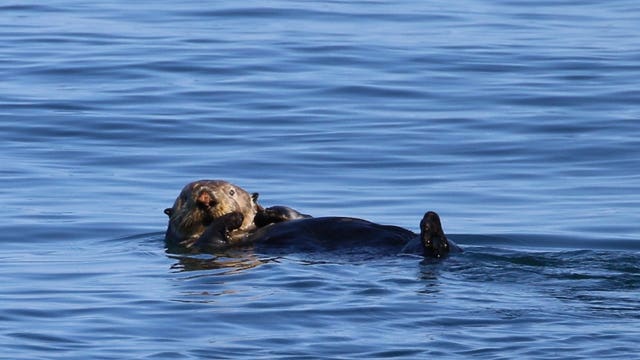
Harsh winter took heavy toll on wildlife across western US
Wildlife managers in Colorado, Utah, Idaho, Oregon and Washington also reported higher losses of animals in the wake of one of the coldest and snowiest winters in decades.
Idaho's largest sequoia tree finds new home (video)
More than a century after it was planted as a sapling in a doctor's yard in Boise, Idaho, the 10-story tree was shifted across the street to make way for a hospital expansion.
Official says more Hanford nuke mishaps likely
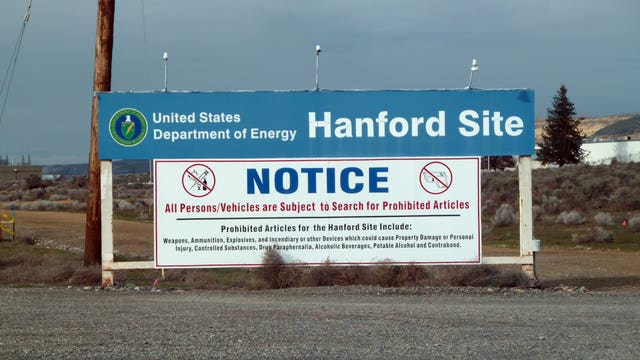
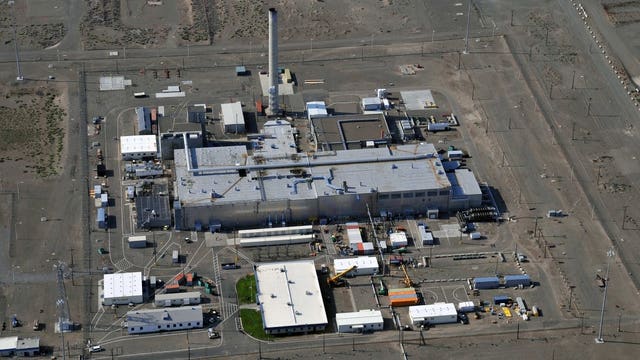
RICHLAND, Wash. -- Future accidental radiation releases at the largest U.S. site of waste from nuclear weapons production are likely following back-to-back emergency evacuations of workers in May and June because aging infrastructure is breaking down, the top Energy Department official at the site told The Associated Press.Adding to the likelihood of more nuclear mishaps at the sprawling Hanford Nuclear Reservation is inadequate government funding to quickly clean up the millions of gallons of toxic nuclear waste at the site, said Doug Shoop, who runs the department's operations office at Hanford.Hanford has an annual budget of $2.3 billion for cleanup but Shoop said it will cost at least $100 billion to clean up the highly toxic radioactive and chemical wastes on the 580-square mile (1,502 square kilometer) site which produced up to 70 percent of the plutonium for the U.S. nuclear arsenal since it was established in World War II."The infrastructure is not going to last long enough for the cleanup," Shoop said in an interview this week. "It will be another 50 years before it is all demolished."Shoop made the comments after hundreds of Hanford workers were evacuated May 9 when the roof of a 1950s rail tunnel storing a lethal mix of waste from plutonium production collapsed.
Official: More Hanford nuke problems likely following back-to-back emergency evacuations
Future accidental radiation releases at the largest U.S. site of waste from nuclear weapons production are likely following back-to-back emergency evacuations of workers in May and June because aging infrastructure is breaking down, the top Energy Department official at the site told The Associated Press.
Low levels of contamination detected; Hanford employees take cover
About 350 workers at the Hanford Nuclear Reservation took cover after radiation warning alarms went off Thursday morning.
Olympia officials seeking input on sea level rise response strategy
Olympia city leaders are asking for the public's input on a response plan to protect Downtown Olympia and the Port peninsula from rising sea levels.
Trump's proposed budget puts quake-warning, tsunami-monitoring systems on chopping block
President Donald Trump is under fire from environmentalists in the Puget Sound over his 2018 budget proposal that would slash $137 million from the U.S. Geological Survey. That would mean cutting funding for the earthquake early warning system, tsunami research and monitoring, and weather forecasting.
Trump proposes $120M cut to Hanford cleanup budget despite recent incidents
SPOKANE, Wash. (AP) — President Donald Trump's proposed budget includes a cut of about $120 million for the Hanford Nuclear Reservation, despite two recent incidents that raised concerned about worker safety at the former nuclear weapons production site.Hanford for decades made plutonium for nuclear weapons, and now is engaged in a massive environmental cleanup that costs more than $2 billion per year.Democratic Sen.
Crews cover partially-collapsed tunnel at nuclear site
Workers this weekend finished installing a protective cover over a partially-collapsed tunnel that contained radioactive waste on the Hanford Nuclear Reservation, the U.S. Department of Energy said Monday.The tunnel that contained highly radioactive wastes left over from production of plutonium for nuclear weapons partially collapsed on May 9, prompting evacuation of nearby workers.The hole left by the partial collapse was filled with more than 50 truckloads of soil the next day.The Energy Department has said no workers were injured and no airborne radiation escaped into the environment as a result of the incident.
Energy chief says hole has been filled at Hanford nuclear waste site
SPOKANE, Wash. -- A hole that was discovered this week on top of a nuclear waste storage tunnel has been plugged with dirt, ending an emergency situation at the Hanford Nuclear Reservation, U.S. Secretary of Energy Rick Perry said Thursday.The hole was discovered Tuesday at the former nuclear weapons production complex, prompting the evacuation of some workers and thousands of others to shelter-in-place for a few hours.Perry announced that the 400-square foot (37 square meters) partial collapse of the tunnel roof had been filled by 53 truckloads of dirt delivered by workers in protective gear at the highly radioactive site."This was accomplished swiftly and safely to help prevent any further complications," Perry said in a press release. "Our next step is to identify and implement longer-term measures to further reduce risks."The Energy Department has said no workers were injured in the incident and no radiation was released to the environment.The state of emergency ended shortly before midnight, and most of the 9,000 workers at the site were told to report to work as usual on Thursday.However, access to the area where the tunnel roof collapsed will continue to be restricted, the agency said.Hanford for decades made plutonium for nuclear weapons and the site in southcentral Washington state is now engaged in cleaning up the nation's largest collection of radioactive waste.
Tunnel with nuclear waste partially collapses at Hanford nuclear site; no radiation release detected
HANFORD, Wash. -- A portion of an underground tunnel containing eight rail cars full of radioactive waste collapsed Tuesday at a sprawling storage facility in a remote area of Washington state, forcing an evacuation of some workers at the site that made plutonium for nuclear weapons for decades after World War II.Officials detected no release of radiation at the Hanford Nuclear Reservation and no workers were injured, said Randy Bradbury, a spokesman for the Washington state Department of Ecology.No workers were inside the tunnel when it collapsed, and other workers who were ordered to shelter-in-place were later sent home early as a precaution, Hanford said. "Workers continue to monitor the area for contamination as a crew prepares to fill the hole with clean soil," Hanford said in a news release.The cause of the collapse was not immediately known.
Tunnel collapse renews safety concerns about Hanford nuclear site
RICHLAND, Wash. -- Thousands of workers at the Hanford Nuclear Reservation were told to stay home Wednesday as efforts began to plug a hole that developed in the partial collapse of a tunnel containing dangerous radioactive waste from the building of nuclear bomb materials.A gravel road was built to the site of the roof collapse, and workers were expected to begin filling the hole with dirt on Wednesday, said Destry Henderson, a spokesman for the U.S. Department of Energy."We intend to start filling the hole today," Henderson said Wednesday.Hanford, located in southcentral Washington state, has about 9,000 employees and most of them were told to stay home Wednesday, Henderson said.A 400-square foot (37 square meters) section of the tunnel roof was discovered to have collapsed Tuesday morning, forcing thousands of workers to shelter-in-place for several hours.Officials have detected no release of radiation and no workers were injured in the collapse of the unoccupied tunnel, Henderson said.The rail tunnel was built in 1956 out of timber, concrete and steel, and topped by eight feet of dirt.
What is Hanford? Most contaminated site in Western Hemisphere
What is it?Hanford for decades made plutonium for nuclear weapons and is now the largest depository of radioactive defense waste that must be cleaned.It contains about 56 million gallons of radioactive waste, most of it in 177 underground tanks.Hanford has more than 9,000 employees.Where is it?Hanford is located near Richland, about 200 miles southeast of Seattle.The site -- about half the size of Rhode Island, in an area centered roughly 75 miles east of Yakima -- continued to buzz during the Cold War, with more plutonium production, as well as the construction of several nuclear reactors.
New population of invasive green crabs found in Washington
More invasive green crabs have been found in Washington state's inland waters, this time at Dungeness Spit near Sequim.
Trump calls national monuments a 'massive federal land grab'
President Donald Trump signed an executive order Wednesday directing his interior secretary to review the designation of dozens of national monuments on federal lands, as he singled out "a massive federal land grab" by the Obama administration.
UW professor leads study tracking climate change rerouting river's course
SEATTLE -- A study published Monday by University of Washington - Tacoma professor Dan Shugar focuses on what seems to be the first modern case of river piracy.
Seattle plant is still dumping partially treated wastewater into Puget Sound
Millions of gallons of raw sewage and untreated runoff have poured into the United States' second-largest estuary since a massive sewage treatment plant experienced equipment failures that forced it to stop fully treating Seattle's waste.
Environmentalists warn about Trump Puget Sound budget
State officials, environmental advocates and others are warning of dire environmental and economic consequences if President Donald Trump's cuts to Puget Sound and other environmental programs go through as proposed.
Up to 300 jobs at Hanford Nuclear Reservation to be cut
RICHLAND, Wash. (AP) — Contractors at the Hanford Nuclear Reservation in Washington state say they're preparing to slash up to 300 jobs by this fall.The Tri-City Herald reports (https://goo.gl/xkHvCa ) that CH2M Hill Plateau Remediation Co., told employees Wednesday that 250 jobs would be cut as some major work is completed.Mission Support Alliance, which provides support services at Hanford, is considering cutting as many as 50 jobs.CH2M currently employs over 1,700 people, and Mission Support Alliance employs about 1,900.Volunteers for layoffs and severance pay are being sought, but CH2M also expects to have involuntary layoffs.The job reductions are related to progress on two key Hanford projects, demolition of the massive, contaminated Plutonium Finishing Plant and cleanup of the 618-10 Burial Ground.The finishing plant for decades made hockey puck-sized tablets of plutonium for the nation's nuclear arsenal.