

Study links COVID-19 infections to increased asthma, allergy risk

COVID shots no longer recommended by CDC for kids
Health Secretary Robert F. Kennedy Jr. says CDC no longer recommends COVID-19 vaccines for healthy children or pregnant women. The move was announced via a video on X without CDC officials present. A CDC advisory panel was set to vote in June on updated vaccine guidance.
People who contract COVID-19 face an increased risk of developing inflammatory airway diseases such as asthma, chronic sinusitis and hay fever, according to a new international study led by Karolinska Institutet in Sweden.
The findings, published in The Journal of Allergy and Clinical Immunology, suggest the coronavirus can trigger type-2 inflammation in the airways even after recovery.
How researchers studied the risks
By the numbers:
The research team analyzed data from the U.S.-based TriNetX electronic health database. They compared nearly 974,000 people who had COVID-19 with 691,000 vaccinated individuals and more than 4.3 million uninfected and unvaccinated controls.
Compared to healthy controls, people who had COVID-19 had:
- A 66% higher risk of developing asthma
- A 74% higher risk of chronic sinusitis
- A 27% higher risk of hay fever
No increased risk was found for atopic eczema or eosinophilic esophagitis, two other inflammatory conditions.
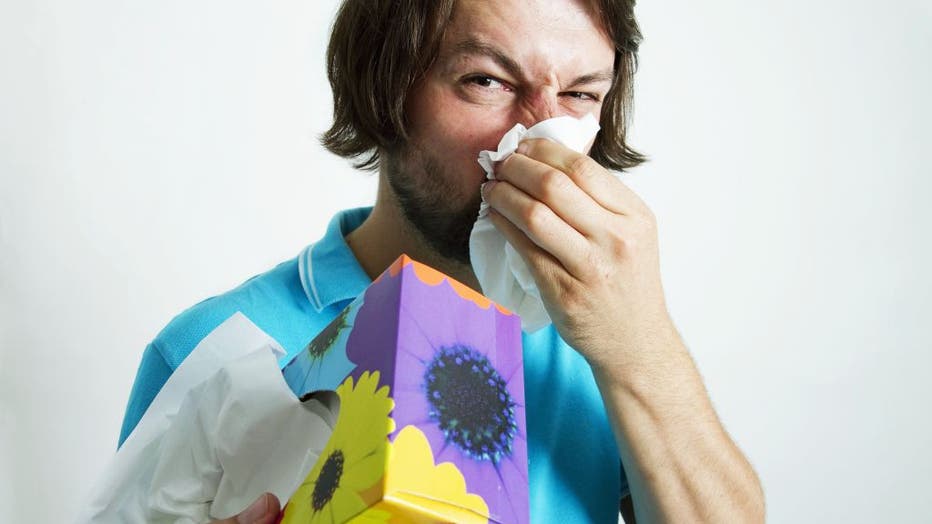
A man blows his nose while holding a box of tissues. New research suggests people who have had COVID-19 face a higher risk of developing asthma, sinusitis and hay fever, though vaccination may lower those risks. (Photo by Universal Images Group via Getty Images)
Vaccination appeared protective
Dig deeper:
By contrast, vaccination against COVID-19 lowered the risk of developing respiratory complications. Vaccinated individuals had a 32% lower risk of asthma and a slightly reduced risk of sinusitis and hay fever compared with unvaccinated healthy controls.
When researchers compared those infected with COVID-19 against vaccinated people, the differences were starker: infection more than doubled the risk of asthma and sinusitis and raised hay fever risk by 40%.
"It is interesting to see that vaccination not only protects against the infection itself, but also appears to provide good protection against certain respiratory complications," said study lead author Philip Curman of Karolinska Institutet.
Limitations of the study
The other side:
The study was retrospective, based on existing medical records. Researchers said they could not establish a definitive cause-and-effect relationship, and some infections may have gone unrecorded — particularly those diagnosed through at-home tests.
The project was conducted with partners in Germany, Spain, and Israel, and funded mainly by the German Research Foundation, Region Stockholm, and Karolinska Institutet.
The Source: This report is based on findings published in The Journal of Allergy and Clinical Immunology and statements from Karolinska Institutet.