

NYU audit urges warrants for Seattle police surveillance video
SEATTLE - An independent civil rights audit of the Seattle Police Department’s Real-Time Crime Center warns that the city’s expanding surveillance apparatus lacks essential privacy safeguards, urging local leaders to mandate search warrants before officers use camera networks to retrace a person’s movements.
The 77-page review, conducted by the Policing Project at New York University School of Law and commissioned by the Seattle Mayor’s Office, concluded that while foundational guidelines exist, critical civil liberties protections still depend on unwritten departmental habits rather than enforceable policy.
The backstory:
Launched in 2025 to address violent crime and department staffing shortages, Seattle's Real-Time Crime Center (RTCC) consolidates feeds from more than 300 municipal closed-circuit cameras, nearly 100 traffic cameras, precinct security systems, and private business cameras into a unified dashboard powered by Axon’s Fusus software.
According to auditors, the platform's current setup allows personnel to pull up live video without entering an active case number or written justification. The interface also fails to record when officers utilize AI-assisted object-detection search features, creating substantial blind spots for internal supervisors and external watchdogs alike.
Data storage practices also drew scrutiny. While the department routinely wipes raw street camera recordings after five days as an unwritten operational norm, official policy permits retention for up to 30 days. Furthermore, whenever an analyst tags and exports footage into Evidence.com, the department preserves those files indefinitely.
What they're saying:
Auditors warned that centralized surveillance networks risk eroding standard Fourth Amendment protections by turning targeted investigations into dragnet monitoring.
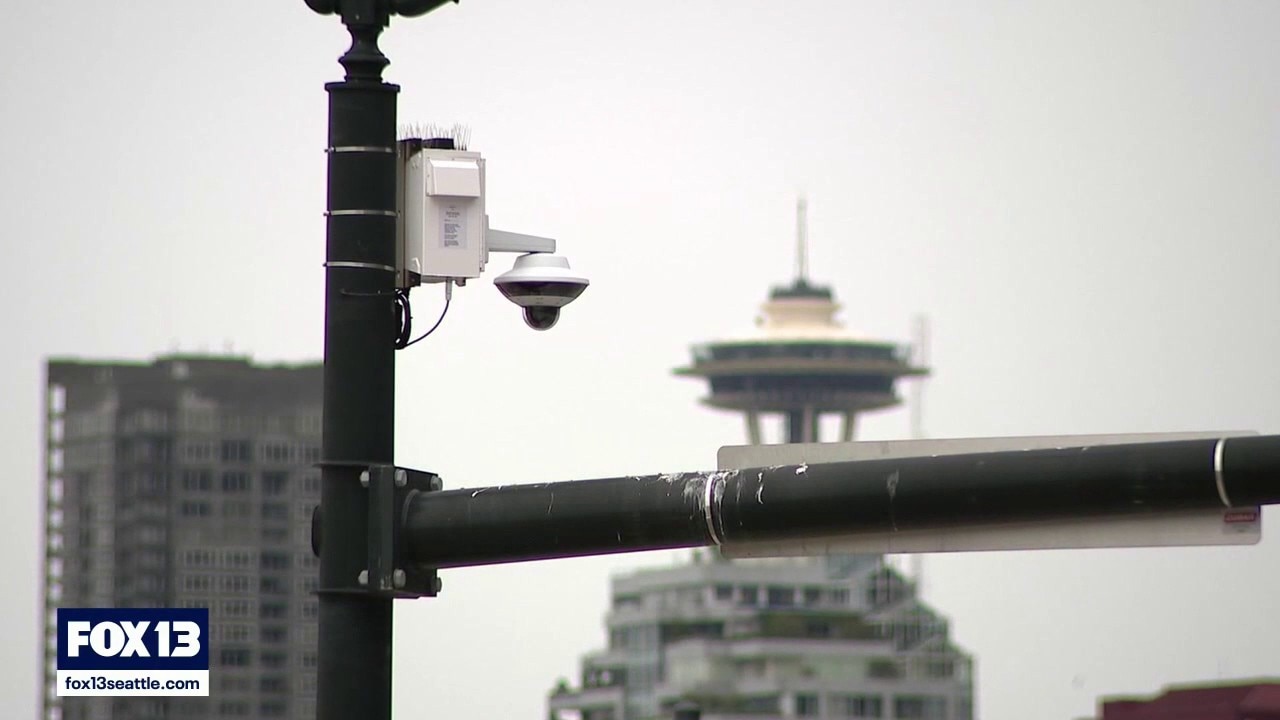
New oll finds strong support for CCTV cameras in Seattle
A new poll found 3/4 of Seattle voters support the use of cameras after a 911 call to assist in an active investigation, while the other quarter opposes it.
"Describing the entire enterprise as 'real time' risks blurring the distinction between real-time operations and after-the-fact investigations, and extending permissions justified by emergencies to routine investigations," the Policing Project wrote.
To safeguard constitutional rights, the report recommends that SPD strictly ban warrantless, retrospective multi-camera tracking of individuals, carving out exceptions only for active, life-threatening emergencies supported by probable cause.
Dig deeper:
The audit highlighted vulnerabilities surrounding sensitive personal data, specifically concerning reproductive healthcare, gender-affirming care, and civil immigration status.
Although Washington state shield statutes and local executive orders bar city agencies from assisting federal immigration sweeps or out-of-state healthcare inquiries, those local laws do not immunize records from federal grand jury subpoenas, federal warrants, or Washington Public Records Act requests served on the city or Axon directly. To mitigate this exposure, auditors advised the city to adopt a formal legal policy outlining when municipal attorneys must go to court to quash outside legal demands for local surveillance footage.
Auditors also cited the expansion of "Connect Seattle," a public-private partnership that currently feeds 23 private business cameras into police headquarters, with 100 additional streaming units queued for deployment. The report recommended that city leaders establish strict deployment criteria, mandate public disclosure, and enforce digital privacy masking on private cameras so windows and residential interiors remain shielded from police view.
Local perspective:
The report raised red flags over how the surveillance network interacts with local public demonstrations and major international gatherings.
While existing departmental policy requires high-level executive sign-off to purposefully film political protests, the crime center’s constant feeds capture protected first-amendment demonstrations incidentally without clear operating restrictions.
Auditors also stressed that major civic gatherings, including matches during the 2026 FIFA World Cup, lack detailed operational frameworks to govern when live aerial or street monitoring is permissible.
What's next:
A separate study evaluating the RTCC’s measurable effect on clearance rates and violent crime reduction is underway by the University of Pennsylvania's Crime and Justice Policy Lab, with results slated for release in late 2027.
The Source: Information in this story came from an independent civil rights and governance audit of the Seattle Police Department’s Real-Time Crime Center conducted by the Policing Project at the New York University School of Law, commissioned by the Seattle Mayor's Office.
MORE NEWS FROM FOX 13 SEATTLE
1 dead after house fire in Woodinville, WA: officials
FOX 13 Seattle debuts new high-tech studio in former Amazon tower
Macklemore says Seattle's Climate Pledge Arena turned down 'Free Palestine' tour
Family of gas station manager killed in Seattle speaks out on loss
To get the best local news, weather and sports in Seattle for free, sign up for the daily FOX Seattle Newsletter.
Download the free FOX LOCAL app for mobile in the Apple App Store or Google Play Store for live Seattle news, top stories, weather updates and more local and national news.