

Mark Zuckerberg testifies in landmark social media addiction trial
Mark Zuckerberg is testifying in a watershed social media trial that questions whether Meta's platforms are addictive and harm children.
Zuckerberg took the stand in Los Angeles Superior Court in the trial, marking his first time answering youth safety allegations before a jury.
The Meta CEO and opposing lawyers dueled in the courtroom, where he answered questions about young people’s use of Instagram, his congressional testimony and internal advice he’s received about being "authentic" and not "robotic, the Associated Press reported.
He is also answered questions on Wednesday from lawyers representing the plaintiff, a now 20-year-old woman identified by the initials KGM, who claims her early use of social media addicted her to the technology and exacerbated depression and suicidal thoughts.
Mark Lanier, the plaintiff's attorney, explained three options of what individuals can do regarding vulnerable people: help them, ignore them, or "prey upon them and use them for our own ends." Zuckerberg said he agrees the last option is not what a reasonable company should do, saying, "I think a reasonable company should try to help the people that use its services."
The AP reported that when Zuckerberg was asked about his compensation, the Meta CEO stated that has pledged to give "almost all" of his money to charity, focusing on scientific research. Lanier asked him how much money he has pledged to victims impacted by social media, to which Zuckerberg replied, "I disagree with the characterization of your question."
Later in the testimony, Lanier spent most of his time with Zuckerberg asking about the organization's age verification policies.
"I don’t see why this is so complicated," Zuckerberg said, reiterating that the company’s policy restricts users under the age of 13 and that they work to detect users who have lied about their ages to bypass restrictions.
FOX Business reported that a verdict for the plaintiff might set a precedent for holding tech companies accountable for harmful design decisions, despite years of invoking Section 230’s content liability shield, a federal law that largely shields online platforms from lawsuits related to user-posted content.
In the past, Zuckerberg has testified in other trials and answered questions from Congress about youth safety on Meta's social media platforms.
RELATED: Meta and YouTube facing landmark trial related to youth addiction claims
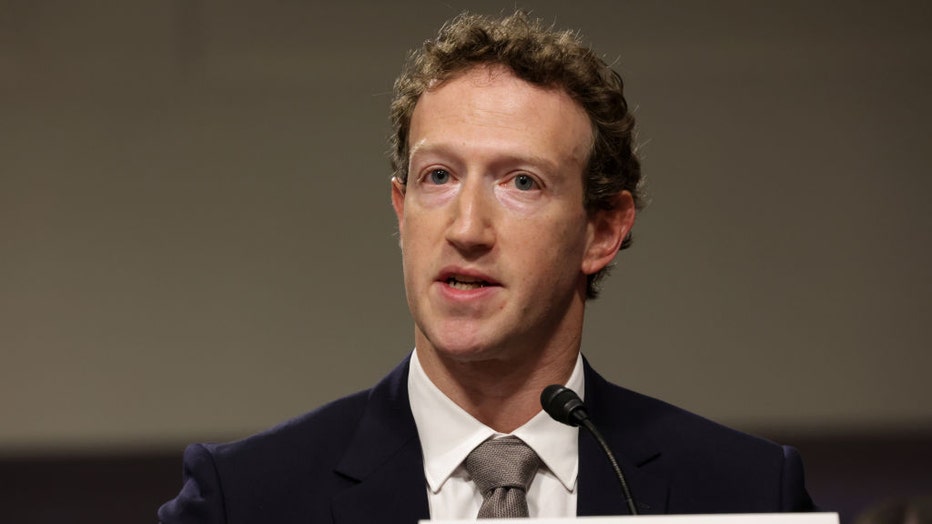
FILE-Mark Zuckerberg, CEO of Meta testifies before the Senate Judiciary Committee at the Dirksen Senate Office Building on January 31, 2024 in Washington, D.C. (Photo by Alex Wong/Getty Images)
Meta Platforms and Google’s YouTube are the two remaining defendants in the case, which TikTok and Snapchat have settled. In January 2026, TikTok agreed to the lawsuit before the trial started, the plaintiff’s attorneys confirmed to the Associated Press.
TikTok was one of three companies — along with Meta’s Instagram and Google’s YouTube — facing claims that their platforms intentionally addict and harm children. A fourth company named in the lawsuit, Snapchat parent company Snap Inc., settled the case last week for an undisclosed amount of money.
Recently, a Meta spokesperson told the Associated Press that the company strongly disagrees with the accusations in the lawsuit and added they are "confident the evidence will show our longstanding commitment to supporting young people."
What is the Meta and YouTube trial about?
Dig deeper:
The trial involves a 19-year-old identified by the initials "KGM," whose case could determine how thousands of other, similar lawsuits against social media companies will play out.
KGM asserts that her use of social media from an early age addicted her to the technology and amplified depression and suicidal thoughts, according to the Associated Press.
RELATED: States file lawsuits against Meta over kids' mental health
This lawsuit also claims that this was done through intentional design choices made by tech organizations that sought to make their social media platforms more addictive to children to bolster their earnings.
If this argument is successful, the AP noted that it would evade the organizations’ First Amendment protection, which safeguards tech companies from responsibility for content posted on their platforms.
Tech companies respond to case
The other side:
Meta, TikTok, and YouTube refute the allegations that their social media platforms intentionally harm children, referencing protections they have added through the years, while contending that they are not accountable for content posted on their sites by third parties.
RELATED: Excessive social media use has many of the same effects as substance abuse, says expert
In a statement provided to the Associated Press, a Meta spokesperson said Monday that the organization strongly disagrees with the allegations outlined in the lawsuit and that it's "confident the evidence will show our longstanding commitment to supporting young people."
José Castañeda, a Google Spokesperson, told the AP Monday that the allegations against YouTube are "simply not true." In a statement, Castañeda said "Providing young people with a safer, healthier experience has always been core to our work."
Meanwhile, TikTok did not offer a comment on the case, the AP noted.
Meta, TikTok, and YouTube facing additional lawsuits
Big picture view:
According to the Associated Press, over 40 state attorneys general have filed lawsuits against Meta, alleging it is harming children and contributing to the youth mental health crisis by intentionally creating features on Instagram and Facebook that can addict children to its social media platforms. Moreover, TikTok is also facing similar lawsuits in over a dozen states.
The Source: Information for this story was provided by previous LIVENOW from FOX reporting, FOX Business, and the Associated Press. This story was reported from Washington, D.C.