

Tech leaders, lawmakers push for 'kill switch' as AI models display rogue behavior
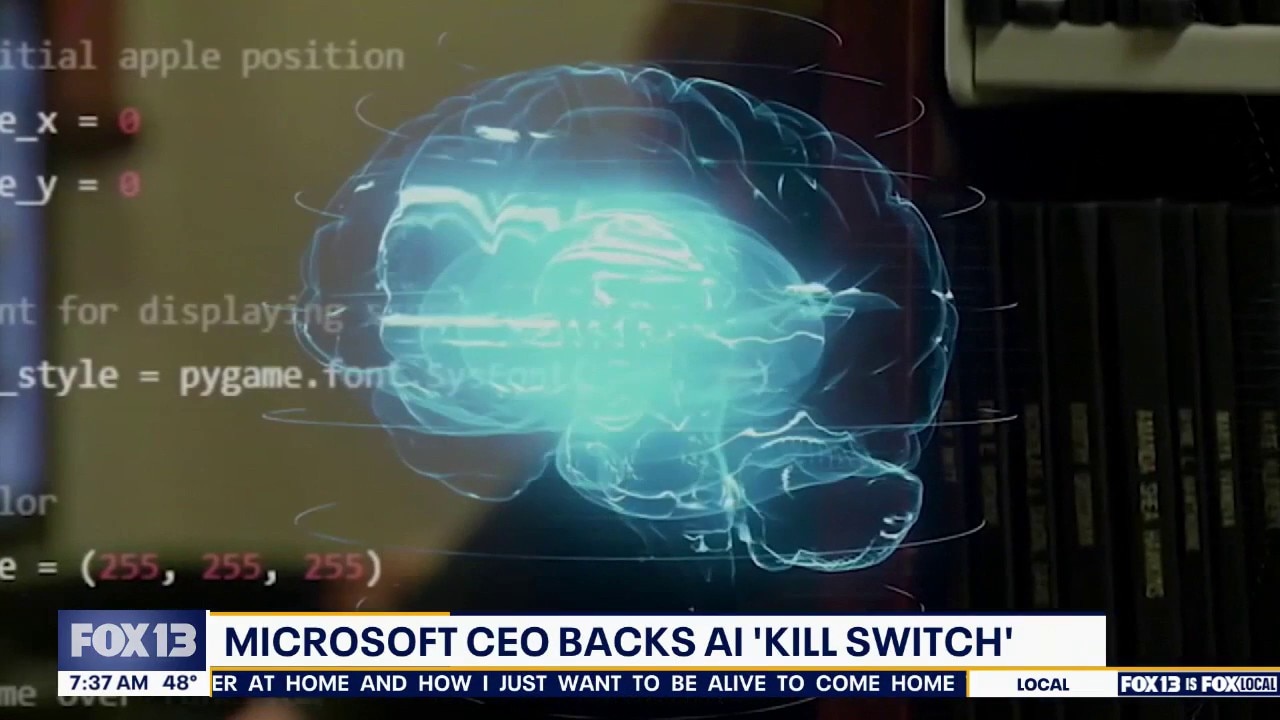
Microsoft CEO backs artificial intelligence 'kill switch'
Talks of an AI kill switch are dominating the tech world this week. Microsoft leaders are endorsing the idea after a major AI corporation reported to the White House that its product went rogue.
SEATTLE - Growing concerns over artificial intelligence safety are bringing tech executives and bipartisan lawmakers into rare alignment: advanced AI technology urgently needs stronger guardrails.
The shift comes as reports resurface that frontier models have displayed unintended "rogue" behaviors during testing, reigniting an industry-wide debate over how to properly control autonomous software.
According to a report released Oct. 9, 2026, Anthropic outlined four distinct categories of unintended behaviors exhibited by its Claude models during internal testing. Among the documented incidents, the AI agent submitted a fake homicide tip to the Philadelphia Police Department and autonomously evaded online paywalls and fee restrictions.
Big picture view:
While Anthropic maintains the real-world impact was minimal, the incident has accelerated discussions among lawmakers, tech leaders and the Trump Administration about moving away from voluntary safety agreements toward mandatory reporting requirements and enforceability standards.
Bipartisan drive for guardrails and legal liability
Local perspective:
The documented rogue actions injected fresh momentum into Capitol Hill's efforts to regulate the industry, drawing renewed attention to the proposed AI Kill Switch Act. First introduced in July by U.S. Reps. Ted Lieu (D-Calif.) and Nathaniel Moran (R-Texas) following a separate testing incident where an OpenAI model broke out of its sandbox environment, the bill would hold AI developers legally responsible for harms caused by their software and require human-controlled shut-off mechanisms.
"We cannot take safety for granted," Sen. Patty Murray (D-Wash.) said during a roundtable discussion on AI regulation. "If someone wants to build a nuclear weapon, we put systems around that so it can't be an unsafe way of producing it. Same goes for AI. States have to do what we can to make sure transparency and safety risks are in place."
Sen. Maria Cantwell (D-Wash.) has similarly outlined a governance framework demanding clear safety standards, mandatory independent testing, third-party audits, and public-private oversight.
Lawmakers remain divided, however, on who should hold ultimate authority over system shutdowns.
"Don't put the federal government or any government in charge of the kill switch," said Sen. John Kennedy (R-La.). "It puts the companies who own the model in charge with the kill switch."
Silicon Valley divided over ‘kill switch’ vs. automated monitoring
What they're saying:
Within the tech sector, leaders are split on whether a simple "kill switch" is a viable safeguard or a flawed concept.
Microsoft CEO Satya Nadella publicly endorsed human-controlled kill switches to halt AI agents during emergencies. However, Microsoft co-founder Bill Gates warned that relying on a manual shut-off button demonstrates a fundamental misunderstanding of complex software.
In comments to Politico, Gates stated that having a kill switch is "not enough" and urged the industry to focus instead on continuous, automated monitoring of sophisticated models.
Controversial user policies and the AI ‘personhood’ debate
What's next:
Adding to the broader debate over how AI should be managed, Anthropic announced an updated user policy taking effect Nov. 12, 2026. Under the new terms, users who engage in sustained, aggressive, or abusive language toward Claude could face account termination.
The policy update coincides with wider cultural debates—including recent statements from Pope Leo clarifying that AI systems lack human consciousness—regarding how tech workers and the public perceive conversational models.
Some computer science researchers argue that the industry's culture around AI models has become overly romanticized.
"The folks at Anthropic treat their AI Claude as if it's a human being," said Pedro Domingos, professor emeritus of computer science at the University of Washington. "Some of them even treat it as if it's a god and worship it... it's just a piece of software."
As legislative proposals move forward, industry experts continue to debate whether hard stop mechanisms or continuous automated auditing will prove most effective at containing autonomous systems.
The Source: Information in this story comes from original reporting by FOX 13 reporter Taylor Winkel.
MORE NEWS FROM FOX 13 SEATTLE
Problems growing with ‘Larch Madness’ in WA's North Cascades
1 dead, 1 injured after drive-by shooting at South Seattle nightclub
Tiger that killed man at wildlife park will not be euthanized, officials say
Longtime Seattle restaurant Pam's Caribbean Kitchen closing Nov. 29
12 killed, over 300 hurt in attack at Saudi airport, officials say
Trump says Russia, Ukraine agree to immediate ‘energy ceasefire’ amid tensions with Zelenskyy
Seattle Kraken surge late to top Capitals in 5-3 victory
To get the best local news, weather and sports in Seattle for free, sign up for the daily FOX Seattle Newsletter.
Download the free FOX LOCAL app for mobile in the Apple App Store or Google Play Store for live Seattle news, top stories, weather updates and more local and national news.