

WA leaders issue new guidance for election workers facing inspections
WA leaders issue new guidance for election workers facing potential federal inspections
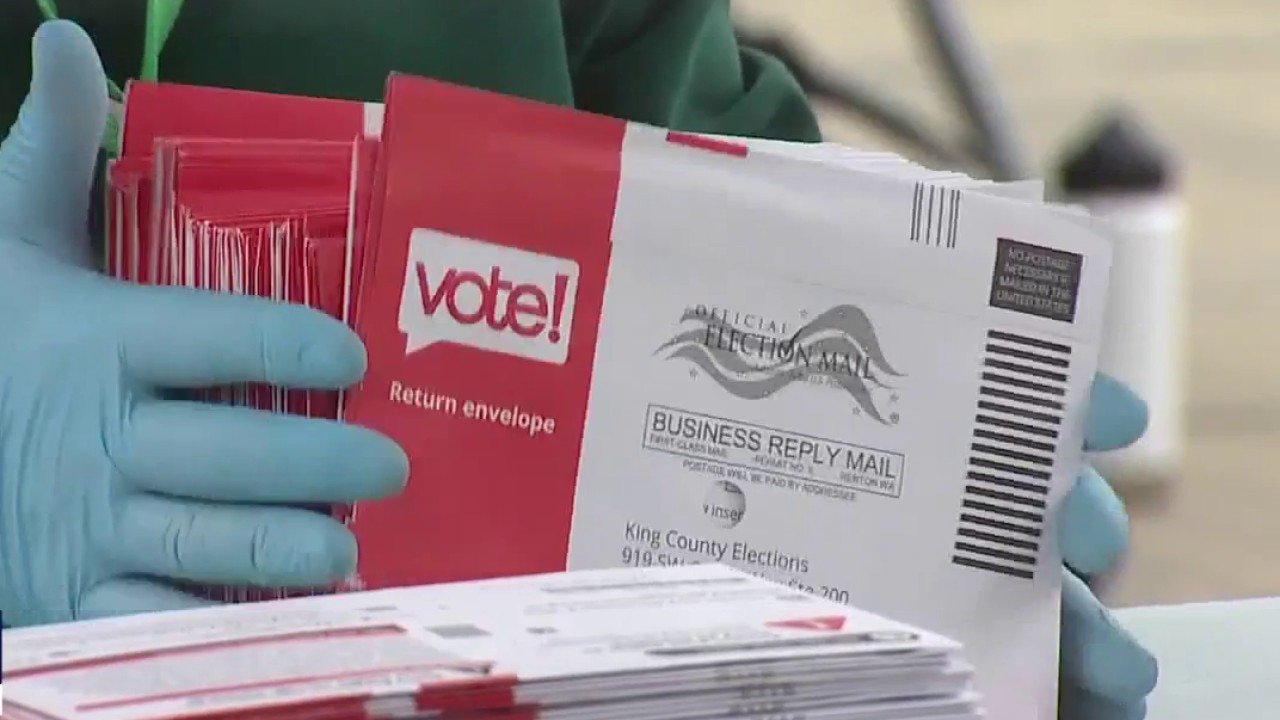
With the November general election just two months away, Washington state election officials have taken a new step to protect frontline county staff. The Office of the Secretary of State, in partnership with the Attorney General’s Office, issued a 17-page guidebook outlining step-by-step protocols for local workers in the event that federal law enforcement or investigators show up at county election facilities.
WASHINGTON - With the November general election just two months away, Washington state election officials have taken a new step to protect frontline county staff.
The Office of the Secretary of State, in partnership with the Attorney General’s Office, issued a 17-page guidebook outlining step-by-step protocols for local workers in the event that federal law enforcement or investigators show up at county election facilities.
"We want the election workers to know exactly what to do so there's no miscommunication, there's no panicking," said Secretary of State Steve Hobbs.
The guidance is titled "Election Administration: A Guide to State and Federal Authority," published on Thursday. It was released amid heightened tensions between state election leaders and the federal government.
Recent executive orders targeting mail-in voting, proposed U.S. Postal Service policy shifts, and the Department of Homeland Security (DHS) ramping up voter fraud investigations have created growing uncertainty for local administrators across Washington’s 39 counties.
"I feel that we have been forced into this situation because of the actions of the federal government, and that's why we had to put this booklet out," Hobbs added.
A Clear Protocol for Frontline Staff
What they're saying:
While Washington is primarily a vote-by-mail state, local county workers still manage physical voting centers, handle paper ballots, and safeguard voting hardware and voter rolls.
Hobbs said local election staff contacted his office asking state leaders for a clear plan on how to handle potential unannounced visits from federal personnel. The new guidebook outlines practical, legal steps for frontline staff:
- Verify Credentials First: Staff are instructed to ask for official government identification before answering questions or granting access to non-public areas.
- Understand Warrants vs. Subpoenas: Workers are advised that unless federal agents present a judicial search warrant signed by a federal judge, they are not required to hand over non-public data immediately or halt ballot processing operations.
- Pause and Consult Counsel: For verbal demands or subpoenas, staff are directed to pause, stay calm, and immediately contact their county prosecutor, the Secretary of State’s Office, or the Attorney General’s Office for legal guidance before releasing documents or agreeing to interviews.
Hobbs emphasized that the primary goal of the booklet is to ensure workers feel supported and prepared rather than overwhelmed.
"You're working in an elections office, and you're approached by someone who says they're a federal official. They shouldn't have to freak out about it," Hobbs said. "They should know exactly what to do, remain calm, ask for identification, and understand the difference between a warrant and a subpoena. These are the important things election officials need to know before handing over data."
Officials with King County Elections said they have received the guidance and are currently reviewing the steps with their team members and legal counsel.
Tensions Between Federal and State Authorities
Local perspective:
State leaders said the new guidebook became necessary after the federal government took an increasingly aggressive stance against mail-in voting.
"We can see it with these executive orders that the Trump Administration has done. And this latest executive order, which directly orders the United States Postal Service to create rulemaking that really affects our state," said Hobbs.
DHS recently announced that Washington would be part of a multi-state "voter fraud surge initiative," deploying Homeland Security Investigations (HSI) agents to pursue leads and conduct field interviews.
Hobbs defended Washington's election security record, pointing out that voter fraud remains extraordinarily rare in the state, with just five documented cases out of 90 million ballots cast since 2008.
"We have a lot of systems in place. We check signatures, we do audits, and you can see the election with your own eyes," Hobbs said, adding that the state routinely cooperates with legitimate federal checks.
"We have done it many times before. In fact, just recently, Homeland Security with their Border Patrol asked for two voter records from Whatcom County. And if they want the voter records…we can do that because that's public information," said Hobbs, noting that the state does not provide a voter’s private information.
USPS Legal Battles & Advice for Voters
Dig deeper:
The conflict over election rules isn't just happening in local offices, it’s playing out across the mail system itself.
Proposed federal rules, which a federal judge temporarily blocked, would allow the U.S. Postal Service to delay or withhold ballot deliveries for states that don’t follow federal envelope design specifications or central list submissions.
While key parts of that proposal remain tied up in federal court, state leaders are taking no chances with ballot transport. With ballots scheduled to go out to military and overseas voters in mid-September and all registered voters in mid-October, Hobbs advised voters to take advantage of Washington's official ballot drop boxes to avoid potential mail delays.
"Because of the environment that we're in right now, I highly encourage voters to put their ballot in an official ballot drop box," Hobbs advised. "If you must use the mail, make sure you send it at least a week before Election Day to ensure it gets postmarked in time."
What Voters Need to Know
State election leaders stress that despite national disputes, Washington's core security measures, including signature verification, independent audits, and paper trail tracking, remain fully operational.
"The security of our elections has always been great in this state," said Hobbs.
Voters can check or update their registration status, track their ballot, and find official local ballot drop box locations by visiting votewa.gov.
The Source: Information for this story came from original reporting by FOX 13 Seattle's Franque Thompson, who interviewed WA Secretary of State Steve Hobbs and also spoke with the WA Attorney General's Office, and officials within the King County Elections office.
MORE NEWS FROM FOX 13 SEATTLE
Family of Kent teen arrested in Chelan Hills Fire speaks out
Texts show Mayor’s Office confusion after Bite of Seattle shooting
FBI offers $150K reward for Tacoma store owner in $600K SNAP fraud scheme
WA salmonella outbreak linked to broccoli sprouts leaves 13 sick
WA officials release guide outlining election administration roles
Lindsay Clancy murder trial ends in mistrial after jury deadlocked
To get the best local news, weather and sports in Seattle for free, sign up for the daily FOX Seattle Newsletter.
Download the free FOX LOCAL app for mobile in the Apple App Store or Google Play Store for live Seattle news, top stories, weather updates and more local and national news.