

How drones are helping scientists monitor Washington’s recovering sea otters
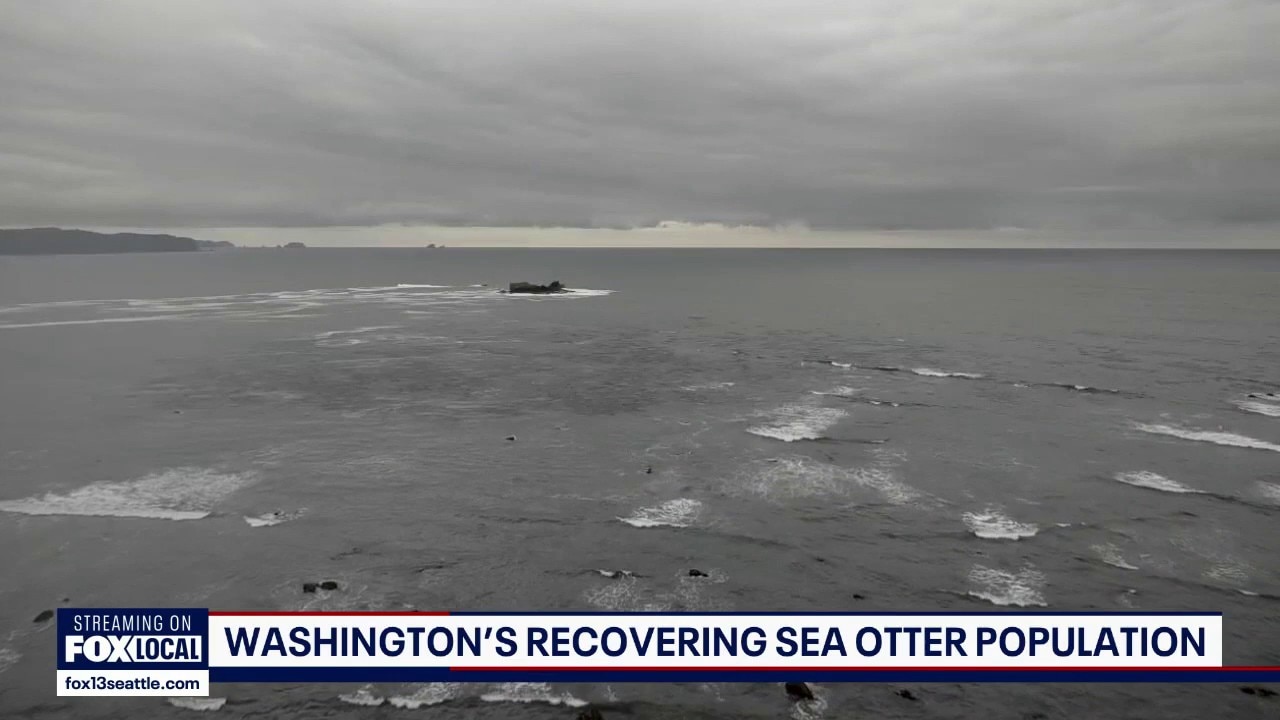
Scientists use drone to count Washington sea otters
Seattle Aquarium researchers are flying a drone over the Washington coast for the first time to accurately track the state's recovering sea otter population.
OZETTE, Wash. - Scientists with the Seattle Aquarium are taking sea otter research to the skies, deploying drones along the Olympic Coast to track the recovering population.
Sea otters were once wiped out from Washington waters entirely.
A comeback story unfolding along the Olympic Coast
Hunted to extinction during the maritime fur trade, the last known sea otter in Washington was killed in Willapa Bay in 1910. More than a century later, thousands now dot the rugged Olympic Coast, descendants of a small group of otters translocated from Alaska in the late 1960s.

News articles, headlines and photos detailing Washington's maritime fur trade at the turn of the 20th century. (Public domain)
But scientists say the recovery story is still unfolding.
Researchers from the Seattle Aquarium, Oregon Coast Aquarium, Oregon Zoo and Pacific University recently trekked into one of the most remote stretches of the Olympic Peninsula to better understand how Washington’s sea otter population is doing and what the future could hold for the species across the Pacific Northwest.
"It’s really important to keep an eye on this population because they really started out with about 10 animals," said Amy Olsen with the Seattle Aquarium. "Over the last, about, 50 years, they have grown to about 3,000."
Olsen said researchers still have not reached the species’ carrying capacity along the Washington coast.
"How many otters can this environment actually support and what were the original numbers of Washington before they were hunted to extinction," she said.
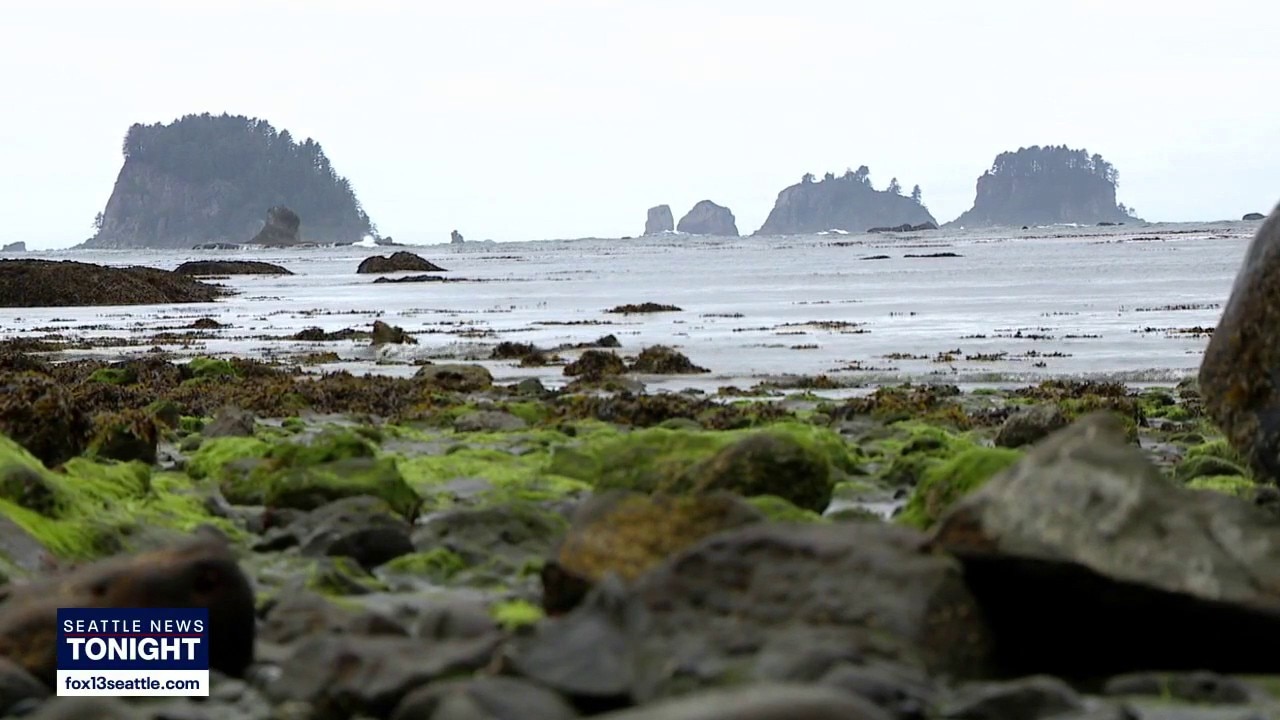
Local scientists hike WA coastline to research sea otters
They spend days hiking remote stretches of Washington coastline, all for a chance to spot sea otters in the surf.
Trekking into the "Graveyard of the Pacific"
Every month, Olsen and her team, led by Shawn Larson, head into the field to monitor sea otters along the Washington coast.
Each expedition lasts three days and focuses on different sites and different clusters of otters. During this trip, researchers surveyed Clallam Bay, Sand Point and Neah Bay.
Two of those sites can be reached by vehicle.
Sand Point cannot.
FOX 13 hiked alongside the team roughly six miles roundtrip through the Olympic coast wilderness carrying spotting scopes, binoculars and drone equipment in hopes of spotting a raft of otters offshore.
A rugged coast shaped by shipwrecks and kelp forests
From the shoreline, sea stacks rose from the surf while kelp swayed in the tide flats.
"This area is known for a lot of shipwrecks," said Larson, who has spent decades studying sea otters.
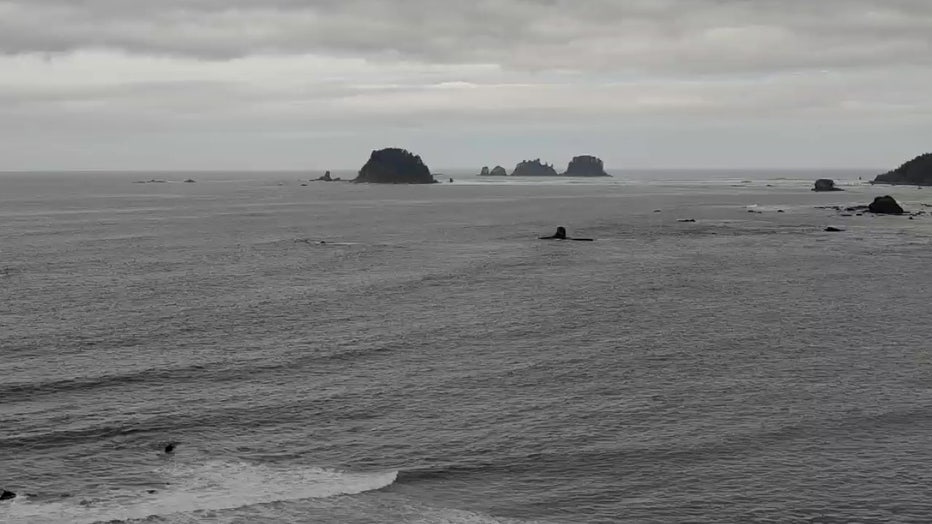
Drone imagery of the Washington coast.
Larson explained the same jagged coastline that once made navigation dangerous for ships also creates ideal habitat for otters.
"With the rocks, you have kelp that can attach to the rocks and in the kelp there’s going to be food and shelter for a bunch of what sea otters eat," explained Larson.
Taking sea otter research to the skies
The weather along the Olympic Coast posed one major challenge.
Researchers needed enough of a break in the rain and wind to launch a drone, an effort Olsen said had been years in the making.
Once conditions cleared, the team climbed atop a grassy bluff overlooking the coastline.
Then came the moment researchers had hoped for. Olsen successfully flew the drone over the otters.
The Seattle Aquarium team said it marked the first time they had brought a drone to survey sea otters along the Olympic Coast.
"It also has a thermal camera which I’m really excited about," explained Olsen.
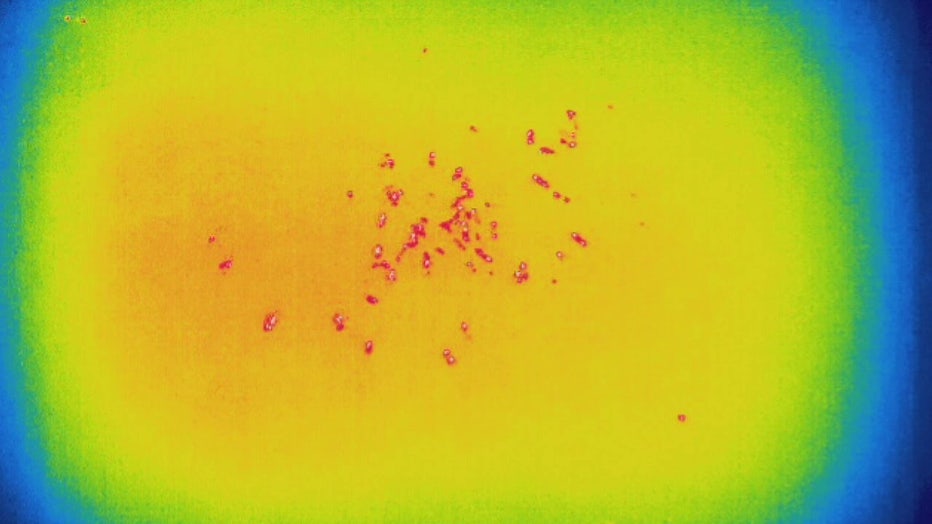
Thermal imagery picks up the heat signatures of a bunch of sea otters.
Why counting sea otters is difficult
From shore, researchers said sea otters can be difficult to distinguish from kelp floating offshore.
"When otters are on the surface, you’re only usually seeing their head and their flippers," explained Olsen. "Even the smallest rock can hide an otter."
Scientists traditionally rely on spotting scopes and binoculars to observe the animals, but tracking individuals can be challenging when otters repeatedly dive and resurface.
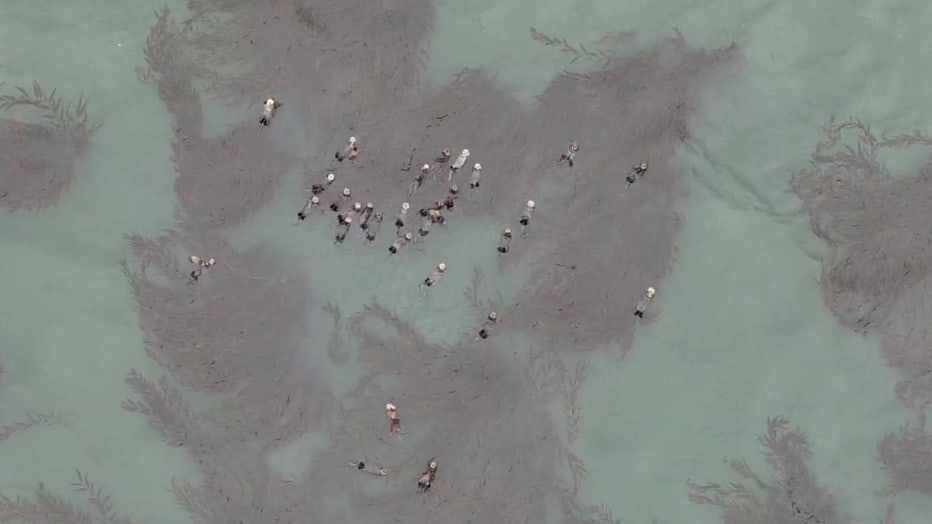
The drone provided researchers with a clearer overhead perspective of the raft.
"So the drone gives us a better sense of numbers," said Olsen. "The spotting scopes and binoculars and foraging data we collect gives us a sense of how the population is doing."
Researchers counted roughly 70 otters during the survey, including about 60 adults and as many as a dozen pups.
Tracking foraging behavior by hand
Even with drone technology overhead, much of the work still relies on old-fashioned field observation.
Researchers locked onto individual otters through spotting scopes, carefully documenting each dive, prey item and surfacing behavior.
"We just follow one otter," said Brittany Blades with the Oregon Coast Aquarium.
The scientists selected a mother otter that stood out visually so they would not lose track of her among the raft.
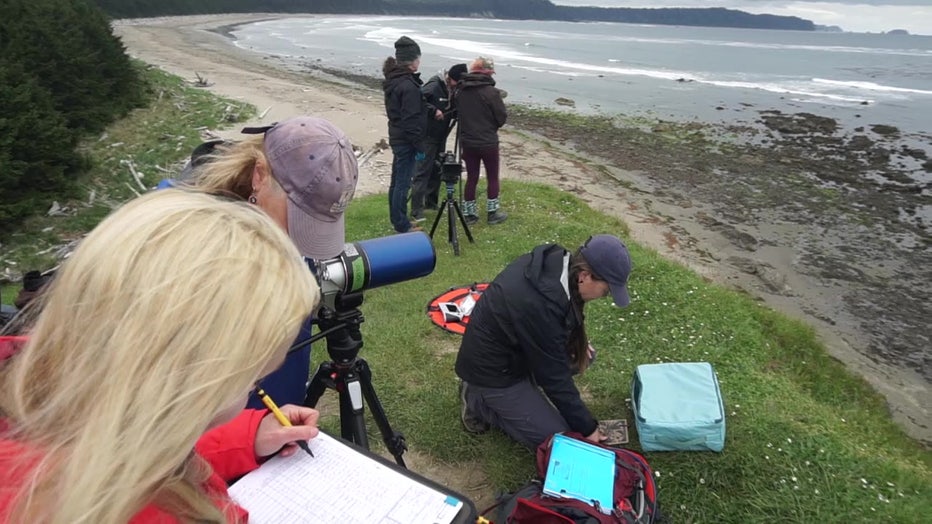
Researchers observed the mother repeatedly diving for snails in the rocky intertidal waters while sharing food with her pup.
"We’re able to calculate how long it takes them to dive and find their food items," said Blades.
Each dive triggered a stopwatch click and handwritten notes from the research team.
"We’re collecting foraging data," said Michelle Munoz with the Seattle Aquarium.
Munoz said sea otters eat different prey depending on where they are along the Washington coast. On this day in Ozette, snails were on the menu. Otters use a rock to crack open the shells and then slurp them like oysters on the half shell.
During a single dive, one otter can pull up multiple of these small snails to feast on.
What otters reveal about ecosystem health
Researchers said the observations help them better understand not only the otters themselves, but the health of the surrounding marine ecosystem.
Scientists said the condition of the otters can also reveal whether enough prey exists to support population growth.
"If we’re seeing a lot of skinny otters who are diving and bringing up nothing, means there’s not enough prey for the population to do well," said Olsen.
Could sea otters ever return to Oregon?
Researchers from Oregon say Washington’s recovery could offer clues about whether sea otters might someday reestablish themselves farther south.
Like Washington, sea otters were also eliminated from Oregon during the maritime fur trade.
"The reason I wanted to get our team coming up here from Oregon is because we don’t have otters in Oregon," said Blades.
Blades said male sea otters occasionally travel south from Washington into Oregon waters.
"We did have two male sea otters that were seen at Cannon Beach in Oregon," she said.
But Blades said a true natural recolonization could take an extraordinarily long time.
"It would actually probably take hundreds of years for sea otters to actually repopulate from Washington down to Oregon on their own," she said. "I think humans need to help out with a reintroduction in order for that to happen in my lifetime."
MORE NEWS FROM FOX 13 SEATTLE
Family in court to see WA man accused of killing Growler Guys employee
RV fire on Seattle's Beacon Hill sparks neighborhood safety concerns
Neighbors along Seattle's Aurora Avenue grapple with 4 shootings in 72 hours
How to catch yourself a single with Seattle Mariners speed dating
Loved ones honor slain UW student Juniper Blessing
WA's latest-ever opening of North Cascades Highway set for June 25
To get the best local news, weather and sports in Seattle for free, sign up for the daily FOX Seattle Newsletter.
Download the free FOX LOCAL app for mobile in the Apple App Store or Google Play Store for live Seattle news, top stories, weather updates and more local and national news.
The Source: Information in this story comes from original reporting by FOX 13 Seattle reporter Lauren Donovan.