

Three gray whale deaths in one week raise alarm along Washington coast
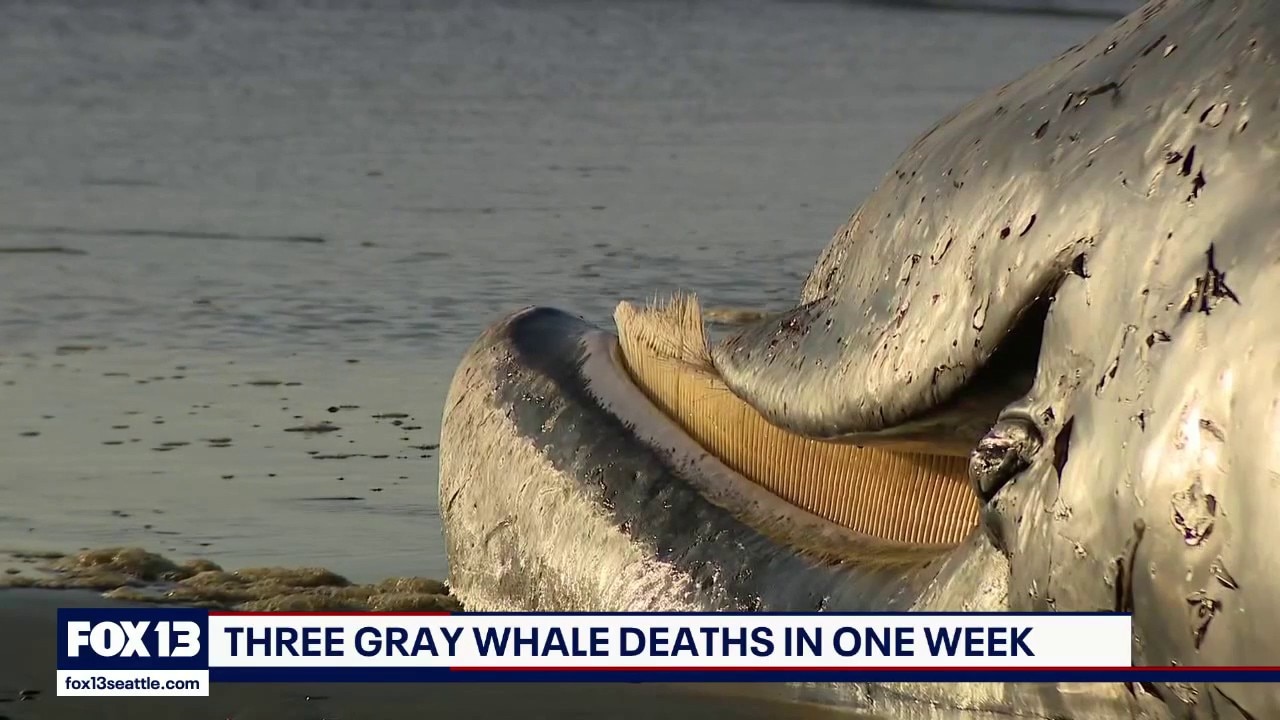
3 gray whale deaths in a week raise concern along Washington coast
Researchers are concerned after three gray whales died in Washington within a week, adding to a growing number of strandings this year. Scientists say malnutrition and climate-driven changes to food sources may be contributing to a broader population decline.
OCEAN SHORES, Wash. - Three gray whales died in Washington in a single week, a sharp increase that researchers say is adding to growing concern about the health of the species. So far this year, six gray whales have stranded along Washington shores compared with just one by this point last year.
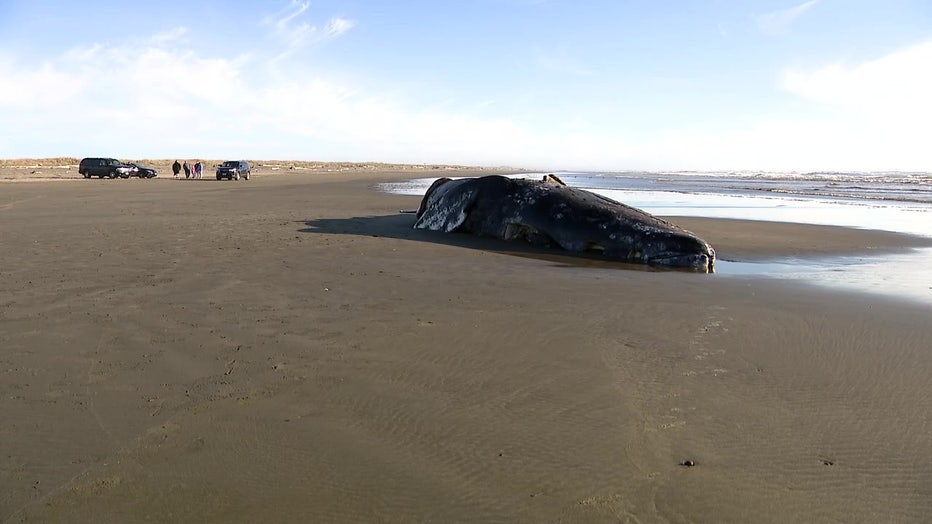
A beached gray whale in Grays Harbor County. (FOX 13 Seattle)
What they're saying:
John Calambokidis, senior research biologist at Cascadia Research, said that number is unusually high.
"That’s already at what used to be our average for a year," said Calambokidis.
He noted that most gray whale mortalities typically occur in April, May and June, making the early total even more striking.
Recent whale deaths
The two most recent whales an adult male and adult female were discovered Friday in Grays Harbor County near Ocean Shores. Researchers said both were in poor body condition. One also showed signs of trauma to the head.
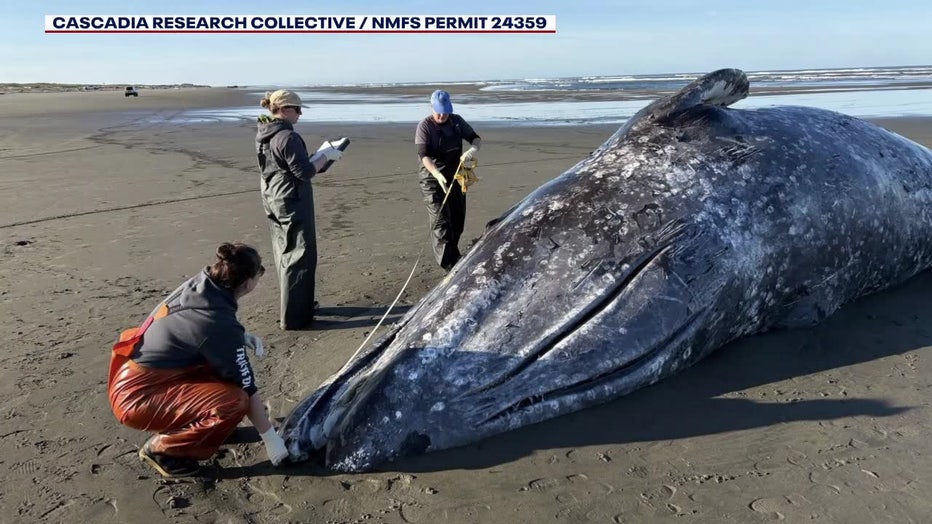
Cascadia Research monitors a beached gray whale in Grays Harbor County. (Cascadia Research Collective)
Calambokidis’ team at Cascadia Research has also been tracking a juvenile gray whale near the Willapa River. That juvenile whale, which had been reported Wednesday, was in poor body condition and later died as well. Researchers attempted to reach it by boat, but the whale had moved farther upriver.
"We’re also just trying to be prepared for that fact that we might have many more of these," said Calambokidis.
Scientists point to long-running decline
Calambokidis said the recent deaths appear to be part of a much larger and longer-running trend affecting gray whales.
"We’ve had these elevated gray whale mortalities now for a number of years," Calambokidis said. "One of the characteristics has been lots of very malnourished whales, and it really cuts to what we think is at the heart of a crisis the gray whale population is facing."
He said the population has dropped dramatically over the last decade, an estimated 50% reduction. Calambokidis reports researchers are now entering the seventh year of elevated gray whale mortalities, a stretch he said is taking a major toll on the population.
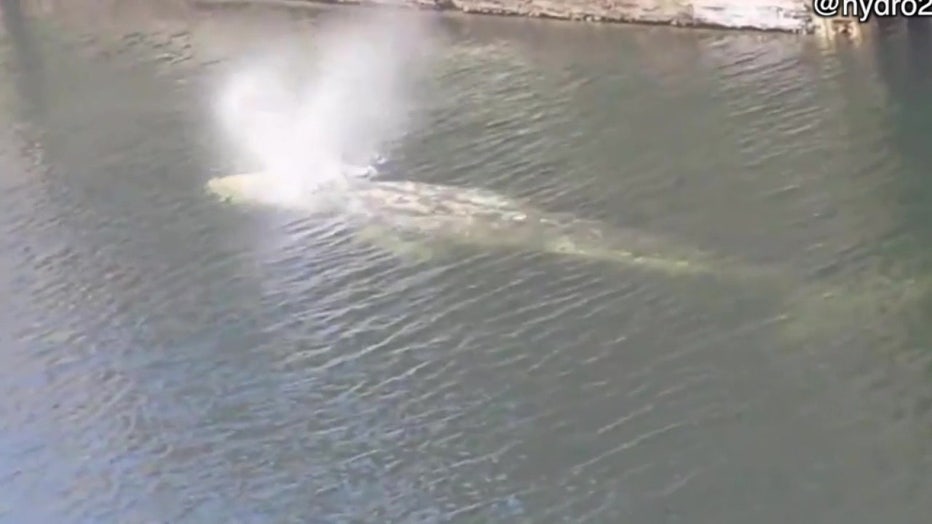
A gray whale surfacing for air.
He also pointed to another troubling sign: NOAA reported the lowest number of gray whale calves born last year in the 50 years the population has been monitored. Combined with higher deaths and a shrinking population, Calambokidis said the signs point to a broader crisis.
"High mortality, low birth rate, declining population are all signs of a crisis in the gray whale population," he stressed.
What's driving the crisis
Researchers with SR3 said the recent strandings come after an unusual mortality event for eastern North Pacific gray whales from 2019 to 2023, during which about 690 strandings were recorded from Mexico to Alaska. While that event has closed, SR3 said the underlying problems remain.
According to SR3, ecosystem changes in gray whales’ Arctic feeding grounds have reduced available prey, contributing to malnutrition, lower birth rates and more deaths. The group said the population has not fully rebounded, making this year’s increase in deaths especially concerning.
Casey Mclean, Executive Director of SR3 says gray whales migrate roughly 10,000 to 12,000 miles between Baja breeding lagoons and Arctic feeding grounds. During migration, they feed very little and instead rely heavily on fat stores built up while feeding in the Arctic. SR3 said gray whales depend on Arctic prey such as amphipods, and those food sources are being altered by climate-driven ecosystem changes.
SR3 also said it has not received reports this year of deaths among the roughly 20 gray whales known as the "sounders," a small subgroup that comes into Puget Sound to feed on ghost shrimp.
Calambokidis said one of the biggest questions now is what is changing for gray whales and whether they are moving into new areas out of desperation as they migrate north.
He said the whales may be venturing into unfamiliar places to feed because they did not get enough to eat the year before and may not have enough reserves to make the journey.
"This is exposing a potential consequence of human-induced climate change," said Calambokidis.
MORE NEWS FROM FOX 13 SEATTLE
Starbucks closes popular U District location near UW campus in Seattle
WA troopers arrest 2 after a 130 mph pursuit on I-5 from Federal Way to Lakewood
Controversy continues to surround CCTV cameras in Seattle
'We can't even bury him': Family of missing Kent, WA man pleads for information
Budget cuts could impact access to Washington’s public lands
To get the best local news, weather and sports in Seattle for free, sign up for the daily FOX Seattle Newsletter.
Download the free FOX LOCAL app for mobile in the Apple App Store or Google Play Store for live Seattle news, top stories, weather updates and more local and national news.
The Source: Information in this story came from Cascadia Research, SR3, the National Oceanic and Atmospheric Administration and original FOX 13 Seattle reporting and interviews.