

Credit agency puts WA on notice reporting a negative financial outlook
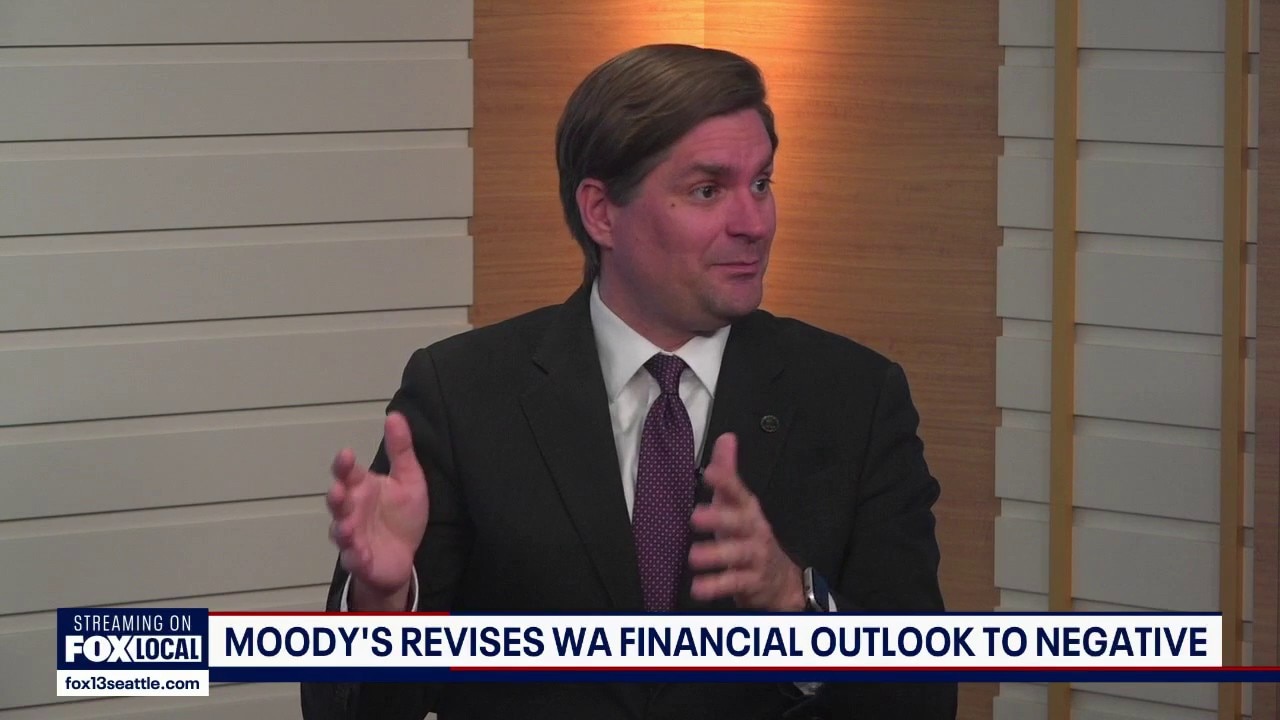
Moody’s shifts Washington outlook to negative, warns of risk
Moody’s has revised Washington’s financial outlook from stable to negative, citing budget concerns. Officials warn the state could risk losing its top credit rating if trends continue.
SEATTLE - For the first time, a major credit agency has revised Washington’s financial outlook from stable to negative, signaling a risk for Washington state to lose its "Triple-A" bond rating.
The revision by Moody’s serves as a formal warning to lawmakers that they are balancing the budget in a unsustainable way. While Washington’s top-tier credit rating remains intact, the outlook suggests the state is at a fiscal crossroads.
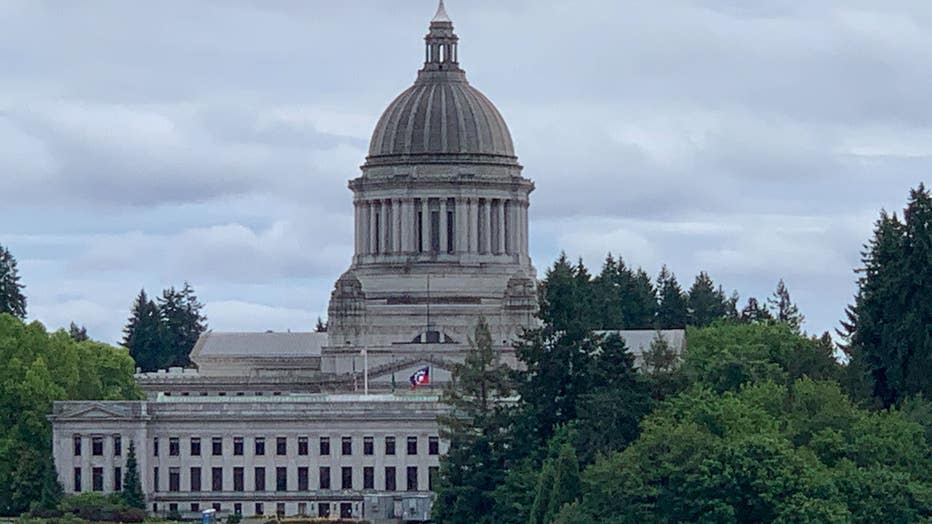
The capitol of Washington located in Olympia, Wash. (FOX 13 Seattle)
What they're saying:
In an interview with FOX 13 on Monday, State Treasurer Mike Pellicciotti compared the revision to a vehicle’s dashboard warning.
"I would say it’s almost like your car engine warning light has just gone on," Pellicciotti said.
Pellicciotti noted that a credit rating functions "kind of like folks have an individual credit score," and it is the primary factor in determining the cost of borrowing money.
"Our credit rating determines what we pay on the interest to pay that money back," Pellicciotti said.
The backstory:
The primary concern cited by Moody’s is what Pellicciotti describes as a "structurally imbalanced budget." In recent years, the legislature has increasingly relied on the state's rainy day fund and other reserves to cover daily operations rather than matching recurring spending with recurring revenue.
In the last legislative session, the Democrat-controlled legislature increased the budget to nearly $80 billion to fund two years despite a more than $2 billion shortfall.
Featured
State budget proposal hits record spending amid multi billion dollar deficit
Supplemental budget proposals include increasing spending by about $1.5 billion and withdrawing up to $880 million from the state’s rainy-day fund.
Lawmakers also pulled approximately $880 million from reserves to fund the budget. Pellicciotti, who said he communicated the dangers of the move "both publicly and privately," characterized the strategy as "definitely risky."
"The problem is when you take money out of your savings, you have to immediately replenish it," Pellicciotti said. "And what the credit rating agency is saying is they’re waiting too long in their budget cycle to put that money back. That money needs to be put back into the budget."
Pellicciotti says the reason why Democrats pulled from the reserves was to compensate for the Trump administration’s reduction in federal Medicaid funding.
Still, Pellicciotti says the state cannot keep spending more money than they are bringing in.
"You can’t rely on your savings to fill that gap," Pellicciotti said.
Big picture view:
The negative outlook also reflects uncertainty surrounding the latest "millionaire tax."
Moody’s took the income tax into consideration because Democrats are relying on revenue from the income tax to balance the budget in future years.
Uncovered emails create 'millionaires tax' controversy
Washington's recently-passed "millionaires tax" is facing new questions after un-redacted emails uncovered the steps lawmakers took to battle future legal challenges to the law, and how the Attorney General's office helped curate it.
The money from the tax is slated to come in 2029, but with legal challenges, the income tax could turn into an unstable source.
"We’re in a situation where if that doesn’t pass or is overturned in some way, that could create an instability in the budget," Pellicciotti said.
But Pellicciotti says it’s not too late and lawmakers can fix the financial outlook. He encouraged lawmakers to prioritize the financial health of the state in next year’s legislative session.
Local perspective:
Currently, 18 states hold the gold standard of a Triple-A bond rating with Washington clinching that status in 2019.
If the bond rating were to be downgraded, Pellicciotti says it could lead to a financial spiral with huge impacts.
It could add to the budget deficit and lead to debates on raising more taxes. It would make it more expensive to borrow money, which in turn would impact everything from infrastructure projects to schools.
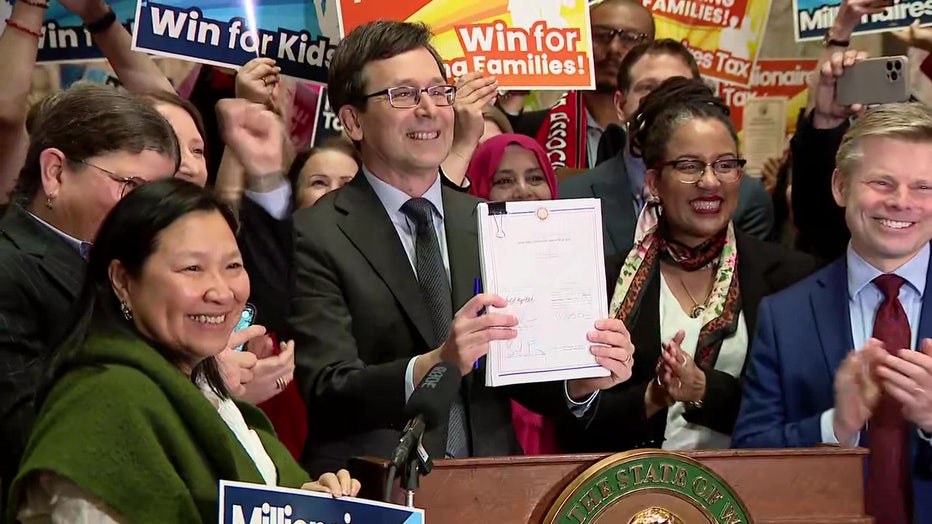
Gov. Bob Ferguson presents the "millionaires tax" bill after signing it into law on March 30, 2026. (FOX 13 Seattle)
Currently, the state has around 8% in financial reserves expecting to dip below 2% by 2028.
FOX 13 requested a response from the governor and his office released this statement:
"Washington has the highest bond rating in the country, and we’re working hard to keep it."
Republican budget leader Rep. Travis Couture released a statement, which reads, in part:
"Moody’s has confirmed what we have been saying for months: the math in Olympia does not add up. You cannot spend record amounts of taxpayer money, raid pension funds, and fail to deliver on the basics without consequences.
"For years, the majority has treated the state budget like a blank check, doubling spending over the last decade. They pushed through an $80 billion budget that spends more than the state brings in, even with record tax collections. Now, a nonpartisan credit agency is calling out the shaky math and the reckless reliance on one-time gimmicks to paper over a structural deficit.
"The consequences of this warning are real. Washington now has the dubious distinction of being dead last in the nation for financial reserves. The majority has drained the rainy-day fund so aggressively that total reserves are projected to collapse to a mere 1.6% by 2028. This leaves us completely defenseless against a recession."
MORE NEWS FROM FOX 13 SEATTLE
Homeowner shoots suspect during home invasion in Kent
Seattle police arrest felon after Capitol Hill bike dispute sparks gunfire
Skydiving Kirkland woman finds 'freedom' from quadriplegia, breaks record
Renton police boost patrols at park following recent shootings
2 motorcyclists killed at same spot 1 week apart in Pierce County
To get the best local news, weather and sports in Seattle for free, sign up for the daily FOX Seattle Newsletter.
Download the free FOX LOCAL app for mobile in the Apple App Store or Google Play Store for live Seattle news, top stories, weather updates and more local and national news.
The Source: Information in this story came from Moody’s and original FOX 13 Seattle reporting and interviews.