

Before fighting to save salmon, WA had mountains of wasted fish
Washington now spends millions of dollars trying to save salmon. But over 100 years ago, the state discarded an estimated 7 million pounds in a single year.
Today, returning salmon draw crowds to places like Issaquah Creek. Hatcheries work to sustain chinook and coho runs, but those efforts have roots in a darker chapter of the region’s history.
An industry built on seemingly endless salmon
The backstory:
When European settlers arrived, salmon appeared to be an inexhaustible resource. By the late 1800s, the fishing industry had expanded dramatically.
More than 50 canneries were operating in the Columbia River Basin alone by 1883. Fishermen used equipment such as fish wheels, some standing upward of 60 feet tall.
Photographs from the Museum of History & Industry capture the scale of the industry. One image, taken in 1905, shows 4,000 salmon piled on a cannery dock.
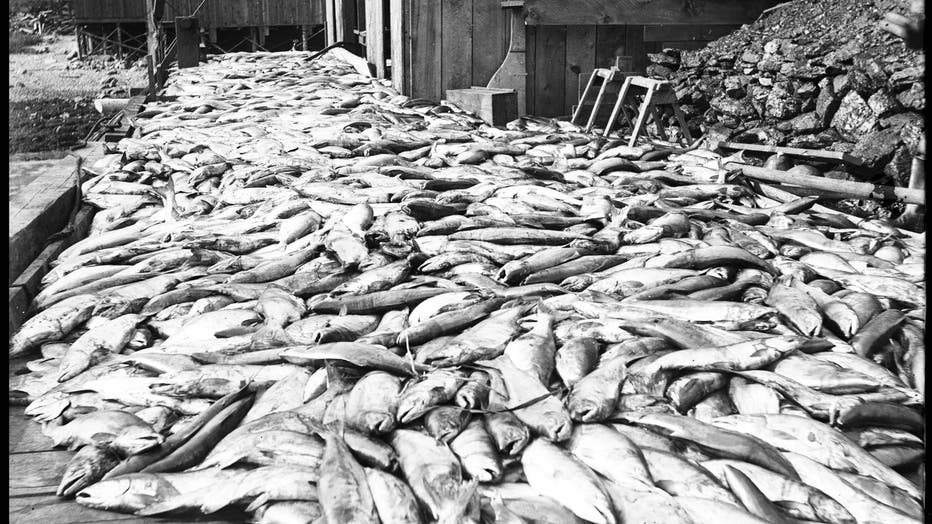
This image, taken in 1905, shows 4,000 salmon piled on a cannery dock.
Fishermen could catch more salmon than the canneries could process. A University of Washington study found that during some spring and summer seasons, canneries processed only chinook, throwing other species back into the river.
The assumption that the salmon runs would never run dry proved wrong.
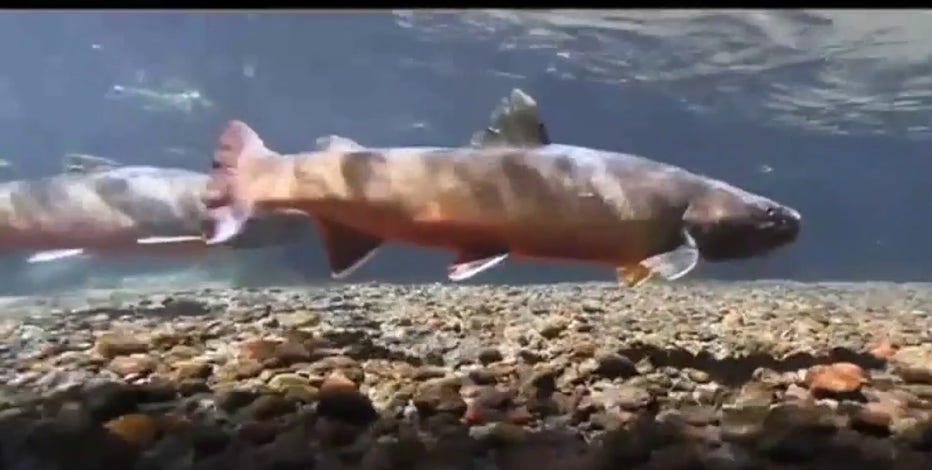
Washington closes Snohomish River to all fishing
The temporary ban, enacted by the Washington Department of Fish and Wildlife, prohibits fishing for all species along the entire river, extending from its mouth to its confluence with the Skykomish River.
Overfishing not sole reason for decline
Dig deeper:
The decline cannot be blamed on overfishing alone. There are a range of environmental challenges facing salmon.
The Washington Department of Fish and Wildlife points to dams, logging, land clearing and urban runoff as changes affecting the rivers and ecosystems salmon need to survive.
The Source: Information for this story came from original reporting by FOX 13 Seattle reporter Lauren Donovan, who spoke with officials within the Washington Department of Fish and Wildlife, the Mountains to Sound Greenway Trust, and reviewed the University of Washington's Fisheries Report.
MORE NEWS FROM FOX 13 SEATTLE
WA ferries cancel multiple sailings due to widespread crew shortages
Washington closes Snohomish River to all fishing
WSP: Woman stabs child after I-5 crash near DuPont
Report: Taxes in Seattle have grown 5 times faster than population
Best pumpkin patches near Seattle to visit this fall
Mackie Samoskevich scores twice as Seattle Kraken blow out Flames 6-1 in home opener
To get the best local news, weather and sports in Seattle for free, sign up for the daily FOX Seattle Newsletter.
Download the free FOX LOCAL app for mobile in the Apple App Store or Google Play Store for live Seattle news, top stories, weather updates and more local and national news.