

Seattle, King County begin cracking down on illegal food vendors
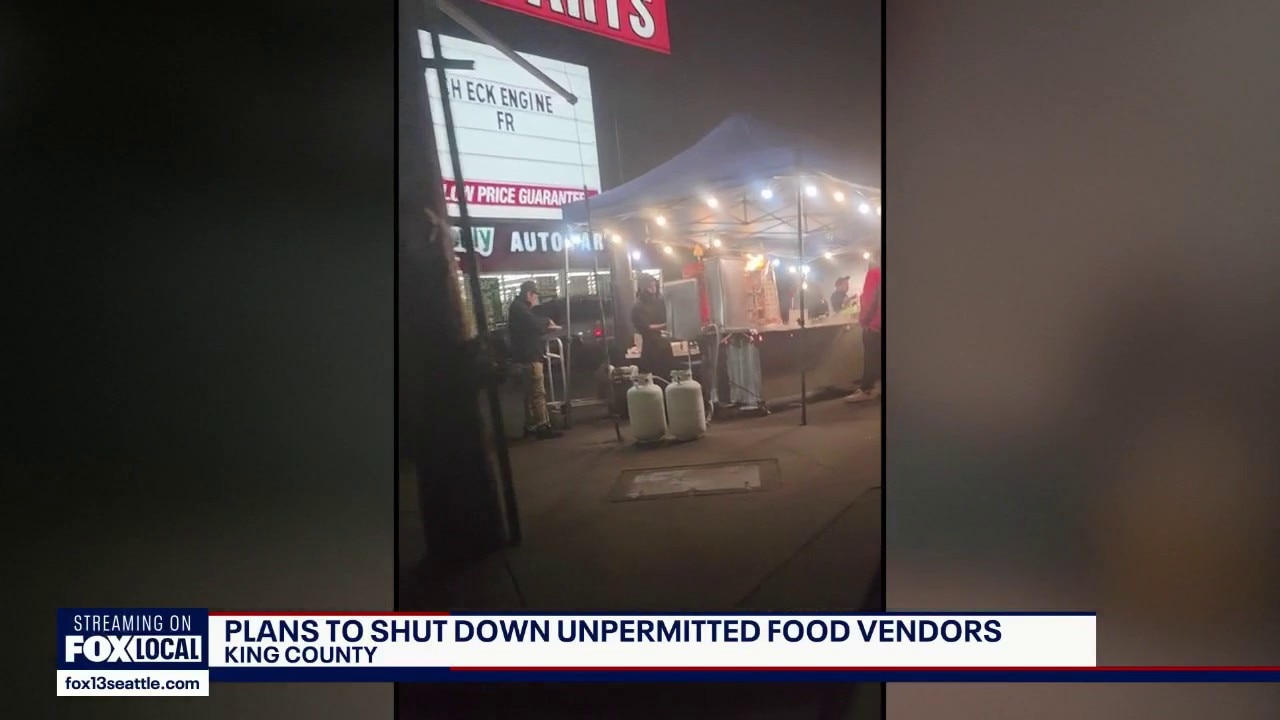
King County cracks down on illegal food vendors over safety concerns
Unpermitted food stands across King County are raising concerns about food safety and fairness for licensed businesses. Health officials say vendors often lack proper sanitation and permits, prompting new enforcement efforts.
SEATTLE - Unpermitted food stands are accused of putting your health in jeopardy. Now, King County officials are laying down the rules.
Just this week, inspectors with Public Health Seattle and King County shut down an illegal vendor in Federal Way at the corner of South 324th Street and Pacific Highway South. They had no permit, no refrigeration, hot water or handwashing facilities.
It's a region wide problem that has been growing fast for the last three years. Not only could you get food poisoning, it creates unfair competition for the businesses that do follow the rules.
What they're saying:
Owner of Seattle's Best BBQ, LT, has been documenting unpermitted food stands around King County on cell phone video.
"Look, there are no handwashing stations here," LT said. "You can very much get sick and who do you trace the food back to?"
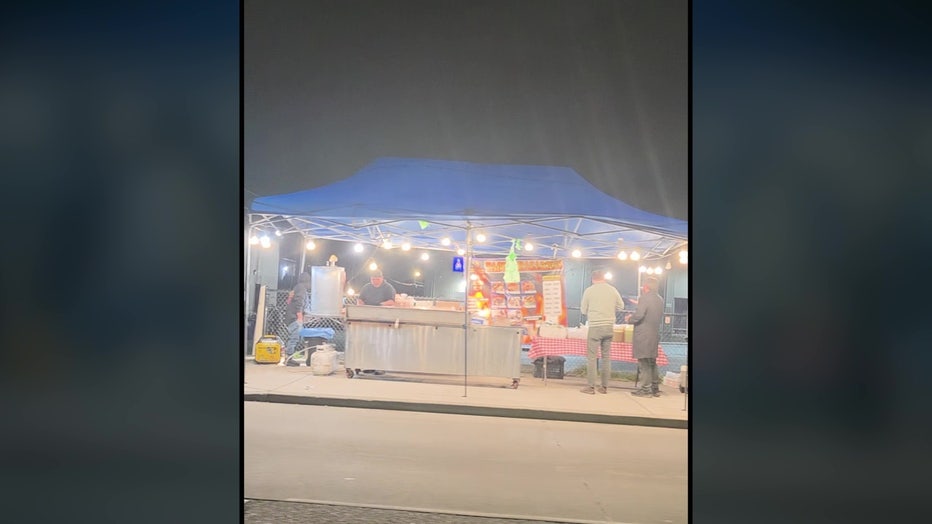
An unpermitted food vendor in King County.
The vendors show up at night, many times near the stadiums in Seattle, violating city codes by setting up on sidewalks, blocking walkways, the food unrefrigerated. No licensing permit is visible, and there's no inspection.
"At any temporary event, they want you to have a handwashing sink. Well, these can hold hot water for up to four hours. They don't even, they won't even do that," LT said.
With hundreds of thousands of visitors expected for the World Cup this summer, LT has a warning.
"They better crack down right now, because it's going to be bad," LT said.
The backstory:
Closing them can be like a game of whack-a-mole after inspectors tell them they have to leave.
"Oftentimes they pack up, they either relocate somewhere else and reopen, or as soon as we leave, they come back to the same spot and reopen," said Dr. Eyob Mazengia.
Dr. Eyob Mazengia, who leads the food safety program for Public Health - Seattle and King County, recently told the board of health that inspectors try to lead with an education-first approach, providing info on how to get a permit. But the vendors are unresponsive.
"For the most part, they don't even engage with Public Health. They either walk away, there's definitely a language barrier, or they would say, ‘You could call my boss,’" Dr. Mazengia said.
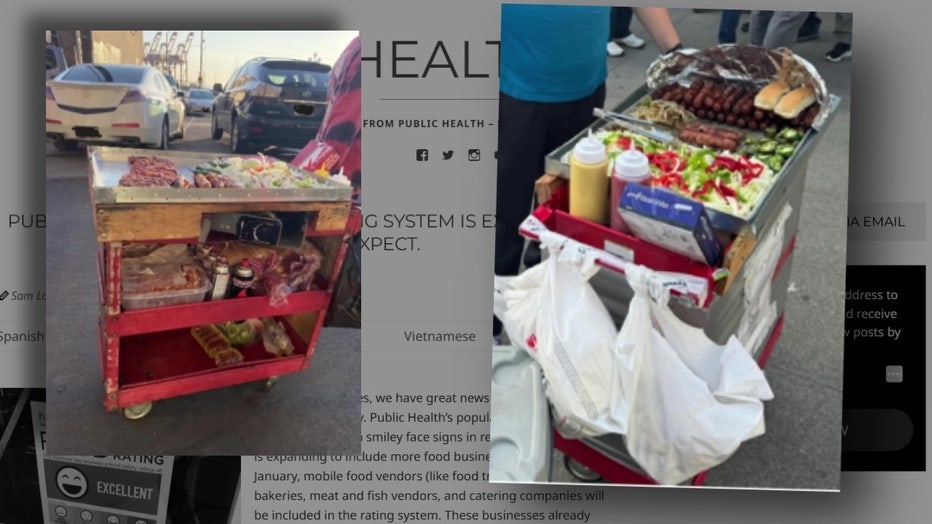
Unpermitted food stands seen outside Seattle stadiums.
Taking Action
Those bosses live out of state, so he says they are working on launching a progressive compliance plan, education about the permitting.
On the first visit, they'll educate vendors. On the second, inspectors will order them to dispose of their food, confiscating it if they don't. And on the third, it could mean criminal charges.
"We will actually initiate a misdemeanor citation to the owners of the operation, not the workers," Dr. Mazengia said.
Dig deeper:
The influx of pop-up stands is creating extra work for inspectors like Kayleigh Bartlett, who now has to respond to complaints about them in addition to the permitted restaurants.
"We want to make sure that people are able to wash their hands, people have the equipment they need to keep food at a safe temperature," Bartlett said.
Any business serving food that is permitted and inspected in King County will display a placard that shows what their food safety rating is.
Some say they're more concerned with the safety of unpermitted food vendors than losing business to them.
"It's not just how you keep your food hot or whether you wash your hands or not. It goes all the way to where you source your, who's your source of ingredients, how you keep your ingredients safe, you know, in your kitchen. Is it a proper kitchen? Is it a home kitchen?" said Monica Rodriguez, co-owner and chef at Tijuana Tacos Food Truck.
That's a concern for the health department too. When they can track down where the food is being prepared, they serve a cease and desist letter to shut them down.
"It needs to stop. The health department needs to correlate with the police department. The police department needs to correlate with the business license. If you don't have a business license, you should not be operating business," said LT.
The other side:
Meanwhile, Everett is taking a firmer stance. In February, the Everett City Council unanimously passed a law that makes it illegal to operate a food stand without a permit.
It allows police to confiscate their equipment and carries a fine of up to $1000 and up to 90 days in jail for workers. Police say the illegal food stands are not an issue in Everett anymore.
King County has added multiple food vendor closures to its website since this story was published, including locations in Seattle and Sammamish.
MORE NEWS FROM FOX 13 SEATTLE
WA Gov. Ferguson says state will prevail against ‘millionaires tax’ lawsuit
Waymo, Waze team up to help fix Seattle's potholes
Man 'lucky' to survive Seattle shooting after bullet grazes his head
Kraken CEO Leiweke: "We are not happy. We are going to get better."
Amazon Flex driver in WA arrested after pile of stolen packages found
To get the best local news, weather and sports in Seattle for free, sign up for the daily FOX Seattle Newsletter.
Download the free FOX LOCAL app for mobile in the Apple App Store or Google Play Store for live Seattle news, top stories, weather updates and more local and national news.
The Source: Information in this story came from Public Health - Seattle and King County and original FOX 13 Seattle reporting and interviews.