

Seattle homelessness plan: Mayor Wilson expands pilot program citywide
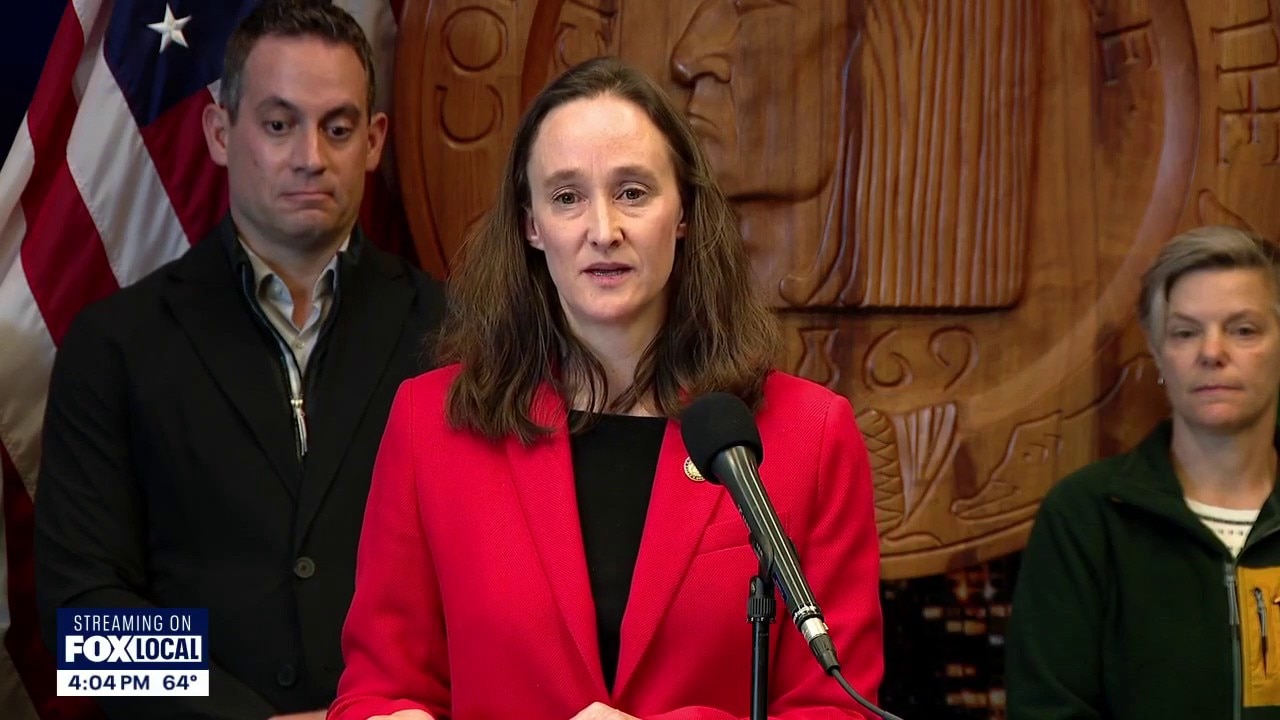
Seattle mayor unveils new strategy on homelessness crisis
Seattle Mayor Katie Wilson announced a new strategy to address the city's homelessness crisis, aiming to expand outreach while still continuing with encampment removals.
SEATTLE - Mayor Katie Wilson wants to take a homelessness strategy tested in Pioneer Square citywide, coordinating outreach and shelter placements for people living outside while Seattle continues removing encampments.
The approach builds on a pilot that city and community partners say helped 70 of 80 people move into shelter or housing during the World Cup period. Wilson says the city can expand the effort using existing resources, including money in her proposed budget for more shelter.
But the mayor has not set a numerical target for how much she expects the strategy to reduce unsheltered homelessness. Seattle's next point-in-time count is scheduled for early 2028.
The plan comes as the city faces continued frustration over homelessness and pressure to show that new approaches can produce lasting results.
Seattle's pilot helped 70 people move indoors
Big picture view:
Downtown Seattle Association President and CEO Jon Scholes said the pilot showed the value of coordinating organizations around the same people and goals.
"Not only were 70 out of 80 people placed into shelter or housing, but these were not easy cases," Wilson said during her press conference. "47% of those individuals had been homeless for more than three years. 77% suffered from addiction or mental illness, and 16% were seniors."
Scholes said the people who received offers of shelter and housing were willing to come inside.
"We didn't find a lot of people that wanted to continue to sleep outside in Pioneer Square," Scholes said. "The folks that were offered services that were offered the right shelter and housing came inside. 70 out of 80 of the folks that we engaged with, the service providers that we brought together to provide outreach and services, those folks came inside."
The city now wants to expand that coordinated approach beyond Pioneer Square, focusing on people with significant needs and a high impact on public spaces.
Wilson said the strategy is intended to keep sidewalks and parks accessible without simply displacing people from one location to another.
"The bottom line is this: our public parks and public sidewalks belong to the public; they should be kept open and usable for their intended purposes," Wilson said. "Scaling up this approach is how we can meet this reasonable expectation without merely pushing human beings around our city from one block to the next."
Outreach will continue alongside encampment removals
Local perspective:
The city plans to use shared lists of people living outside to track placements and whether people remain in shelter or housing.
The city's Unified Care Team will also continue removing encampments.
Wilson said the team has continued removals at roughly the same rate as before she took office.
What they're saying:
"As we're opening up new sites, the unified care team is going to be able to make more meaningful offers of shelter and services to people in encampments all across the city," Wilson said. "So I would expect and hope that means that we will have higher rates of navigating people into that shelter as opposed to them moving to the next block."
Scholes said Seattle's homelessness response has suffered from a lack of coordination, even when individual organizations were doing good work.
"I agree with the mayor. We've had a fragmented system of lots of different players doing, in many cases, very good work, but not coordinated around a common strategy," Scholes said. "We haven't oriented the resources we have to those that are having the highest impact in our parks, in our public spaces, in our neighborhoods, in our downtown, and those that have the highest needs."
Wilson points to Denver and Houston
The other side:
Wilson cited Denver as an example of a city making progress through a coordinated homelessness initiative. She pointed to a New York Times analysis published the previous week that reported Denver's unsheltered population had declined 64% over three years.
Wilson acknowledged Seattle faces a different starting point.
"Denver was starting from a much lower level of unsheltered homelessness, so we have a higher bill to climb, and I just want to acknowledge that," Wilson said. "I think there are different ways to measure success."
Houston's Super Hub is another model receiving attention for combining shelter with services intended to help people move toward permanent housing and employment.
Scholes said Seattle needs to expand shelter and housing options rather than debate which model should receive priority.
"We need to build a lot more shelter. We need to build a lot more housing. We need to move faster and bringing that online. All types," Scholes said. "For far too long, we've argued in this city: should we have tiny homes? Should we have enhanced shelter? Do we need more permanent supportive housing? Do we need more of this or that? We need all of it, and let's stop the argument about the different flavor. We need all of it, and those cities aren't arguing about it. They're building it and delivering it, and we need to do that here in Seattle."
Nearly 1,000 shelter units planned by end of 2027
By the numbers:
It's important to note the mayor's shift as she campaigned on creating 4,000 shelter units, 1,000 units per year for her four-year term. In mid-September, she scaled back, saying 960 units would be available by end of 2027. That projection depends on City Council approval of funding in her proposed budget.
The mayor said the new strategy will initially use existing resources, including some of the shelter capacity funded through her proposed $37 million shelter expansion initiative.
"So right now, this plan will be conducted using existing resources," Wilson said.
Denver spent at least $180 million in their efforts to create housing and provide services. When asked what funding she was willing to cut to expand her strategy, Wilson said: "We believe that we can make some really significant progress within the resources that we have, and if we have to have a conversation about additional resources to scale up even further, then that can happen at a later date. But I believe we can make a lot of progress with what we have."
Wilson has not set a numerical goal for reducing homelessness
What's next:
Wilson said she hopes the next point-in-time count will show a significant reduction in unsheltered homelessness. But she did not identify a specific number or percentage the city aims to reach.
The next count is expected in early 2028. In the meantime, Wilson said residents' experience of their neighborhoods is another way to judge progress.
"Obviously, I'm hoping to see a significant reduction in unsheltered homelessness in that count," Wilson said. "But I think, in some ways, a more meaningful measure is just, what does it feel like in your neighborhood? What does it feel like walking down the street?"
She said the coordinated lists will also give the city a way to track how many people move from the street into shelter or housing and how many are able to remain there.
MORE NEWS FROM FOX 13 SEATTLE
Police: Man breaks into West Seattle home, eats food, arrested in bed
Woman jumps out of car of fake rideshare driver after pickup in Seattle's Pioneer Square
Last call: Seattle tiki bar Navy Strength closing after 10 years in Belltown
SDOT provides clarity after 'surge pricing' video sparks concern
2 men charged with murder in Des Moines, WA deadly shooting
To get the best local news, weather and sports in Seattle for free, sign up for the daily FOX Seattle Newsletter.
Download the free FOX LOCAL app for mobile in the Apple App Store or Google Play Store for live Seattle news, top stories, weather updates and more local and national news.
The Source: Information in this story comes from original reporting by FOx 13 Seattle reporter Alejandra Guzman.