

WA's local produce saves shoppers from national Cyclospora scare

Where Washington stands as the cyclosporiasis outbreak surges
The CDC is currently tracking a cluster of cyclosporiasis cases across the country, centered around the Midwest while other states are being linked to the outbreak. Washington, however, has mostly gone unaffected.
SEATTLE - A massive surge in Cyclospora cases throughout the U.S. is drawing intense national scrutiny. The foodborne parasite, which causes severe gastrointestinal illness, including watery diarrhea, has heavily impacted several eastern and midwestern states.
"This is really unusual for the United States," said Sara Larson while shopping at her local PCC Community Market in Seattle.
Currently, the epicenter of the outbreak is centered in Michigan, Ohio, West Virginia, and Kentucky, where local health departments are scrambling to manage thousands of reported cases. While a definitive source has not yet been pinpointed, health officials suspect that prepackaged salad greens or head lettuce may be the primary culprit.
The local landscape: Safe but vigilant
The Washington State Department of Health (DOH) confirmed that none of the cases reported locally are linked to this multi-state outbreak.
According to the DOH, 27 cases of Cyclospora have been reported within the state. However, epidemiologists clarified that these are isolated cases, with the vast majority stemming from people who recently traveled internationally to areas where the parasite is common.
Still, with the source of the national outbreak remaining a mystery, the news has sparked plenty of conversation, and some anxiety, among local shoppers.
At Pike Place Market in Seattle, local vendors are working hard to put those fears to rest. Chaz Shamseldin, a manager of Frank’s Quality Produce, noted that while concerned customers have been asking questions, their supply chain keeps them protected.
"I have no produce that’s going to get anybody sick here," Shamseldin said. "I get people that are concerned, maybe they have some immune problems that could be exacerbated by their condition... what people are eating is critically important to their health."
Frank's Quality Produce bypasses the affected regions entirely. Shamseldin said roughly 75 percent of their inventory is grown in Washington state, with the remainder sourced strictly from Oregon, California, and Mexico.
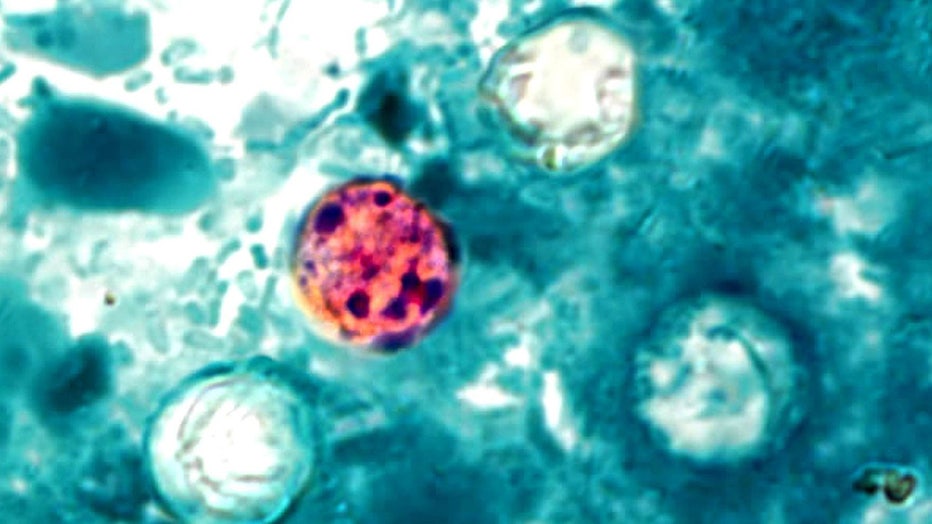
Cyclospora cayetanensis oocysts seen under a microscope. (U.S. Centers for Disease Control and Prevention)
Why Washington is insulated
Washington’s vibrant agricultural sector serves as a natural shield during national food safety scares. Because local markets rely so heavily on regional farms, the produce on Seattle shelves is rarely caught up in massive Midwestern or eastern distribution disruptions.
"Our produce here in Washington is just spectacular," Shamseldin added. "Like, the corn right now is unbelievable. 10 out of 10. There isn't much impetus for us to bring in anything that's not from here because everything here is so good."
For small businesses Mendoza’s Mexican Mercado, sourcing locally for the last 15 years has always been about safety and quality.
"I think it’s more important for the same reason—to keep it local, to keep it fresher, to get here faster, and we’ve got more guarantees," said Carlos Mendoza, general manager of the market. "Always get local. Local, organic is the best."
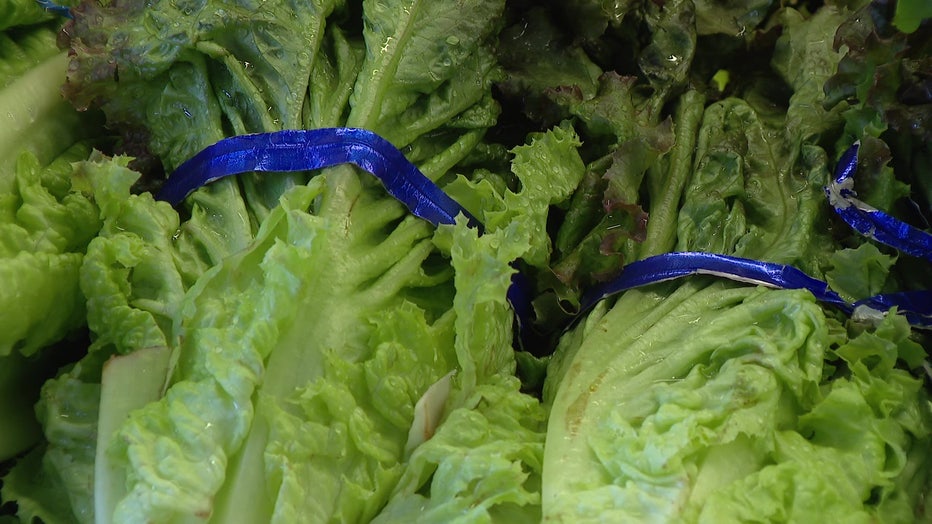
Lettuce on display at a grocery store.
Understanding the parasite: Is washing enough?
Despite the local safety net, the nature of Cyclospora makes it a tricky opponent. According to the Centers for Disease Control and Prevention (CDC), the microscopic parasite sticks tightly to the rough surfaces of fresh produce, especially leafy greens and berries. Health officials warn that standard washing and sanitizing may not be 100% effective at removing the parasite once it has bonded to the food.
That fact has shoppers taking extra precautions.
"I usually wash [produce] with hot water. And I know there are pesticides that are still on there, but I think there are other means coming out of how to wash vegetables and fruits more safely," said Larson, who strictly buys organic produce.
Staying safe: What to look for
- Wash thoroughly: While not a perfect guarantee against Cyclospora, scrubbing firm produce and washing all fruits and vegetables under cold, running water is still highly recommended to reduce overall bacteria and pesticide exposure.
- Know the symptoms: Cyclospiasis symptoms include watery diarrhea, loss of appetite, weight loss, stomach cramps, bloating, increased gas, nausea, and fatigue.
- Seek treatment: If left untreated, the infection can linger for weeks or even months, cycling in waves of sickness. If you suspect you have been exposed, a healthcare provider can easily diagnose the parasite with a stool test and treat it with a specific course of antibiotics.
DOH has additional food safety tips on its website, including when to buy, prepare, serve, and store food.
MORE NEWS FROM FOX 13 SEATTLE
6-year-old Bellingham, WA boy dies from injuries after beach driftwood accident
Grandmother thwarts Pike Place kidnapping, Seattle police make arrest
'Transfer Fire' near Lake Chelan, WA hospital prompts evacuation notices
Here's where WA wildfires are currently burning
Seattle office vacancy crisis shifts tax burden onto homeowners
Thurston County, WA couple desperate to find dog after Rover sitter vanishes
Husband of pregnant wife killed in Seattle sues King County homeless authority
To get the best local news, weather and sports in Seattle for free, sign up for the daily FOX Seattle Newsletter.
Download the free FOX LOCAL app for mobile in the Apple App Store or Google Play Store for live Seattle news, top stories, weather updates and more local and national news.
The Source: Information in this story comes from original reporting by FOX 13 Seattle reporter Franque Thompson.