

Seattle Mayor considers crackdown on rental ‘hidden junk fees’

Seattle proposal targets hidden renter junk fees
Seattle mayor Katie Wilson proposed new legislation to regulate hidden renter junk fees, requiring landlords to disclose all costs upfront.
SEATTLE - For many Seattle residents, the hunt for an affordable apartment comes with a frustrating twist: the price listed on the lease isn't always the actual amount due at the end of the month.
Taking aim at what city leaders call "hidden junk fees," Seattle Mayor Katie Wilson announced a new legislative proposal designed to drive down the cost of living and bring much-needed transparency to the local housing market.
The hidden cost of renting in Seattle
The push for regulation follows a citywide survey conducted earlier in 2026, which gathered responses from over 8,800 local renters. The data paints a stark picture of the current rental market: 58% of respondents reported paying extra fees on top of their base rent.
"All sorts of extras, seems ridiculous," said one renter in Seattle’s Belltown neighborhood. "I’m seeing unbridled application fees adding up really quickly."
Mayor Wilson said her experience with the unexpected add-ons was personal, as she herself has rented in Seattle. In conversations with residents since taking office, the mayor said renters have expressed growing exhaustion over the mounting costs.
"This is a pattern that we’re seeing, not just in rental housing, but across our economy where irresponsible actors are nickel and diming ordinary people. Finding sneaky ways to add on a fee here, a fee there," Mayor Wilson said at City Hall. "This legislation is about fixing that problem and creating predictability and transparency for renters across Seattle."
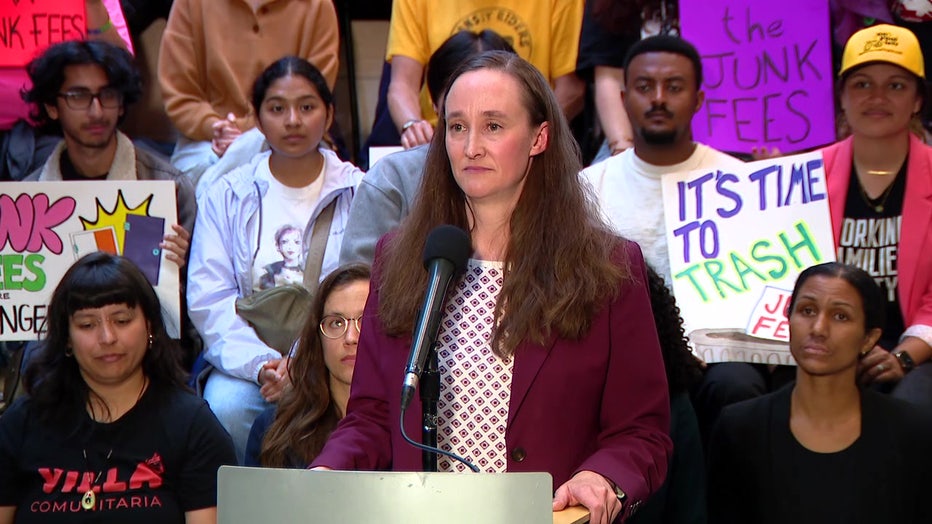
Katie Wilson gives a speech on "hidden junk fees" for renters.
What the proposed legislation changes
The proposed bill outlines strict new rules for how housing providers advertise and charge for units.
Upfront transparency
Landlords would be legally required to disclose all potential fees upfront, both in initial rental listings and during the formal lease signing.
Approved vs. banned fees
Under the new framework, the city would limit what landlords can actually charge extra for:
- Allowed Fees: Standard costs such as utilities and late payment charges.
- Banned Fees: Mail/package room fees or extra charges for standard appliances.
Strict penalties for violations
The city is prepared to back the rules with penalties. Seattle City Attorney Erika Evans clarified that the goal isn't to punish landlords who do things the right way, but rather to hold bad actors accountable.
"And you’re going to have to pay," Evans warned violators. "You’re going to have to pay the City of Seattle, you’re going to have to pay the renters that you took money from, you’re going to have to pay up to three times the amount of the unlawful fees that you collected."

Apartment buildings in Seattle.
Small landlords push back
While the proposal is a welcome money-saver for tenants, some local housing providers argue the city is overreaching and making it too difficult to stay afloat.
Gordon Haggerty, a small landlord with a property in the Eastlake neighborhood, agrees that upfront transparency is fair, but fears the sweeping bans will ultimately harm the housing supply.
"People are moving their rental properties, transferring out of the city and some even out of the state because it’s just not worthwhile taking on those risks," Haggerty said.
According to the city's survey data, pet fees rank at the very top of the most common extra charges renters face. Haggerty, who is a pet owner himself, warns that banning these specific fees could backfire on animal lovers, as landlords look for ways to protect themselves against property wear and tear.
"What I fear is going to happen on this, is that a lot more units are going to become no pets at all because of the lack of ability to recoup those expenses," Haggerty noted. "I think there’s going to be a lot of pet owners that are going to be very unhappy about their limited supply of housing coming up if we’re not able to negotiate a fair and agreeable, mutually agreeable arrangement for this."
What’s next?
The legislation faces a journey through the legislative process before becoming law. It must first be debated and approved by the Seattle City Council. City Attorney Evans noted that the bill will likely undergo several amendments before a final vote.
If approved, city leaders expect the new regulations to officially take effect in July 2027.
MORE NEWS FROM FOX 13 SEATTLE
World Cup ends, Seattle traffic begins: 'Revive I-5' work resumes this week
Evacuations downgraded for wildfire near Lake Chelan
U.S. run at World Cup ends with 4-1 loss to Belgium
Here's where Washington wildfires are currently burning
Seattle-area Lululemon shoplifting suspects charged with organized retail theft
To get the best local news, weather and sports in Seattle for free, sign up for the daily FOX Seattle Newsletter.
Download the free FOX LOCAL app for mobile in the Apple App Store or Google Play Store for live Seattle news, top stories, weather updates and more local and national news.
The Source: Information in this story comes from original reporting by FOX 13 Seattle reporter Franque Thompson.