

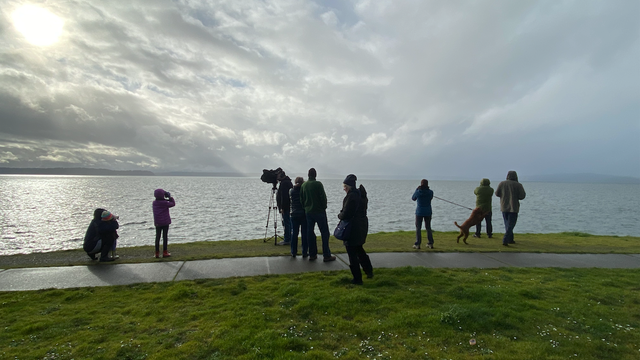

Southern resident orcas swim by West Seattle, giving residents a show
SEATTLE -- It was a sight to see in the Puget Sound today and dozens of people rushed to the shores of West Seattle hoping for a peek.
SEATTLE -- It was a sight to see in the Puget Sound today and dozens of people rushed to the shores of West Seattle hoping for a peek.
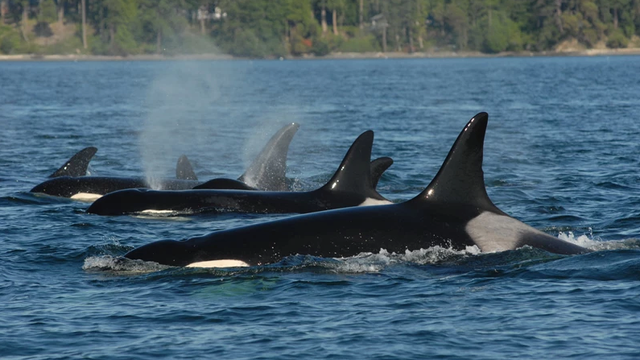

Grandmother orcas are critical to the survival of their grandkids
SEATTLE -- They say it takes a village to raise a child, and parents know how helpful an involved grandmother can be.
SEATTLE -- They say it takes a village to raise a child, and parents know how helpful an involved grandmother can be.
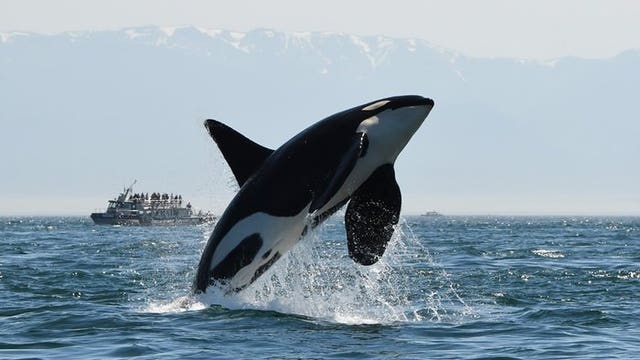

Car tab initiative could cut into orca recovery
SEATTLE -- The most visible statewide effort to save the southern resident orcas from extinction has officially sunset while a dark cloud looms.
SEATTLE -- The most visible statewide effort to save the southern resident orcas from extinction has officially sunset while a dark cloud looms.
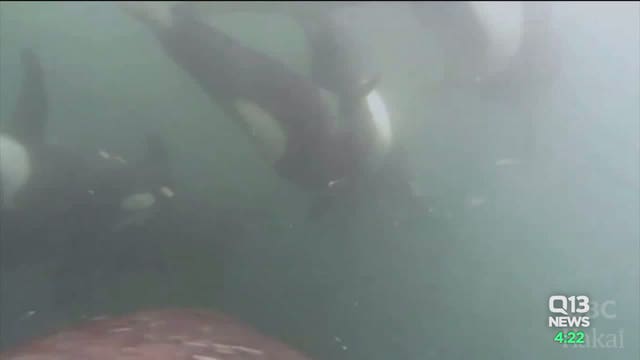

Drone footage offers scientists new perspective in understanding killer whale behavior
SEATTLE - Drone technology is now offering scientists a new perspective on killer whale behavior and help endangered southern residents.Scientists at the University of British Columbia are using aerial drones to get a rare glimpse at the whale's eating habits while underwater.The footage will help them determine if endangered southern residents are getting enough Chinook salmon to meet nutritional needs.Researchers say comparing northern residents to southern residents is an important step to understanding foraging habits.“We’re studying northern residents, that unlike southern, appear to be healthy, generally better body condition, a larger population size,” researcher Sarah Fortune explained. “And we're looking at their feeding behavior and the prey that they have available in habitats, and we're comparing that to the smaller population of southern residents that show poor body condition.”This is the first time researchers are using drones to record behavior and prey fields at the same time.
SEATTLE - Drone technology is now offering scientists a new perspective on killer whale behavior and help endangered southern residents.Scientists at the University of British Columbia are using aerial drones to get a rare glimpse at the whale's eating habits while underwater.The footage will help them determine if endangered southern residents are getting enough Chinook salmon to meet nutritional needs.Researchers say comparing northern residents to southern residents is an important step to understanding foraging habits.“We’re studying northern residents, that unlike southern, appear to be healthy, generally better body condition, a larger population size,” researcher Sarah Fortune explained. “And we're looking at their feeding behavior and the prey that they have available in habitats, and we're comparing that to the smaller population of southern residents that show poor body condition.”This is the first time researchers are using drones to record behavior and prey fields at the same time.
Task force's final word on saving the southern resident orcas
To view the draft report, click here.
To view the draft report, click here.

Ferries slowing down to save endangered orcas
PUGET SOUND, Wash. -- Some ferry trips across the Puget Sound could take a little longer than usual but it's for a good cause: They're slowing down and steering clear of whales in the water.Responsible for the most sailings by a single industry in the Puget Sound, there's no denying the noise impact Washington State ferries have on the endangered southern resident orcas.
PUGET SOUND, Wash. -- Some ferry trips across the Puget Sound could take a little longer than usual but it's for a good cause: They're slowing down and steering clear of whales in the water.Responsible for the most sailings by a single industry in the Puget Sound, there's no denying the noise impact Washington State ferries have on the endangered southern resident orcas.

Tracking whales from the ferry? There's an app for that
SEATTLE -- New technology could help ships and ferries navigate around whales in Washington, reducing the chances of a deadly ship strike.This week, Washington State Ferries will be the first to use the WhaleReport Alert System throughout Puget Sound, which will alert captains to credible whale sightings in the area.Vessels are one of the main threats to the critically endangered southern resident orcas, both in terms of disturbance and the potential for a catastrophic ship strike.In 2016, an 18-year-old orca male known as DoubeStuf, or J34, died from blunt force trauma injuries due to a ship strike, according to the necropsy.This summer, a ferry hit and likely killed a young humpback whale in Elliott Bay.
SEATTLE -- New technology could help ships and ferries navigate around whales in Washington, reducing the chances of a deadly ship strike.This week, Washington State Ferries will be the first to use the WhaleReport Alert System throughout Puget Sound, which will alert captains to credible whale sightings in the area.Vessels are one of the main threats to the critically endangered southern resident orcas, both in terms of disturbance and the potential for a catastrophic ship strike.In 2016, an 18-year-old orca male known as DoubeStuf, or J34, died from blunt force trauma injuries due to a ship strike, according to the necropsy.This summer, a ferry hit and likely killed a young humpback whale in Elliott Bay.

Feds propose major habitat protections for endangered southern resident orcas
U.S. protections for the waters that a group of endangered orcas call home could soon expand beyond the Seattle area to encompass much of the West Coast.
U.S. protections for the waters that a group of endangered orcas call home could soon expand beyond the Seattle area to encompass much of the West Coast.
Orca task force to write blueprint to save dying species
PORT ANGELES, Wash. -- The endangered southern resident orcas are still in critical condition despite statewide efforts to save them.
PORT ANGELES, Wash. -- The endangered southern resident orcas are still in critical condition despite statewide efforts to save them.

New lawsuit seeks protection zone for southern resident orcas
SEATTLE -- A new U.S. lawsuit filed Monday seeks to establish a whale protection zone for endangered orcas in the Pacific Northwest.The Center for Biological Diversity and the Orca Relief Citizens' Alliance sued NOAA Fisheries in U.S. District Court in Seattle, saying the agency has failed to act on a petition it filed in 2016.The petition sought to bar vessels from a 10- to 12-square-mile (26- to 31-square-kilometer) area west of San Juan Island where the orcas, called southern resident killer whales, feed from April through September each year.
SEATTLE -- A new U.S. lawsuit filed Monday seeks to establish a whale protection zone for endangered orcas in the Pacific Northwest.The Center for Biological Diversity and the Orca Relief Citizens' Alliance sued NOAA Fisheries in U.S. District Court in Seattle, saying the agency has failed to act on a petition it filed in 2016.The petition sought to bar vessels from a 10- to 12-square-mile (26- to 31-square-kilometer) area west of San Juan Island where the orcas, called southern resident killer whales, feed from April through September each year.
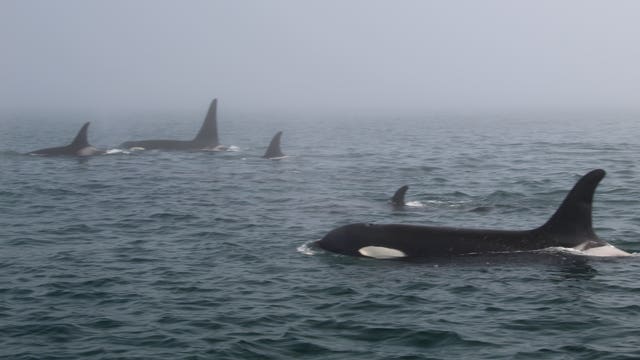

Endangered resident orcas return to inland waters after long absence
SAN JUAN ISLAND, Wash. -- A sight for sore eyes, the southern resident orcas appeared through the fog Thursday morning on the west side of San Juan Island.It's been 40 days since the endangered orcas were last seen in inland waters.
SAN JUAN ISLAND, Wash. -- A sight for sore eyes, the southern resident orcas appeared through the fog Thursday morning on the west side of San Juan Island.It's been 40 days since the endangered orcas were last seen in inland waters.
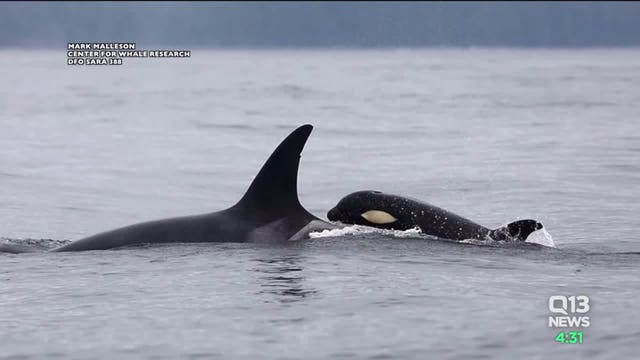

Both orca babies alive, all 3 southern resident pods spotted
SEATTLE (AP) — Researchers have documented that both babies in the southern resident killer whale pods are still alive.The Seattle Times reports researchers with the Center for Whale Research, which tracks the southern resident population, photographed both babies Sunday, alive and seemingly well.That was welcome news in a population of endangered orcas that dropped to just 73 this month, with three adults missing and presumed dead.
SEATTLE (AP) — Researchers have documented that both babies in the southern resident killer whale pods are still alive.The Seattle Times reports researchers with the Center for Whale Research, which tracks the southern resident population, photographed both babies Sunday, alive and seemingly well.That was welcome news in a population of endangered orcas that dropped to just 73 this month, with three adults missing and presumed dead.
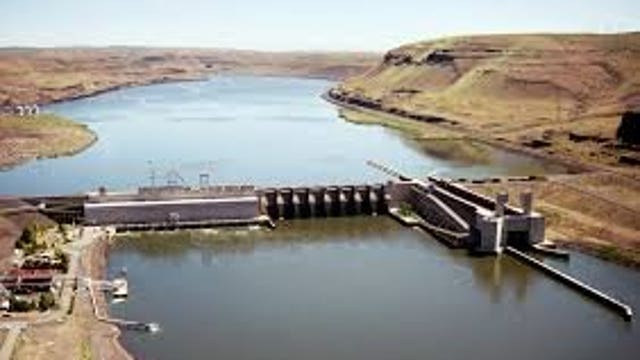

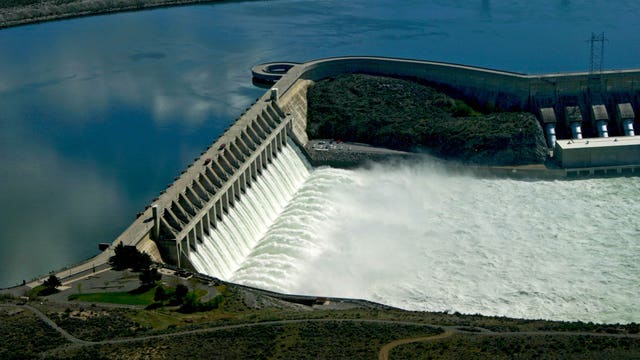
Snake River dam spills up to 300 gallons of oil into river
LOWER MONUMENTAL DAM, Wash. -- Up to 300 gallons of oil may have spilled into the Snake River from a leaking, power-generating turbine at Lower Monumental Dam.On Friday, the U.S. Army Corps of Engineers told Q13 News that, "any oil spilled into the river is too much."Lower Monumental Dam is about 40 miles northeast of Tri Cities.
LOWER MONUMENTAL DAM, Wash. -- Up to 300 gallons of oil may have spilled into the Snake River from a leaking, power-generating turbine at Lower Monumental Dam.On Friday, the U.S. Army Corps of Engineers told Q13 News that, "any oil spilled into the river is too much."Lower Monumental Dam is about 40 miles northeast of Tri Cities.
3 southern resident orcas presumed dead, Center for Whale Research says
SEATTLE -- Three more of the critically endangered southern resident orcas have been declared dead by the Center for Whale Research.The center said Tuesday that an orca from each pod is being declared dead after long absences from Washington waters.The three whales are J17, K25 and L84.
SEATTLE -- Three more of the critically endangered southern resident orcas have been declared dead by the Center for Whale Research.The center said Tuesday that an orca from each pod is being declared dead after long absences from Washington waters.The three whales are J17, K25 and L84.
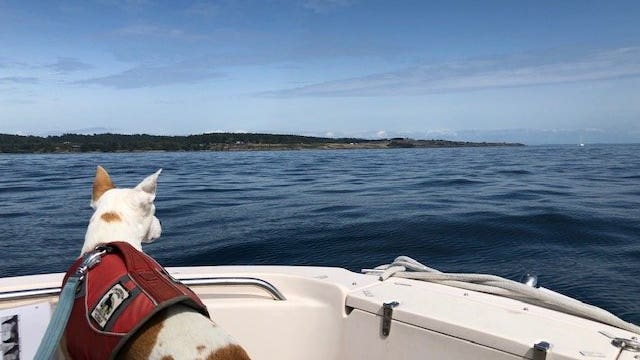

Poop-detecting dog helps sniff out key problems for endangered orcas
SAN JUAN ISLANDS, Wash. -- The absence of southern resident orcas in inland waters this year is stalling the science researchers say help shape policy, but it also shows what they already know: There's not enough food -- and their poop proves it.Eba, a rescue dog owned by researcher Deborah Giles, has a nose for orca scat.
SAN JUAN ISLANDS, Wash. -- The absence of southern resident orcas in inland waters this year is stalling the science researchers say help shape policy, but it also shows what they already know: There's not enough food -- and their poop proves it.Eba, a rescue dog owned by researcher Deborah Giles, has a nose for orca scat.

High-tech, portable fish passage may revolutionize salmon transport over dams, barriers
SEATTLE -- In British Columbia, a devastating rockslide is blocking critical salmon habitat on the Fraser River.
SEATTLE -- In British Columbia, a devastating rockslide is blocking critical salmon habitat on the Fraser River.

It's a girl! Why the newest orca calf's gender is so important
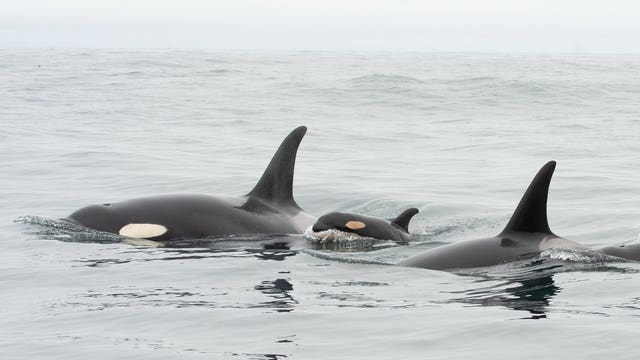
SAN JUAN ISLANDS, Wash. -- The newest southern resident orca calf is reportedly fat and healthy, but that's not the only news researchers are celebrating: She's also female.It's a great sign for the dwindling population that has seen far more male calves than females in recent years."If she makes it her teens she might start producing babies of her own," said Ken Balcomb of Center for Whale Research. "Unfortunately, none of them made it recently to their teens."Balcomb, looking at a photo of the new calf known as J56, indicated that the endangered population is obviously trying to repopulate.While the population has more than 70 whales, he said only about a third of them are of reproductive age.
SAN JUAN ISLANDS, Wash. -- The newest southern resident orca calf is reportedly fat and healthy, but that's not the only news researchers are celebrating: She's also female.It's a great sign for the dwindling population that has seen far more male calves than females in recent years."If she makes it her teens she might start producing babies of her own," said Ken Balcomb of Center for Whale Research. "Unfortunately, none of them made it recently to their teens."Balcomb, looking at a photo of the new calf known as J56, indicated that the endangered population is obviously trying to repopulate.While the population has more than 70 whales, he said only about a third of them are of reproductive age.
Southern resident orcas spotted in Salish Sea after 2-month absence
SEATTLE -- After an unprecedented absence, multiple sources confirmed to Q13 News that the endangered southern resident orcas are back in inland waters.
SEATTLE -- After an unprecedented absence, multiple sources confirmed to Q13 News that the endangered southern resident orcas are back in inland waters.

Southern resident killer whales missing from Salish Sea
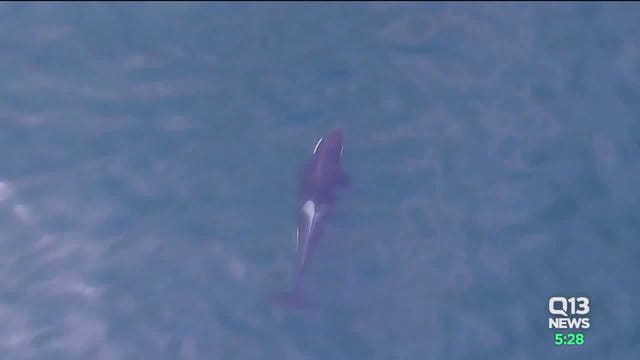
SEATTLE -- An endangered species of killer whale, a normally common sight around this time, is missing from the Salish Sea, according to the Orca Behavior Institute.Southern Resident Orcas typically inhabit the waters of the state of Washington and British Columbia during spring and summer, but experts say the orcas haven’t been seen for two months.
SEATTLE -- An endangered species of killer whale, a normally common sight around this time, is missing from the Salish Sea, according to the Orca Behavior Institute.Southern Resident Orcas typically inhabit the waters of the state of Washington and British Columbia during spring and summer, but experts say the orcas haven’t been seen for two months.

Lummi Nation launches new campaign to save dwindling orca population
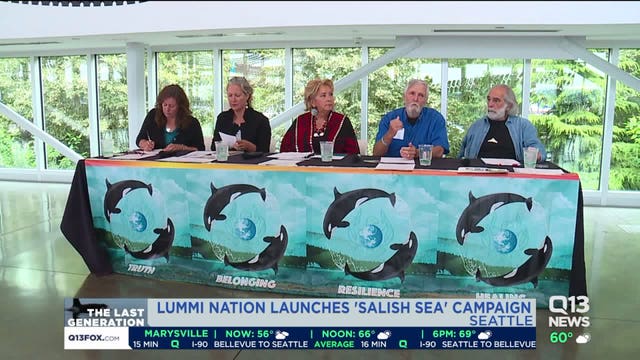
Members of the Lummi Tribe, along with activists and scientists, launched the Salish Sea Campaign this weekend to save the southern resident orcas and restore their home.
Members of the Lummi Tribe, along with activists and scientists, launched the Salish Sea Campaign this weekend to save the southern resident orcas and restore their home.