


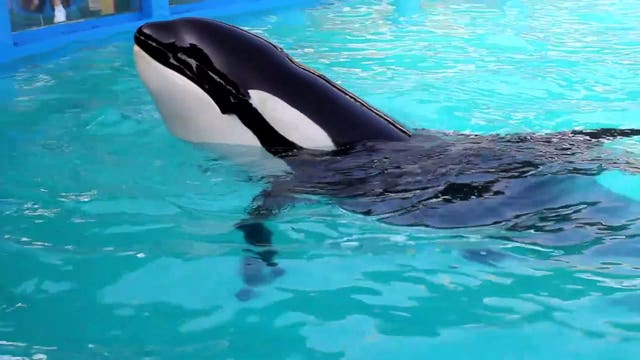

Miami Seaquarium says Lummi Nation's calls to release killer whale 'reckless and cruel'
MIAMI -- The Miami Seaquarium says it would be "reckless and cruel" to follow the Lummi Nation's calls to release Lolita, a killer whale that was captured in the Puget Sound 47 years ago.Aquarium officials say releasing Lolita would expose her to a "wide variety of health threats," and agreed with those who argued the move would be "catastrophic."The Lummi Nation has argued for the release of Lolita, since she was captured as a calf in the 1970s at Penn Cove near Coupeville.
MIAMI -- The Miami Seaquarium says it would be "reckless and cruel" to follow the Lummi Nation's calls to release Lolita, a killer whale that was captured in the Puget Sound 47 years ago.Aquarium officials say releasing Lolita would expose her to a "wide variety of health threats," and agreed with those who argued the move would be "catastrophic."The Lummi Nation has argued for the release of Lolita, since she was captured as a calf in the 1970s at Penn Cove near Coupeville.
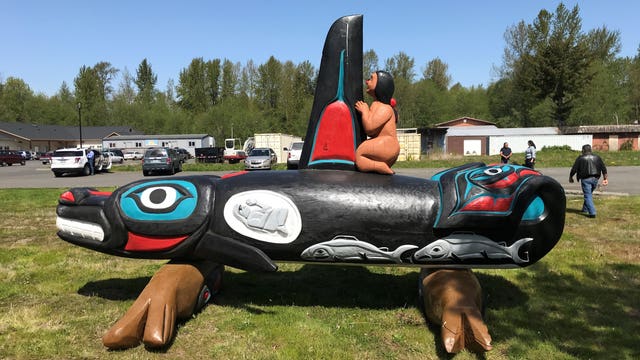

Battle lines drawn in new fight to free Puget Sound whale Tokitae/Lolita from Miami Seaquarium
WHATCOM COUNTY, Wash-- Some members of the Lummi Tribe near Bellingham are starting a quest this week that will take them thousands of miles to Miami.
WHATCOM COUNTY, Wash-- Some members of the Lummi Tribe near Bellingham are starting a quest this week that will take them thousands of miles to Miami.
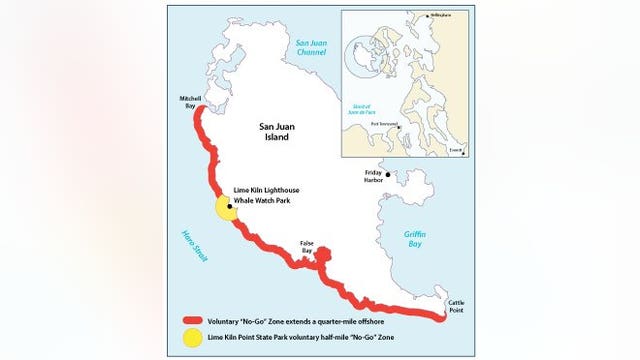

State places voluntary 'no-go' zone along western San Juan Island to protect orcas
OLYMPIA, Wash. -- State fish and wildlife managers are asking boaters to avoid an area along the west side of San Juan Island in an effort to protect a dwindling population of Southern Resident killer whales.Despite state and federal government protection, the population of Southern Resident killer whales has declined from 98 whales in 1995 to just 76 in December 2017.The state said major threats to the whales include a lack of chinook salmon, disturbance from vessel traffic and increased noise, and toxic contaminants."The Washington Department of Fish and Wildlife (WDFW) will be working with partner agencies and stakeholder groups to help educate people about the voluntary 'no-go' zone, which applies to all recreational boats – fishing or otherwise – as well as commercial vessels, the department said.The no-go zone is located on the west side of San Juan Island, including:
OLYMPIA, Wash. -- State fish and wildlife managers are asking boaters to avoid an area along the west side of San Juan Island in an effort to protect a dwindling population of Southern Resident killer whales.Despite state and federal government protection, the population of Southern Resident killer whales has declined from 98 whales in 1995 to just 76 in December 2017.The state said major threats to the whales include a lack of chinook salmon, disturbance from vessel traffic and increased noise, and toxic contaminants."The Washington Department of Fish and Wildlife (WDFW) will be working with partner agencies and stakeholder groups to help educate people about the voluntary 'no-go' zone, which applies to all recreational boats – fishing or otherwise – as well as commercial vessels, the department said.The no-go zone is located on the west side of San Juan Island, including:


Survive The Sound: Follow our fish's journey
Meet Sam Q Newsfish. He represents one of the thousands of real-life steelhead who migrated to Puget Sound in Spring 2017.
Meet Sam Q Newsfish. He represents one of the thousands of real-life steelhead who migrated to Puget Sound in Spring 2017.
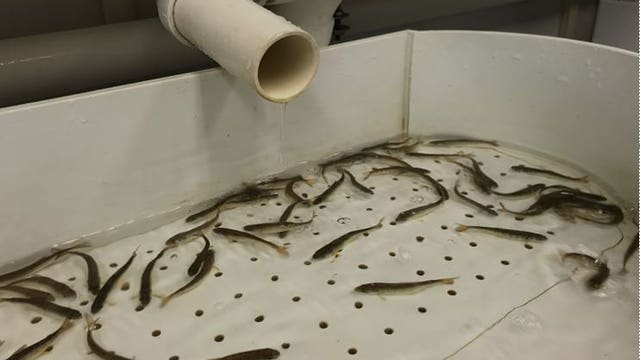

Raising millions of salmon to help feed our Southern Resident orcas
PIERCE COUNTY, Wash. -- A light rain is falling onto the Clear Creek Fish Hatchery, as a noisy trailer parked between two concrete holding ponds sends sounds into the forested landscape on JBLM land.The chinook salmon being raised here might hold the key to keeping our resident orcas in the Puget Sound for generations to come.
PIERCE COUNTY, Wash. -- A light rain is falling onto the Clear Creek Fish Hatchery, as a noisy trailer parked between two concrete holding ponds sends sounds into the forested landscape on JBLM land.The chinook salmon being raised here might hold the key to keeping our resident orcas in the Puget Sound for generations to come.
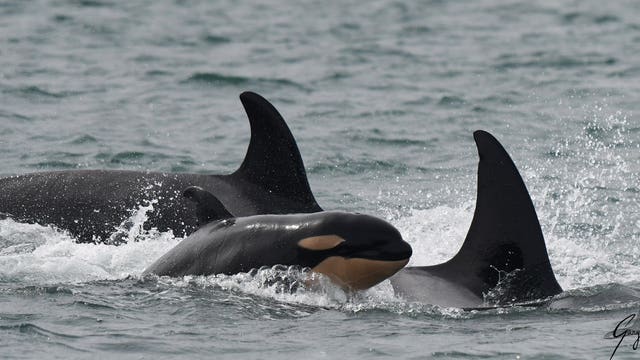

New baby killer whale in our waters: a closer look at why that's not good news for our local orcas
Whale watchers have spotted a new baby killer whale in the Salish Sea. It's some amazing new video of the estimated month-old marine mammal off the southeast coast of Vancouver Island.
Whale watchers have spotted a new baby killer whale in the Salish Sea. It's some amazing new video of the estimated month-old marine mammal off the southeast coast of Vancouver Island.


Survive The Sound: Game brings plight of Puget Sound steelhead to the classroom
Scientific data about steelhead migration in Puget Sound might not sound like an exciting topic to some students, but one non-profit is working to change that, using a unique game to bring awareness to the declining population of salmon and steelhead.
Scientific data about steelhead migration in Puget Sound might not sound like an exciting topic to some students, but one non-profit is working to change that, using a unique game to bring awareness to the declining population of salmon and steelhead.
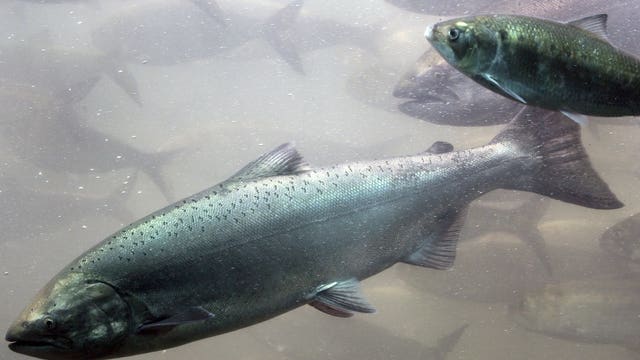

King salmon limits cut on coast, but some anglers see opportunities
SEATTLE -- On the surface, the news from the Washington Department of Fish and Wildlife is not good.Low returns of chinook and coho salmon are expected for the 2018 salmon fishing season.Warm waters, flooding rivers and habitat loss have cut the number of salmon returning to the state's waterways.
SEATTLE -- On the surface, the news from the Washington Department of Fish and Wildlife is not good.Low returns of chinook and coho salmon are expected for the 2018 salmon fishing season.Warm waters, flooding rivers and habitat loss have cut the number of salmon returning to the state's waterways.


Survive The Sound: How to join our team!
It’s tough in Puget Sound for steelhead. Just how tough? Join our team and play along with us as we watch our fish (Sam Q Newsfish) navigate predators, disease and pollution in his 12-day migratory race to survive Puget Sound.
It’s tough in Puget Sound for steelhead. Just how tough? Join our team and play along with us as we watch our fish (Sam Q Newsfish) navigate predators, disease and pollution in his 12-day migratory race to survive Puget Sound.
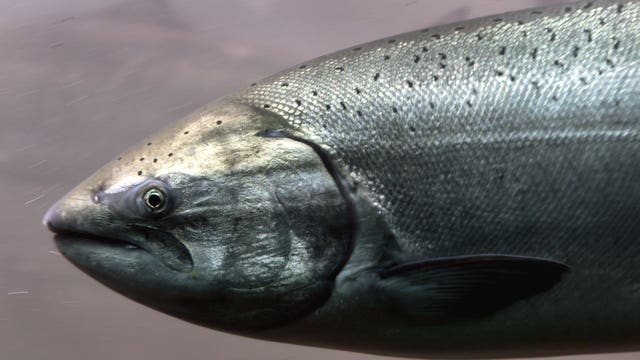

Federal appeals court OKs boosting water spill to aid salmon, steelhead at Northwest dams
PORTLAND, Ore. (AP) — A U.S. appeals court on Monday affirmed an order to spill more water over Columbia and Snake river dams to help protect salmon and steelhead and aid their migration to the sea.The decision came after U.S. District Court Judge Michael Simon of Oregon ruled last spring that the U.S. Army Corps of Engineers must spill more water through spillways rather than turbines that pose a danger to the fish.He sided with conservationists who say allowing extra water to flow between April and mid-June will help young salmon.The Army Corps, National Marine Fisheries Service and another federal agency appealed Simon's ruling.A three-judge panel of the 9th U.S. Circuit Court of Appeals said Monday that Simon rightly concluded that the salmon and steelhead are imperiled and will remain so without further conservation efforts.The judges also pointed to decades of studies that show higher spill volumes lead to increased survival rates."At best, federal defendants establish uncertainty about the benefits of increased spill, but the existence of scientific uncertainty does not render the district court's findings clearly erroneous," Chief Judge Sidney Thomas wrote in the opinion.The new spill operations are set to begin Tuesday at some dams on the Snake River and next week on some dams in the Columbia, one of the largest rivers in North America.
PORTLAND, Ore. (AP) — A U.S. appeals court on Monday affirmed an order to spill more water over Columbia and Snake river dams to help protect salmon and steelhead and aid their migration to the sea.The decision came after U.S. District Court Judge Michael Simon of Oregon ruled last spring that the U.S. Army Corps of Engineers must spill more water through spillways rather than turbines that pose a danger to the fish.He sided with conservationists who say allowing extra water to flow between April and mid-June will help young salmon.The Army Corps, National Marine Fisheries Service and another federal agency appealed Simon's ruling.A three-judge panel of the 9th U.S. Circuit Court of Appeals said Monday that Simon rightly concluded that the salmon and steelhead are imperiled and will remain so without further conservation efforts.The judges also pointed to decades of studies that show higher spill volumes lead to increased survival rates."At best, federal defendants establish uncertainty about the benefits of increased spill, but the existence of scientific uncertainty does not render the district court's findings clearly erroneous," Chief Judge Sidney Thomas wrote in the opinion.The new spill operations are set to begin Tuesday at some dams on the Snake River and next week on some dams in the Columbia, one of the largest rivers in North America.


One of Washington's most iconic bridges may be hurting salmon
PORT LUDLOW, Wash. -- The tourist slogan for the Olympic Peninsula is "the Wild Side of Washington."But one of the main transportation thoroughfares connecting travelers in Seattle to the famous towns and sites of the Olympic Peninsula may be hurting one of the Northwest's most famous residents: Salmon.
PORT LUDLOW, Wash. -- The tourist slogan for the Olympic Peninsula is "the Wild Side of Washington."But one of the main transportation thoroughfares connecting travelers in Seattle to the famous towns and sites of the Olympic Peninsula may be hurting one of the Northwest's most famous residents: Salmon.
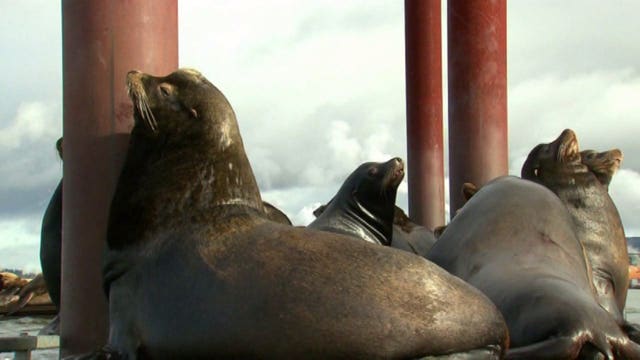

Humans aren't the only ones to blame for dwindling salmon population in Puget Sound
As salmon populations dwindle in Puget Sound, natural predators from killer whales to bald eagles are on the hunt for the precious calories the fish bring.
As salmon populations dwindle in Puget Sound, natural predators from killer whales to bald eagles are on the hunt for the precious calories the fish bring.
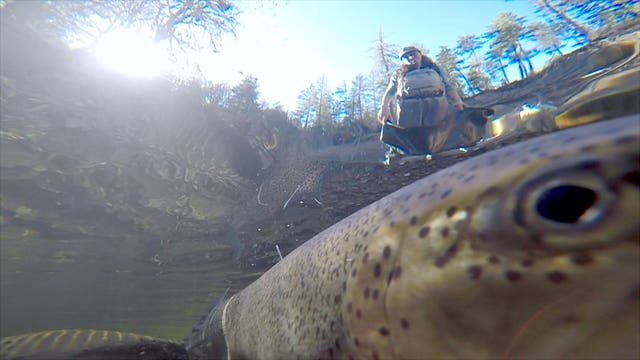

A different kind of hatchery: Nonprofit tries new technique to save wild steelhead
The more we learn about the dwindling populations of Washington's signature animal-- the Southern Resident orca whale-- the more researchers are learning about how intertwined our region's ecosystem really is.
The more we learn about the dwindling populations of Washington's signature animal-- the Southern Resident orca whale-- the more researchers are learning about how intertwined our region's ecosystem really is.
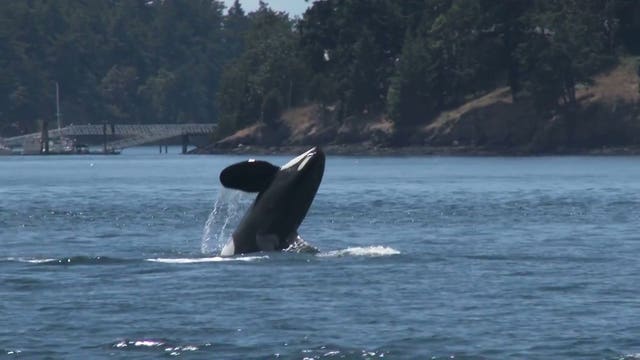

Sport-fisherman spawns non-profit to protect salmon in Puget Sound
SEATTLE - Jacques White runs a non-profit called Long Live the Kings which was started more than three decades to restore wild salmon.He told Q13 News' Alex Lewis that initial efforts started on Orcas Island, where the group’s founder developed his own backyard Chinook hatchery.Since then, Long Live the Kings has lead hatchery programs that aim to bring steelhead and salmon back from the brink of extinction while providing fishing opportunities for anglers and Orcas.
SEATTLE - Jacques White runs a non-profit called Long Live the Kings which was started more than three decades to restore wild salmon.He told Q13 News' Alex Lewis that initial efforts started on Orcas Island, where the group’s founder developed his own backyard Chinook hatchery.Since then, Long Live the Kings has lead hatchery programs that aim to bring steelhead and salmon back from the brink of extinction while providing fishing opportunities for anglers and Orcas.
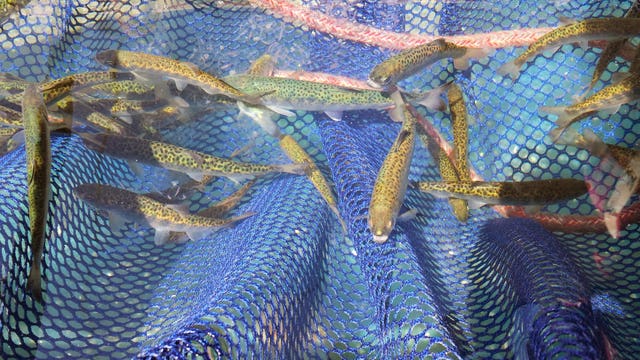

What's killing the salmon? Long Live the Kings investigates decline in iconic fish
Solving the mystery is what nonprofit Long Live the Kings is working on, and thanks to a grant from Microsoft, technology is helping the nonprofit develop a comprehensive model to find clues to solve it.
Solving the mystery is what nonprofit Long Live the Kings is working on, and thanks to a grant from Microsoft, technology is helping the nonprofit develop a comprehensive model to find clues to solve it.