

USGS deletes 5.9 quake in Nevada from its website

USGS investigates cause of false alarm Shake Alert notice
Bay Area residents received an erroneous 5.9 magnitude earthquake alert Thursday from the USGS Shake Alert system. USGS scientists quickly removed the automated alert about a quake in Dayton, Nevada east of Carson City. The Shake Alert Chief Scientist says it appears the data originated from five sensors in the area, and now scientists are examining whether an algorithm error might be to blame.
DAYTON, Nev. - The U.S. Geological Survey sent out an erroneous alert on Thursday, stating originally that an earthquake with a magnitude of 5.9 struck in Nevada, but then pulled that alert back, saying it was a mistake.
According to the initial alert, the quake struck just after 8 a.m. east of Dayton, Nevada.
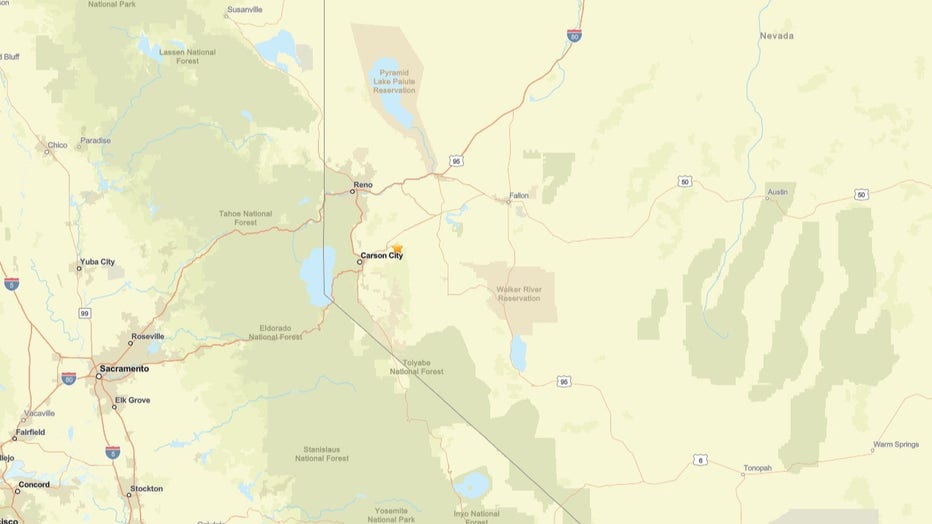
USGS alert deleted
Timeline:
Then, moments later, the USGS deleted the event from its website.
In a post on X, the USGS said there was no 5.9 earthquake in Nevada and that they canceled the faulty alert.
"We are currently looking into why the alerts were issued," the USGS posted. "We'll provide more information when we learn more."
Several people also reported getting earthquake alerts on their phones. One person wrote on social media that the MyShake app woke her up, and then she looked again, and it wasn't listed.
A spokeswoman for the Nevada County Sheriff's Office told KTVU via email that they have no affiliation with the earthquake alert.
"We didn’t feel anything here but we are quite a ways from Dayton," the spokeswoman wrote.
Dayton is 40 miles from Reno.
Why was the false earthquake alert triggered?
What experts say:
The Shake Alert seismology team said they are now working to review the data, but that it appears the faulty alert might've been caused by a software error.
"The Shake Alert system is fully automated," Jeff McGuire, USGS Shake Alert chief scientist, said. "It's listening to data all the time, and there [were] some anomalies in the data from Nevada that caused us to or caused the system to interpret it as an earthquake."
He said the system's sensors detected what it thought might be an incoming wave.
"A number of sensors detected what they thought was an incoming seismic wave," he said. "Some on the Nevada side of the border and some on the California side of the border. And that information was combined to make the alert."
The USGS quickly posted a correction.
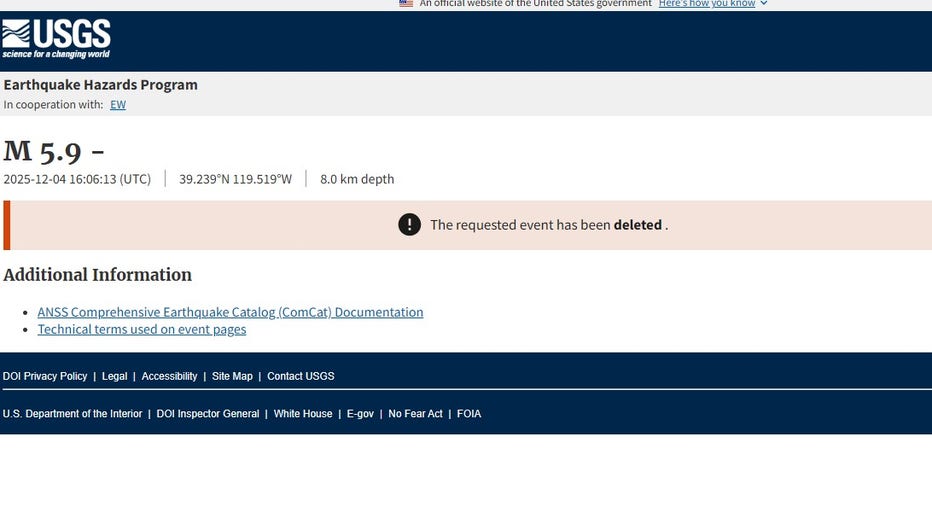
Screen grab of USGS deleting 5.9 quake in Dayton, Nevada. Dec. 4, 2025
"There are humans assigned to be on watch 24/7, and they, when the alert went out, they checked the data and determined that this was a false alert, and that led it to be removed from the web pages and things like that, which is standard operating procedure," McGuire said.
McGuire says the system requires data from a minimum of four sensors placed at intervals of about 20 kilometers in order to trigger an alert.
Now, scientists are reviewing the data and the algorithms to determine if the mistake was from the software failing to filter out a false trigger that can sometimes occur.
"Many things can cause the ground to shake. Construction, big trucks — most sensors are located in places that are relatively free from that kind of noise, but there's still any number of things that show up on our data all the time," he said.
McGuire says it will likely take days to finish analyzing the data to get a better idea of what went wrong.
They are also expecting an update from phone companies to determine how many people received the false alert.