

As we fall back, here's how much sleep your state gets
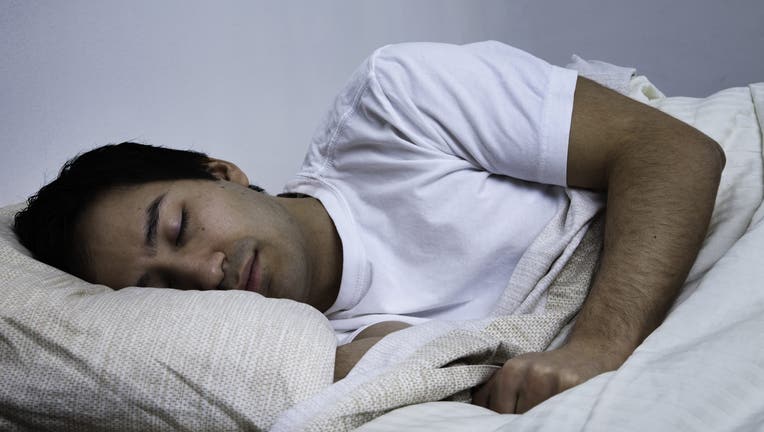
The good news: You will soon get a glorious extra hour of sleep. The bad: It’ll be dark as a pocket by late afternoon for the next few months in the U.S.
Daylight saving time ends at 2 a.m. local time on Sunday, November 2, which means you should set your clock back an hour before you go to bed.
RELATED:
But a study overall shows how much sleep you'll get depends on what state you live in.
How much sleep does your state get?
By the numbers:
The American Heart Association and Brigham and Women’s Hospital released a study showing when a person usually goes to sleep and how much sleep that person gets depending on the state the person lives in.
How much sleep do you really need?
Dig deeper:
Experts say it’s an important question to consider.
Most of us spend a third of our lives sleeping, but you may need more or less than eight hours a night. The number of hours needed changes throughout your life, with babies and kids needing more sleep and people 65 and older able to function on slightly less than seven to nine hours.

Some schools teach teens how to sleep
Some school districts are introducing an unexpected topic to their high school curriculum: how to sleep. In Mansfield, Ohio, and several Minnesota schools, educators are piloting sleep education programs aimed at helping teens get more rest—and, they hope, improve behavior, attendance, and mental health outcomes in the process. Kyla Wahlstrom at the University of Minnesota joined LiveNOW from FOX's Christy Matino to discuss what it all means.
Here’s what sleep scientists and doctors say about how much you really need — and whether your gender plays a role.
What they're saying:
Sleep is still a mystery, despite how critical it is for our health.
"The reasons aren’t entirely clear, but it’s an essential thing that we all do," said Dr. Rafael Pelayo, a sleep specialist at Stanford University. "Something remarkable happens when you sleep. It’s the most natural form of self-care that we have."
Most of the population gets between seven to nine hours — and that particular category has the lowest association with health problems, said Molly Atwood, a behavioral sleep medicine clinician at Johns Hopkins.
Once people either dip into less than six hours of sleep or get more than nine hours on average, the risk of health problems inches up, Atwood said, but everybody is different.

Impacts of Daylight Saving Time on health, sleep
Neuroscientist Dr. Karin Johnson joins LiveNOW's Andy Mac discuss Daylight Saving and the potential impacts.
When you’re trying to figure out how much sleep you need, it’s important to think about the quality of it, Pelayo said: "What you really want to do is wake up feeling refreshed — that’s what it’s about."
"If somebody tells me that they sleep many hours but they wake up tired, something is wrong," Pelayo said. "You shouldn’t leave your favorite restaurant feeling hungry."
How much sleep we need changes
Why you should care:
The amount of sleep we need changes throughout our lives. Newborns need the most — somewhere between 14 to 17 hours.
"Definitely when we’re babies and children, because we are growing so rapidly, we do need a lot more sleep," Atwood said.
The National Sleep Foundation recommends most adults between 26 and 64 get between seven to nine hours of sleep. People who are 65 and older can get slightly less, and young adults between ages 16 and 25 can get slightly more.
Humans cycle through sleep stages roughly every 90 minutes. In the first portion of the night, Atwood said that more of the cycle is slow wave sleep, or deep sleep, which is essential to repairing and restoring the body. It’s also when "growth hormone" is released.
In the latter hours of the night, more of the sleep cycle is spent in rapid-eye movement sleep, or dream sleep, which is important for learning and memory consolidation, or the process in which short-term memory gets turned into long-term memory.
Kids get more "deep sleep," with about 50% of the night in that realm, she said. That drops at adolescence, Atwood said, because our body doesn’t need the same kind of repair and restoration.
Something else interesting happens around puberty: Gender-based differences in sleep start to crop up.
The Source: The Associated Press contributed to this report. The information in this story comes from a study conducted by the American Heart Association and Brigham and Women’s Hospital, which examined sleep patterns across different U.S. states. This story was reported from Los Angeles.