

Seattle homeless crisis: Inside Bayside Village, the 'emergency room' for unsheltered
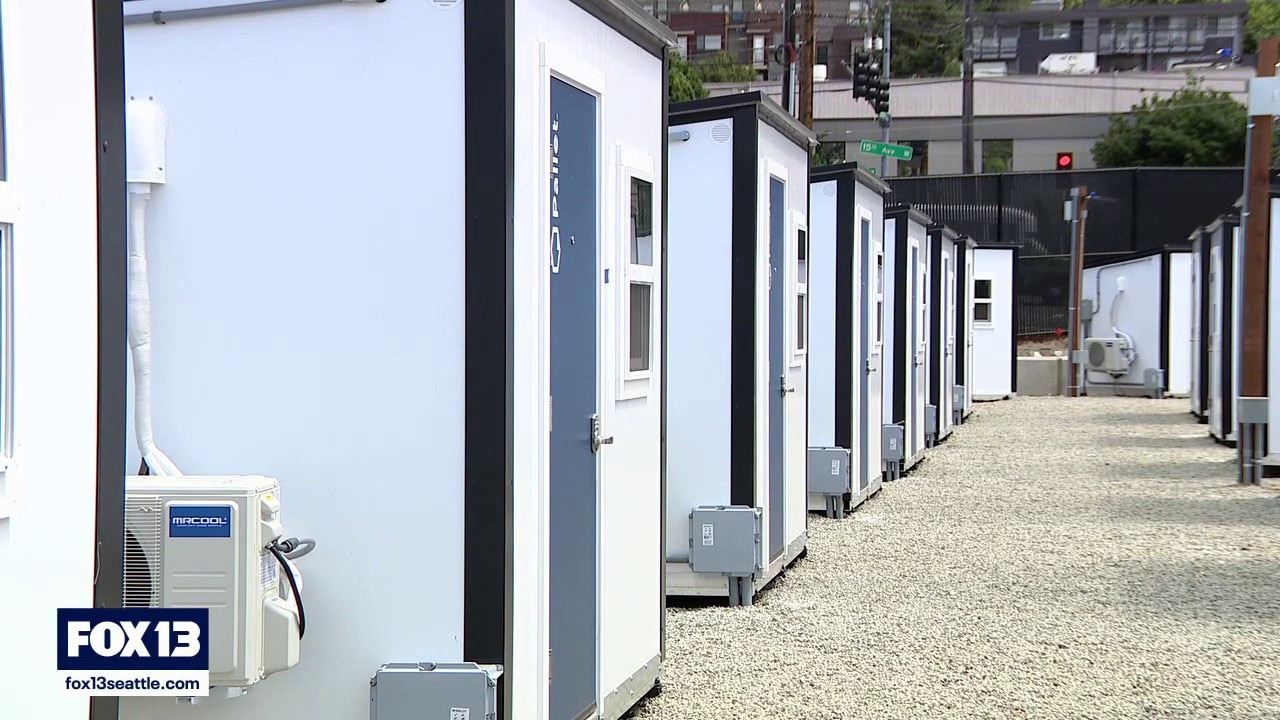
Tiny home village opens in Interbay
Bayside Village in Interbay is welcoming its first residents to 50 new pallet shelters, as the manufacturing company's CEO emphasizes that housing must be paired with accountability to combat a crisis evolved by fentanyl.
SEATTLE, Wash. - A new tiny home village is now open in Interbay, marking an expansion of Seattle's temporary housing capacity.
The site, named Bayside Village, currently has 50 pallet shelters for single adults. An additional 25 shelters are currently being manufactured and are scheduled to be installed later this month.
Locally Made and Manufactured
The backstory:
The structures are manufactured in an Everett warehouse by Pallet, a Snohomish County-based company founded nearly a decade ago. CEO Amy King and her husband smashed their two worlds together to find a solution. He brought the building expertise; she brought a background in medical and social services that manufactures rapid-response, non-congregate shelters designed to help unhoused individuals stabilize and transition into permanent housing.
Now, after building 148 sites across 136 cities nationwide, Pallet is finally bringing its innovative model close to home. This week, the company is launching Bayside Village, its first major partnership with the city of Seattle.
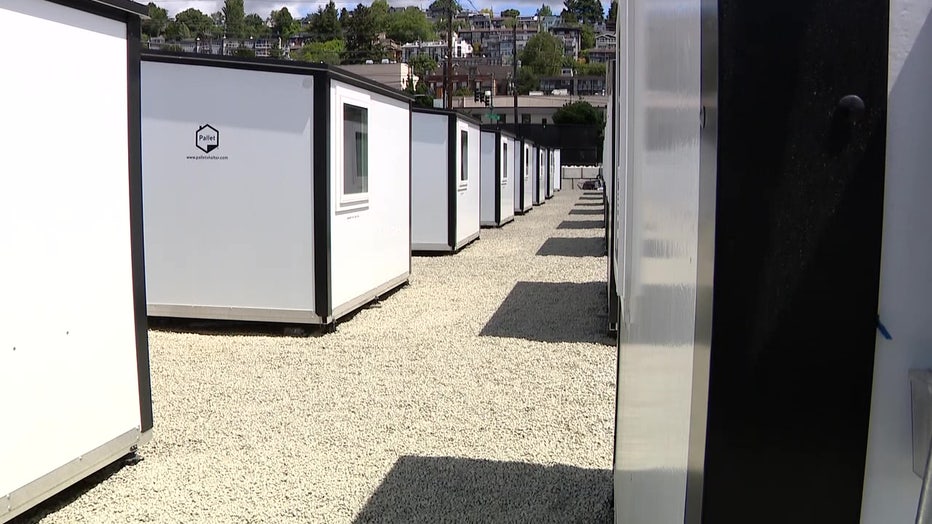
Bayside Village tiny homes in Interbay
The site features Pallet's 70-square-foot single-occupancy sleeper units, which cost roughly $16,000 to $17,000 each—fully furnished, delivered, and set up. Under a three-year land lease, the village functions as what King calls an "emergency room" for the unsheltered.
"If you're sick, you need a place to go to be assessed and figure out what you need, and then you move on to what's next," King said. "That's what we're trying to create in partnership with Seattle—these emergency rooms, and then eventually a hub-and-spoke model where people have a place to go based on what their needs are."
Unlike traditional, wood-framed tiny homes, these shelters are constructed using composite materials.
According to King, the composite design allows the structures to last for 20 years, whereas traditional stick-built tiny homes often only last for one or two uses. The materials are resistant to mildew, mold, and bed bugs, and the units can be pressure washed, repaired panel by panel, or relocated to different sites as needed.
The partnership between the company and the city of Seattle moved rapidly to prepare the site for occupancy.
"The whole process from start to finish has taken us about eight weeks to get to where we can receive residents, which is pretty fast," King said.
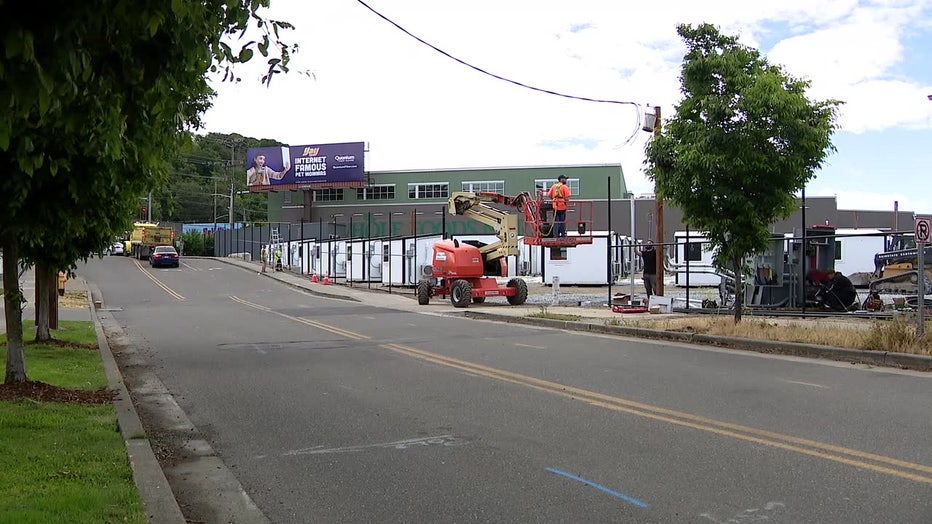
An exterior view of Bayside Village in Interbay (FOX 13 Seattle)
The Reality of the Fentanyl Crisis
What they're saying:
The CEO acknowledges the deep frustration taxpayers feel regarding the billions spent on the homelessness crisis with little visible return. However, she argues that unmanaged homelessness already costs taxpayers heavily through uncompensated emergency room visits, extra law enforcement, and street cleanups.
For King, the crisis of homelessness isn’t just a housing deficit or a data point. It’s a human struggle deeply tied to trauma, addiction, and what she calls "relationship poverty."
"When people say homelessness is a housing issue, that really frustrates me," King said. "The narrative for so long has been 'build more housing and homelessness will go away,' and that's not true. We now have a huge number of people that have been extremely traumatized. Putting folks with significant mental health and substance use issues into permanent housing without first addressing those issues is a death sentence for them."
She highlighted the rise of fentanyl over the last decade as a major disruptor which alters brain chemistry and makes recovery much more difficult. She advocates for a balanced middle ground between "housing first" ideologies and strict accountability models.
While regional agencies like the King County Regional Homelessness Authority (KCRHA) have historically focused heavily on permanent supportive housing due to federal HUD funding restrictions, King notes a growing, nationwide shift toward recognizing the value of transitional housing models like Bayside Village.
Workforce Development and Beyond
Dig deeper:
What truly sets Pallet apart from other shelter manufacturers is its workforce. The company is, first and foremost, a workforce development program.
The Snohomish County company hires workers who have lived experience with homelessness, addiction, or incarceration. King said the company's foundational concept came directly from listening to individuals who had experienced homelessness and said they wanted non-congregate spaces to stabilize.
"We started the company primarily from a workforce development perspective," King said. "We really see the value in getting folks that are exiting those troubled systems back to work and back to self-sufficiency and working with purpose and meaning."
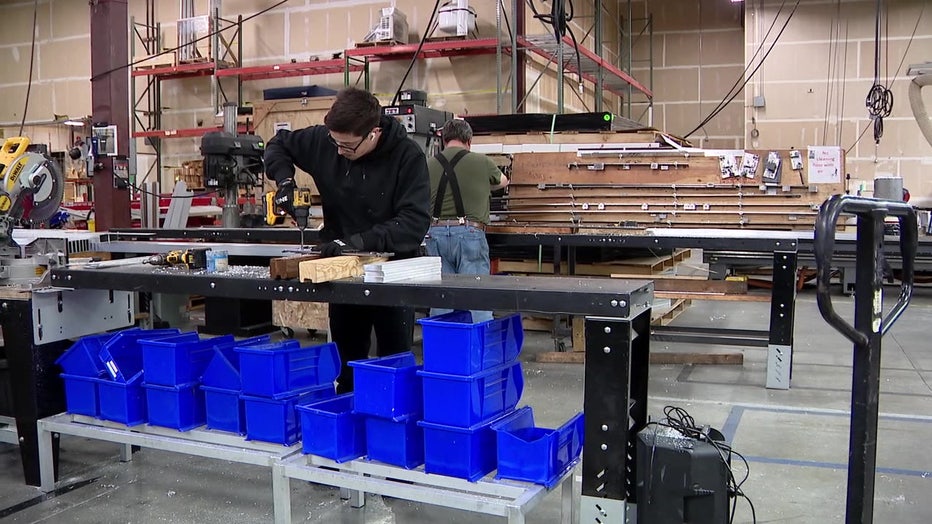
Inside the manufacturing warehouse of Pallet (FOX 13 Seattle)
The Cohort Model allows employees to join Pallet for nine to 12 months. Workers are exposed to 22 different construction and manufacturing trades, provided with living wages, full benefits, and wraparound care before graduating workers into union construction jobs or positions at major local employers like Boeing.
"Part of the reason why our pallet is more expensive than the traditional tiny home is because we pay people to build it," King said.
She says hundreds of workers have cycled through the program.
"People need purpose, they need money, they need the ability to get back on their feet. Everyone that comes here gets a living wage, full benefits, wraparound care, and support," King said.
Rethinking the Response to Homelessness
While the Bayside Village site offers low-barrier shelter, King says providing a roof for someone is only one part of addressing a complex, evolving crisis.
King challenged the narrative that building more housing is the sole solution to the homelessness crisis, arguing the strategy must combine both housing and treatment.
"Housing first is an effective methodology when done correctly, and in the United States, we've done it wrong," King said. "Honestly, it's housing first, not housing only, and we've produced it as housing only. We need accountability programs for people who need them. We need housing first. We need low barrier. That's what Bayside is."
King says it's going to take a wide range of approaches to meet different needs across the community.
The shelters are meant to serve as temporary spaces, with the long-term goal focused on achieving stability through a combination of housing, treatment, and employment opportunities.
MORE NEWS FROM FOX 13 SEATTLE
Bellevue 'OnlyFans house' suspect charged with human trafficking
Human remains found in Chelan County, WA identified as woman missing since 1986
Phone-free WA schools? Governor Ferguson eyes new legislative priority
13-year-old-boy arrested in deadly shooting of Seattle teen
Report: Billionaire sports owner shows interest in Seattle Seahawks sale
Here's where to watch World Cup games at all hours in Seattle
To get the best local news, weather and sports in Seattle for free, sign up for the daily FOX Seattle Newsletter.
Download the free FOX LOCAL app for mobile in the Apple App Store or Google Play Store for live Seattle news, top stories, weather updates and more local and national news.
The Source: Information in this story came from original FOX 13 Seattle reporting and interviews.