

Seattle mayor unveils plan for 1,000 shelter spaces as critics question approach
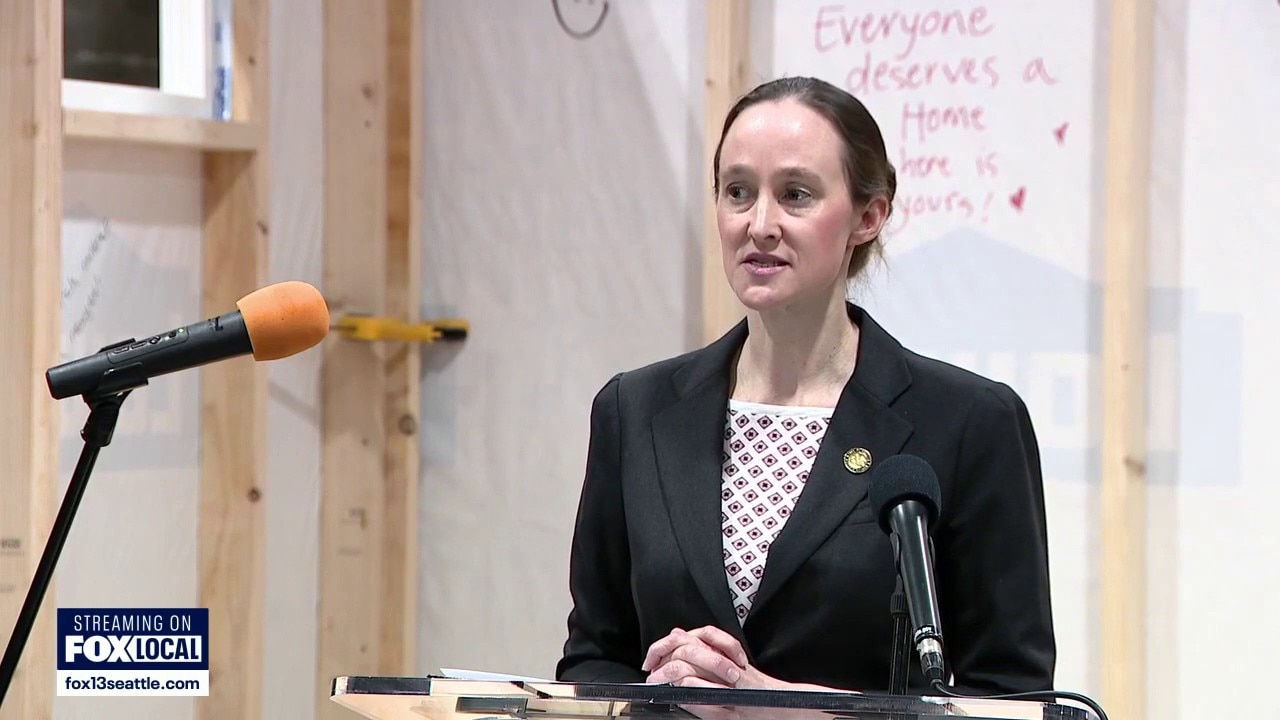
Seattle mayor unveils plan to expand shelter beds; outreach groups raise concerns
Seattle Mayor Katie Wilson says the city must act faster on homelessness, announcing a plan to add 1,000 new shelter spaces by the end of the year and 4,000 by the end of her term. While city leaders say expanding emergency housing is critical, some business owners and outreach groups question whether fast-tracked shelters will address underlying issues.
SEATTLE, Wash. - Seattle Mayor Katie Wilson says the city has waited too long to respond with urgency to the homelessness crisis and is moving to rapidly expand shelter space — but outreach workers and some business owners question whether the plan will solve the deeper problems on the streets.
On Wednesday, the mayor announced a proposal this week to add 1,000 new shelter spaces by the end of the year and calling it the first step toward addressing an emergency the city declared more than a decade ago.
What they're saying:
Seattle declared a civil state of emergency on homelessness in November 2015, yet Wilson said the crisis still has not been treated with the urgency it requires.
"We can't just keep moving people from place to place, and calling that progress," Wilson said. "The single most important thing we can do to address our city's homelessness crisis is to rapidly expand emergency housing and shelter with supportive services."
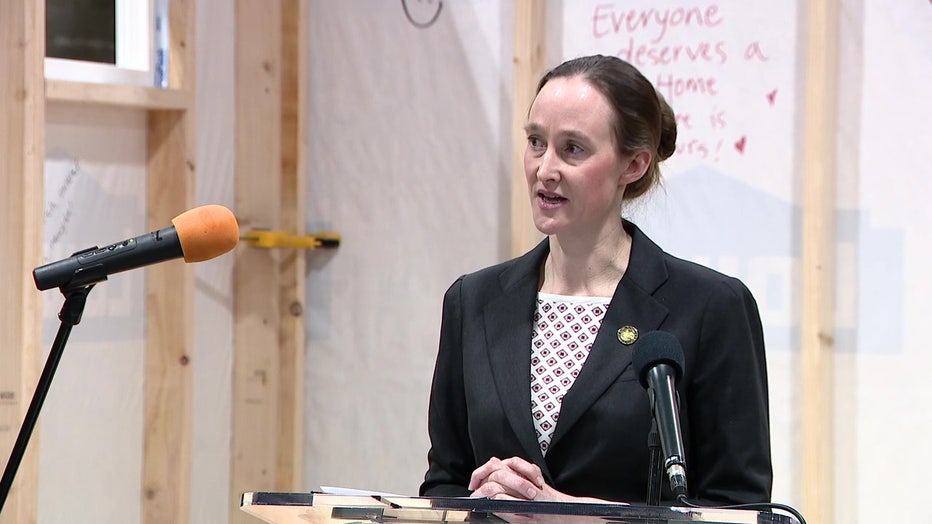
Seattle Mayor Katie Wilson announces plan to add 1,000 shelter beds by the end of 2026. (FOX 13 Seattle)
During an eight-minute speech announcing the plan, Wilson said, "We have twice as many homeless people in Seattle as we have shelter beds," leaving thousands with nowhere to go.
As part of the initiative, Wilson said she has already signed legislation designed to waive certain review requirements and speed up the development process for shelters and housing by five months to a year.
"That's why today I'm also making a direct appeal for everyone to pitch in," Wilson said. "We need your help to get sites ready, to help build new shelter, to support our frontline service providers and to be good neighbors with the sites that we need to open around the city."
Wilson’s proposal includes increasing shelter capacity at some locations from about 100 beds to between 150 and 250 beds, depending on the site.
The other side:
Some business owners near the planned Glassy Yard Commons shelter development in West Seattle say the expansion is moving too quickly and without enough community input.
Alan Bridgman, president of Northwest Custom Interiors, said the industrial area is already struggling with crime, fires and drug use tied to nearby encampments.
"What happens if this tiny house community and RV lot doesn't work out, and if it becomes really dangerous for the surrounding community?" Bridgman said. "What's plan B?"
Councilmember Rob Saka's District 1, including SODO, Georgetown and West Seattle, have seen large concentrations of people living in RVs.
"District 1 is disproportionately impacted by our homelessness crisis," Saka said.
Dig deeper:
Some outreach workers say simply increasing shelter capacity may not address what they see as a large population of people who refuse services or cannot remain in existing programs.
Andrea Suarez, founder of the nonprofit We Heart Seattle, said some encampments continue to return even after repeated sweeps.
"This camp behind me has been swept twice in less than 30 days," Suarez said.
Suarez said the organization frequently encounters what she describes as a "service-resistant population" — people who have previously been offered shelter or housing but declined or left programs.
"My question to the mayor is, what about the service-resistant population, the communities that have been living out here for years, that have had housing, they've been in tiny house villages already," Suarez said. "They've had temporary shelter, and they've been swept multiple times."
Suarez said leaders within some encampments have told outreach workers they prefer to remain together in outdoor communities rather than move into structured shelters.
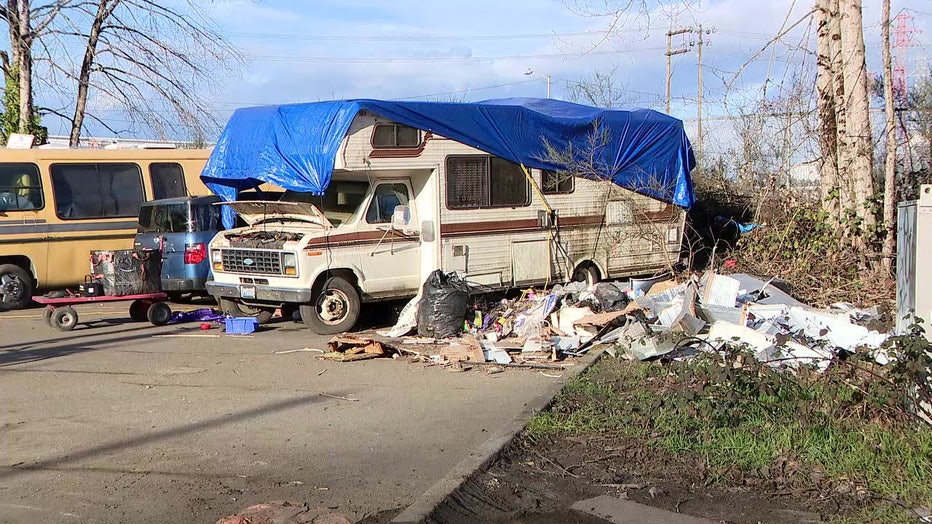
An RV homeless encampment in Seattle. (FOX 13 Seattle)
She also raised concerns about increasing the size of shelter facilities.
"My other concerns for the mayor is where, where is it that 100 or 200 or 250 people from multiple disabilities, multiple vulnerabilities, all live together, and it's nothing short of chaotic," Suarez said. "There’s a reason why tiny house villages and shelter communities are 50 people, 75 tops," Suarez said. "Otherwise you've got people who are sleep deprived, hungry, cold, worried about their belongings; you have all these people coming together who have untreated mental illness and addiction under one roof."
Suarez said her group has also seen high rates of people declining available services.
"As an example, just a couple weeks ago, when we had our severe weather pattern, we came out to this encampment … and we asked over 100 people, do they want to go down to Fisher Pavilion or the library or a church to stay warm?" Suarez said. "They all said, no. We had 100% decline."
She argues the city’s approach — often described as "housing first," which prioritizes shelter without mandatory treatment — has not reduced chronic homelessness.
"What we have done in Seattle is we removed rock bottom and leverage points for vulnerable populations that might have otherwise finally accepted shelter, finally served their warrant, finally go to treatment," Suarez said. "But when it's just so darn easy to stay outside, we actually trap them in addiction longer."
FOX 13 asked Suarez if adding the mayor's goal of 1,000 shelter units would address the population currently living in encampments. She said, "They may be filled, but maybe not from these people right behind us. I think they will be filled from people coming in from Everett, Camas, Burien, Shoreline. We have an inflow crisis."
Wilson did not take questions after the announcement, leaving her press conference about 24 minutes after it began. Her office did not immediately respond to multiple requests for comment.
What's next:
During her remarks, Wilson acknowledged the challenges that come with expanding shelter locations in neighborhoods.
"There can be problems when we don’t get it right," Wilson said, adding that the city is committed to improving how sites operate.
Wilson also urged residents to help address the crisis.
"We need your help," Wilson said, "to be good neighbors with the sites that we need to open around the city."
MORE NEWS FROM FOX 13 SEATTLE
WA Gov. Ferguson cancels parole of convicted rapist who previously fled state
Phone app, 'wife's intuition' saves WA skier buried by avalanche in Stevens Pass
33 charged in 2025 pro-Palestinian protest at UW in Seattle
Gig Harbor, WA community remembers 4 women killed in Key Peninsula stabbing
WA measles cases rise to 26 as US total tops 1,100 in 2026
To get the best local news, weather and sports in Seattle for free, sign up for the daily FOX Seattle Newsletter.
Download the free FOX LOCAL app for mobile in the Apple App Store or Google Play Store for live Seattle news, top stories, weather updates and more local and national news.
The Source: Information in this story came from original FOX 13 Seattle reporting and interviews.