

Trump order aims to bring back ‘Department of War’

Department of War: Trump renames Department of Defense
President Donald Trump signed an executive order in the Oval Office on Friday, directing the Pentagon to use the historic title "Department of War." The move is largely symbolic, as Congress must pass legislation to formally rename a federal agency.
President Donald Trump signed an executive order Friday directing the Pentagon to use the historic title "Department of War," reviving the name the military operated under until 1947.
The move has been one of Trump’s long-discussed goals, with both the president and Defense Secretary Pete Hegseth saying the name projects American strength. Critics, however, argue the change is symbolic, legally limited, and could come with a hefty price tag for taxpayers.
Can Trump rename the Department of Defense?
The U.S. Constitution gives Congress the power to create, shutter and rename federal agencies, meaning Trump cannot unilaterally change the Pentagon’s official title.
Instead, the order will install "Department of War" as a secondary name used on federal communications and instruct Hegseth to recommend legislative steps to make the rebrand permanent. Without a law from Congress, the Department of Defense will remain the official name on all statutes.
In practice, a "secondary title" means the Pentagon can start putting the "Department of War" label on press releases, signage, letterheads and other communications, but it won’t change the agency’s legal standing. Laws, budgets and official government documents will still use "Department of Defense" until Congress votes to change the name.
Florida Rep. Greg Steube and Sens. Rick Scott of Florida and Mike Lee of Utah are introducing legislation to formally restore the old name, though it’s unclear if such bills will gain traction in the Senate.
What we know:
According to a White House fact sheet, Trump’s order will:
- Direct the Pentagon to use "Department of War" as a secondary title.
- Allow Hegseth to be referred to as "Secretary of War" alongside his current title.
- Require the name and titles to appear in all official internal and external communications.
What we don't know:
It remains unclear how Congress will respond to the proposals, or how much the rebranding effort would ultimately cost.
The Defense Department has not provided a full financial estimate, though a past report found a far smaller renaming initiative tied to Confederate assets carried a $62.5 million price tag.
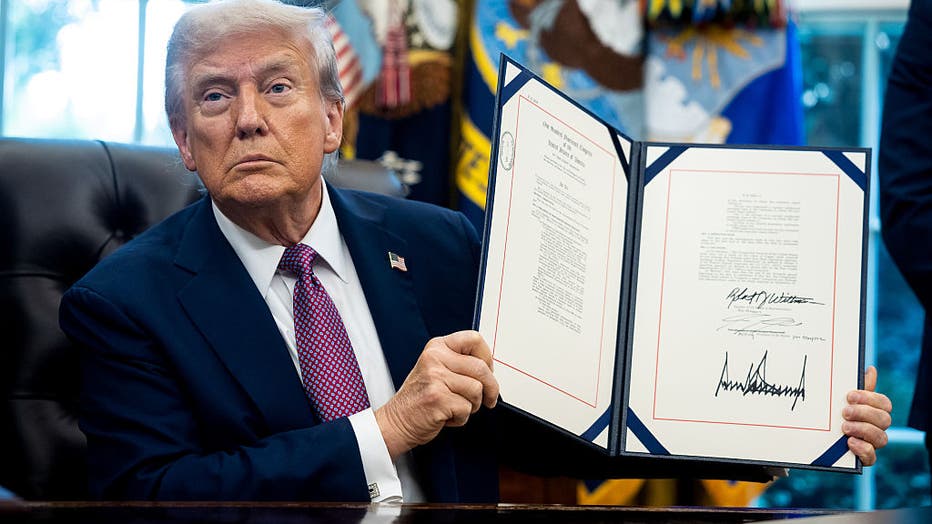
US President Donald Trump displays a signed executive order on the Defense Department in the Oval Office of the White House in Washington, DC, US, on Friday, Sept. 5, 2025. (Photographer: Francis Chung/Politico/Bloomberg via Getty Images)
The backstory:
The Department of War was created in 1789 to oversee the Army, while the Navy and other branches operated separately. After World War II, lawmakers moved to unify the services under one structure, renaming the agency the Department of Defense in 1949.
Historians say the postwar rebrand was meant to project peace and defense rather than aggression as the Cold War began. "The name change was to communicate to America’s adversaries and the rest of the world that America was not about making war but defending the United States," UNC professor Richard H. Kohn told The New York Times.
The other side:
Democrats have criticized Trump’s focus on reviving the "war" title, saying it is more about politics than strengthening the military.
"Why not put this money toward supporting military families or employing diplomats that help prevent conflicts from starting in the first place?" Sen. Tammy Duckworth, D-Ill., told Reuters.
What's next:
Even with Trump’s order in place, the Department of Defense will not officially become the Department of War unless Congress acts. Supporters in the House and Senate have filed bills, but their path forward is uncertain.
The Source: This report is based on information from the Associated Press, Forbes and Reuters.