

'Do not travel': NWS issues blizzard warning for WA Cascades and Olympics

Blizzard warning issued for Cascades, Olympics
The National Weather Service issued a blizzard warning for the Washington Cascades and Olympic Mountains starting early Wednesday.
After days of heavy rain and regional flooding across western Washington, the state is bracing for a new weather development: a blizzard warning set to take effect Wednesday.
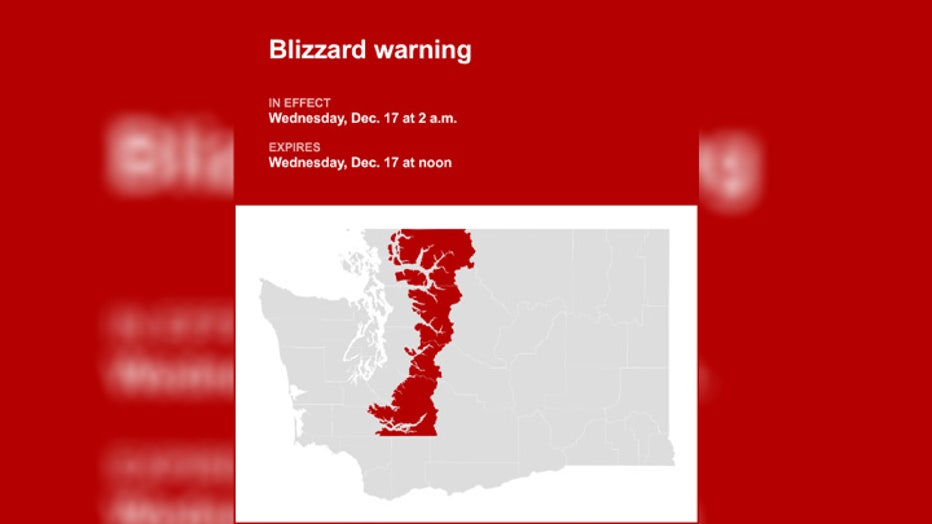
(NWS)
According to the National Weather Service (NWS), the blizzard warning will be in effect for the Washington Cascades from 2 a.m. Wednesday through Wednesday afternoon. The warning includes the Cascades in Whatcom, Skagit, Snohomish, King, Pierce and Lewis counties. A blizzard warning will also be in effect during the same time frame for the Olympic Mountains.
The NWS issued the blizzard warning because 35 mph winds are expected to accompany heavy snow, potentially causing whiteout conditions for drivers. Wind gusts could reach up to 50 mph, raising the risk of falling trees across the region.
How much snow are the mountains in western Washington expected to get?
According to the NWS, total snow accumulations during the blizzard warning are expected to range from 10 to 20 inches in the Cascades. The Stehekin area of Chelan County could see 4 to 8 inches.
In the Olympic Mountains, the NWS is forecasting snow accumulations of 10 to 15 inches at Hurricane Ridge, with wind gusts as high as 45 mph.
Blizzard warning might be exactly what ski resorts in western WA need
Skiers and snowboarders in western Washington have been eagerly waiting to get on the slopes – let alone hear an official opening date announcement from their favorite ski resort.
La Niña snow totals were already off to a slow start before a devastating atmospheric river swept through the area, causing widespread flooding and leaving ski resorts completely bare, wiping out any chance of establishing a solid snow base.
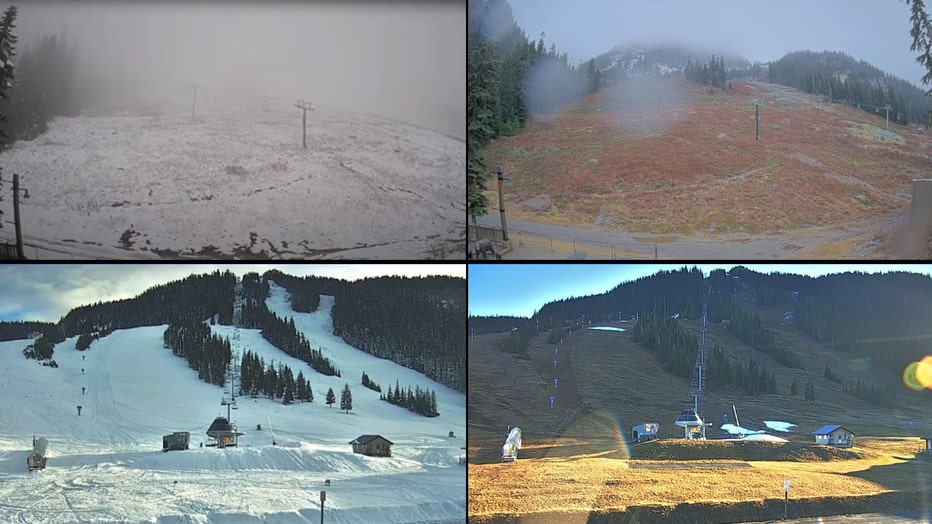
Atmospheric river wipes out snow at Summit Snoqualmie (top) and White Pass (bottom) following an atmospheric river event in December 2025
Though a blizzard warning is likely to cause treacherous driving conditions, it may be exactly what the ski resorts need.
According to the NWS, total snow accumulations for Snoqualmie Pass are between 10 and 15 inches. Stevens Pass could see 15 to 20 inches, while Mount Baker may receive two feet or more.
This is a developing story. Check back for updates.
The Source: Information in this story comes from the National Weather Service.