

Northern lights visible in WA, possible in OR this week

Northern lights shine across WA Tuesday night
A powerful solar storm caused a colorful northern lights display that was visible across much of the U.S., including Washington state.
SEATTLE - Washington got a glimpse of the northern lights Tuesday night, and the Pacific Northwest has more opportunities to see the sky spectacle this week.
What we know:
The sun recently emitted several powerful solar flares, resulting in Aurora Borealis, otherwise known as the northern lights. The collage of colors in the night sky is caused by coronal mass ejections, which can typically be observed in northern Canada.
However, the sun's activity this week is expected to bring the northern lights as far as Alabama or northern California, with Washington and Oregon likely to see the light show.
Many witnessed the powerful display Tuesday night, and there's another chance the northern U.S. could see some auroras Wednesday and Thursday night, though it's dependent upon the orientation of Earth’s magnetic field.
Western Washington may get another good view of the northern lights, however forecasts point to increasing cloud cover overnight.
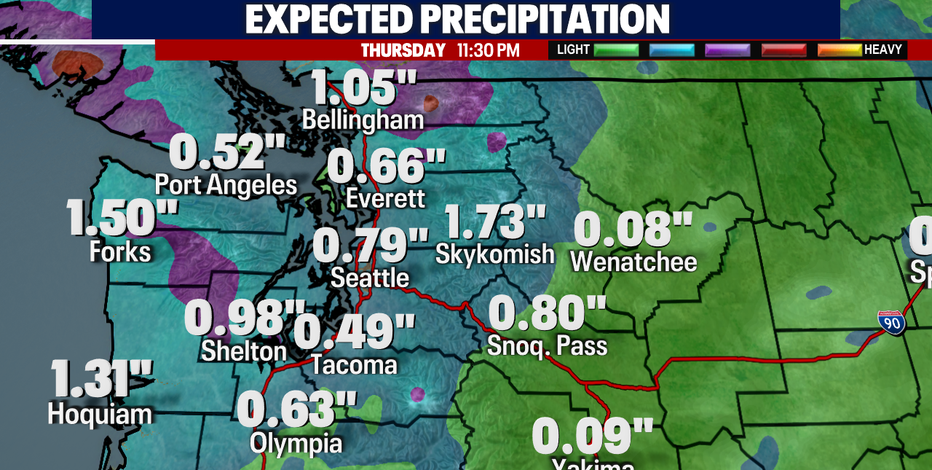
Seattle weather: Widespread rain returns on Thursday
The next round of widespread rain will hit the Puget Sound area late Wednesday night into early Thursday morning.
Big picture view:
On Tuesday, the National Weather Service in Seattle captured a photo of the northern lights over Lake Washington.
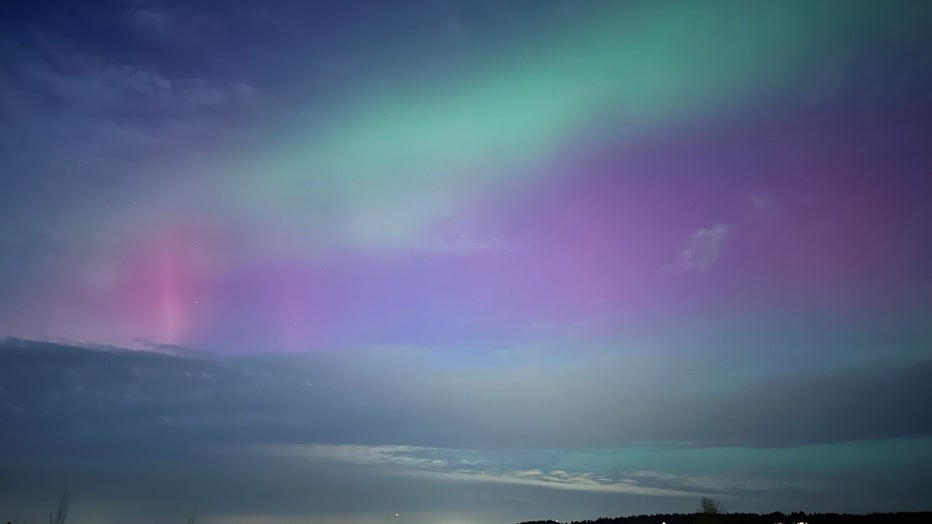
(via US National Weather Service Seattle Washington on Facebook)
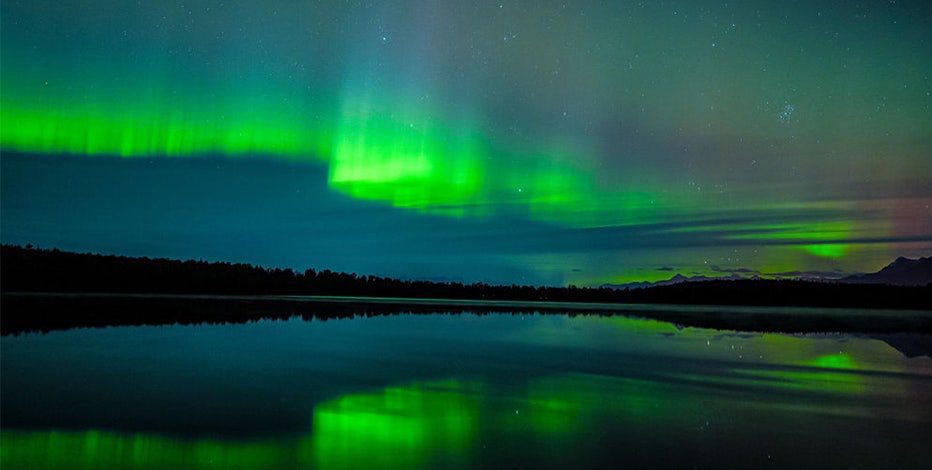
Dan Dron near Kachess Lake also sent FOX 13 some photos of the phenomenon:
The best times to see northern lights in the US
Dig deeper:
The NOAA said the best times to potentially see northern lights from the U.S. are:
- 4 p.m. to 7 p.m. ET
- 7 p.m. - 12 a.m. PT
A geomagnetic storm watch was issued by the NOAA on Tuesday, with predicted storm categories reaching strong and severe.
- Nov 12: G4 (severe) category storm
- Nov. 13: G3 (strong) category storm
- Nov. 14: G1 (minor) category storm
Northern lights may be visible in the US this week: Here's where
The NOAA Space Weather Prediction Center has issued a G4 (severe) geomagnetic storm watch for Nov. 12.
What you can do:
Tips on seeing northern lights:
- Try to find an unobscured view and look toward the northern horizon.
- It must be dark outside, so if you can, go somewhere that has as little light pollution as possible.
- The best time to see auroras is within an hour or two of midnight, according to the NOAA.
- Check the weather forecast because clouds can cover up the spectacle entirely.
- Taking a picture with a smartphone camera may also reveal hints of the aurora that aren’t visible to the naked eye.
MORE NEWS FROM FOX 13 SEATTLE
WA baby hospitalized with botulism, leading to baby formula recall
Lenny Wilkens, legendary Seattle SuperSonics player and coach, dies at 88
Seattle to update street parking rates again — see what’s going up
Rad Power Bikes faces permanent closure at Seattle site
Seattle's SODO housing ordinance blocked after Port of Seattle wins lawsuit
To get the best local news, weather and sports in Seattle for free, sign up for the daily FOX Seattle Newsletter.
Download the free FOX LOCAL app for mobile in the Apple App Store or Google Play Store for live Seattle news, top stories, weather updates and more local and national news.
The Source: Information in this story came from the National Weather Service, National Oceanic and Atmospheric Administration, FOX Digital and FOX 13 Seattle reporting.