

If 'The Big One' hits, can Washington get help where it’s needed?
LACEY, Wash. - If a powerful earthquake and tsunami cuts off roads, knocks out communications and devastates Washington communities, how would responders get medical supplies to people who need them?
That question is driving a two-day statewide exercise led by the Washington State Department of Health. The drill brings together state, tribal, local and federal agencies to test their response to a catastrophic Cascadia Subduction Zone earthquake and tsunami.
The scenario involves a magnitude 9.0 earthquake offshore, followed by a tsunami and widespread damage along the coast and through the Interstate 5 corridor, according to Weed.
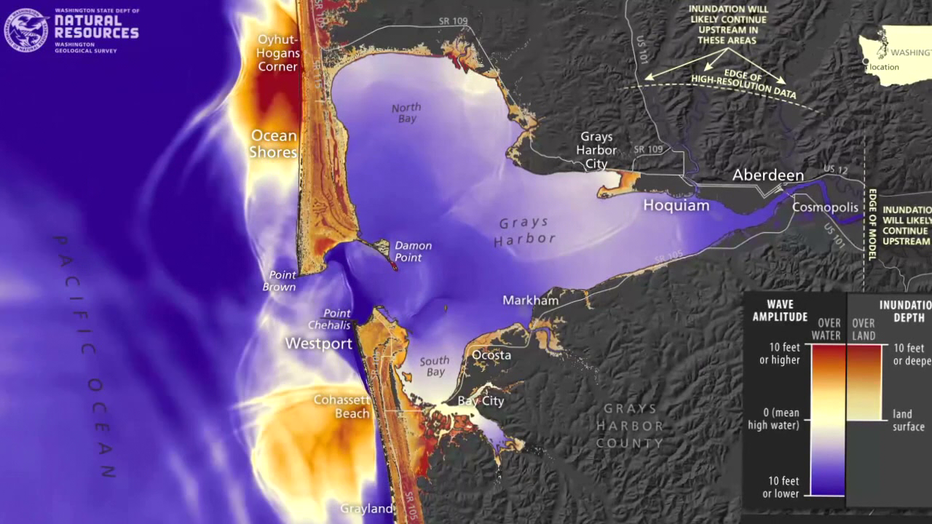
A map of a simulated 9.0 Cascadia earthquake and tsunami in Washington.
Moving medical supplies under disaster conditions
The Level Up exercise, held Oct. 19-20 at sites across Washington, challenges responders to coordinate public health and health care operations under disaster conditions, according to the department.
In Lacey, responders gathered at the Medical Logistics Center, a nearly 200,000-square-foot warehouse that holds emergency supplies, including personal protective equipment and extra hospital beds.
"Part of the test today is to see if we can mobilize some of those resources and actually deliver them on the ground to local jurisdictions," said Nate Weed, chief of resiliency and health security for the Department of Health.
The exercise tests how responders would move those supplies when damaged roads and disrupted communications complicate deliveries.
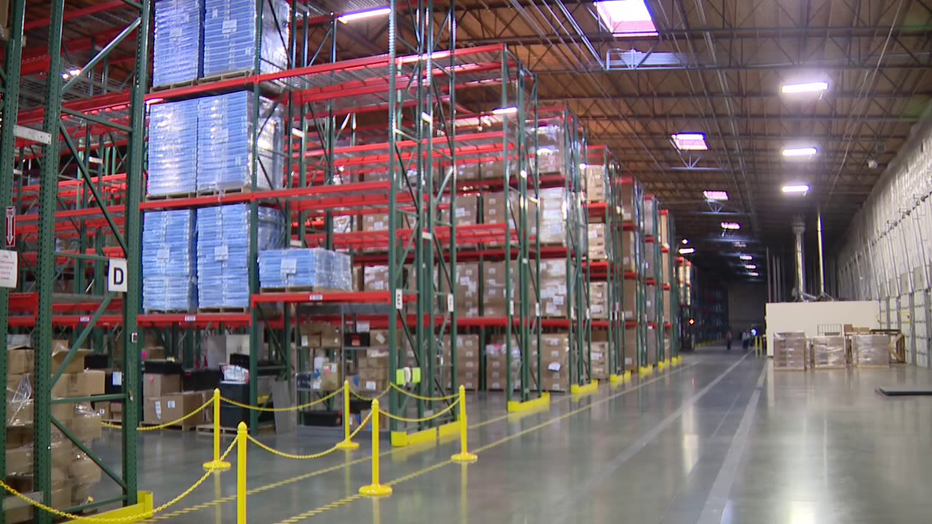
Stocked emergency supplies at the Medical Logistics Center. (FOX 13 Seattle)
Mobile command vehicles provide connections and power
Among the tools available are the department’s two mobile command vehicles, which can help responders operate in places that have lost power or communications infrastructure.
"These are really kind of like large hot spots that can provide a lot of internet connectivity. Satellite connectivity," said Weed.
The vehicles can also generate power, according to Weed. The department deployed them during this summer’s wildfire response.
"Hopefully we don’t have to use them, but when we do have to use them, they often provide a really critical component for emergency managers or emergency responders to be able to communicate with their communities or to be able to communicate with each other," said Weed.
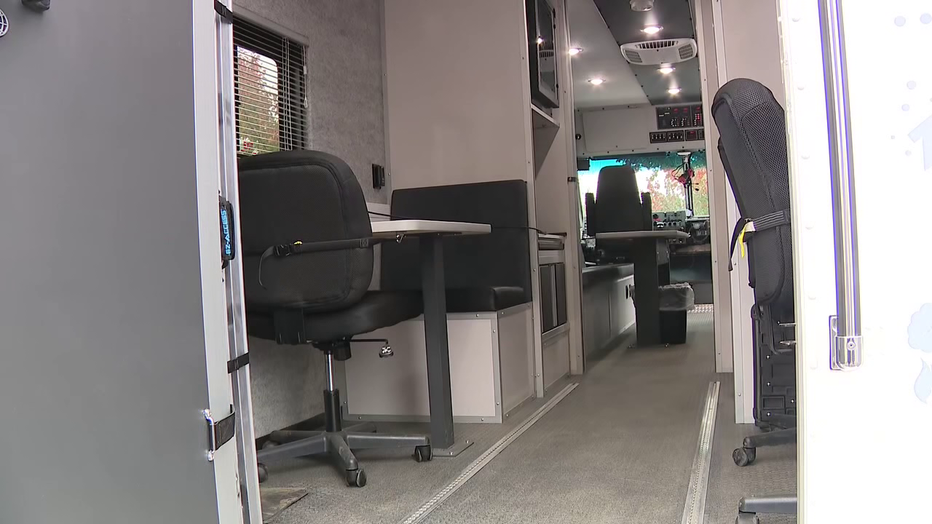
Inside the Washington State Department of Health's Resiliency and Health Security truck. (FOX 13 Seattle)
MORE NEWS FROM FOX 13 SEATTLE
Police: Man breaks into West Seattle home, eats food, arrested in bed
Woman jumps out of car of fake rideshare driver after pickup in Seattle's Pioneer Square
Last call: Seattle tiki bar Navy Strength closing after 10 years in Belltown
SDOT provides clarity after 'surge pricing' video sparks concern
2 men charged with murder in Des Moines, WA deadly shooting
To get the best local news, weather and sports in Seattle for free, sign up for the daily FOX Seattle Newsletter.
Download the free FOX LOCAL app for mobile in the Apple App Store or Google Play Store for live Seattle news, top stories, weather updates and more local and national news.
The Source: Information in this story came from the Washington State Department of Health and FOX 13 Seattle reporting.