

WA officials, feds to discuss ‘crisis’ of missing, murdered Indigenous persons
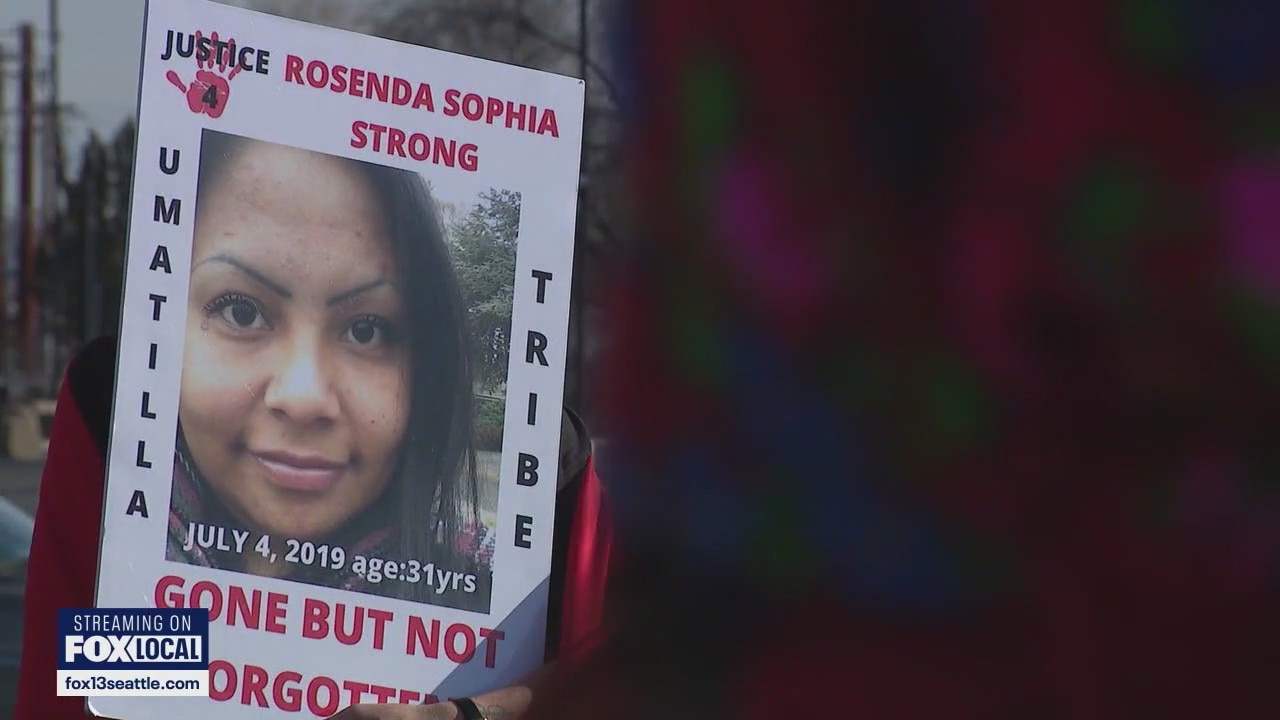
Missing, murdered indigenous people reaches crisis levels
The rate of indigenous people reporting missing or murdered has reached crisis levels in the U.S., including Washington. Now, leaders are joining forces with others from across the country, hoping to save lives.
AUBURN, Wash. - In Washington state, Indigenous people make up about 3% of the population, but account for more than 7% of the missing persons lists maintained by Washington State Patrol (WSP).
Local, state, federal, and tribal leaders said the rate of Indigenous people reported as missing or murdered is at a crisis level nationally.
"Native Americans are Washingtonians, and their lives are at risk. And we as Washingtonians should be stepping forward to protect every one of us," said State Rep. Debra Lekanoff of the 40th legislative district.
By the numbers:
Washington State Patrol said there are currently 110 Indigenous persons listed as missing in the state, which is likely an undercount as race profiles are often incomplete or mislabeled.
The Muckleshoot Indian Tribe is hosting the second National Missing & Murdered Indigenous People Coordinator Gathering, November 5–7. 60 leaders from 13 states will hold meetings in Auburn at Muckleshoot’s community center and resort. Those in attendance include members of government, law enforcement agencies, advocacy groups, tribal nations, and the courts.
"Ultimately, we are responsible to our communities. And, the better we’re networked together, the better we have relationships at all different levels of government and cross-government," said Samuel White, chief of police with the Lower Elwha Klallam Tribe.
The groups are collaborating on how to improve communication networks, response strategies, and family services when their tribal member is reported missing or murdered. They’re also reviewing current trends, challenges, and investigative practices in hopes of developing greater coordination in intervention, prevention, education, and advocacy to save more lives.
What they're saying:
"We all come together collectively to create a response that we’re all doing. This way, we decrease and minimize these opportunities for these challenges and barriers of missing, murdered, any form of violence and victimization," said Valaura Imus-Nahsonhoya, the MMIP Program Coordinator for the Arizona Governor’s Office on Tribal Relations.
Imus-Nahsonhoya helped launch the inaugural National Missing & Murdered Indigenous People Coordinator Gathering in 2024, hosted in Arizona. She said the goal is to continue these discussions regularly throughout the country in hopes of sharing and expanding life-saving resources.
Imus-Nahsonhoya said she has dedicated at least 20 years to this work.
"Our families and survivors telling me what went wrong in their cases, who didn’t respond, who responded, what services were provided to them, and what services they did not know about. So, it’s their voice that guides me," said Imus-Nahsonhoya.
For her, she has a deeper personal connection to this effort.
"I do this work, honestly, because of my brother, who was also murdered. I do this work because of my niece, my nephews, his children, who are continuing to grieve with no answer," Imus-Nahsonhoya.
In Washington state, the crisis continues gaining the attention and resources it deserves.
Big picture view:
"Washington state knew there was a crisis with missing and murdered Indigenous people. I think we just needed the right people at the table beginning to develop policies, regulations, and investing in Washington state to bring this crisis forward," said Lekanoff, who helped launch the state’s Missing and Murdered Indigenous Women and People (MMIWP) Task Force.
In 2018, the state passed legislation creating two tribal liaison positions in the Washington State Patrol. In 2019, WSP began keeping a list of Missing Indigenous Persons. Troopers explained the list is updated every two weeks and distributed to statewide law enforcement.
White said he has noticed improvements in the partnerships with local, state, and federal law enforcement. He said he’d like to see continued education opportunities within the community and law enforcement.
"The end result is we’re having better cases, earlier reported cases, families are getting the services they need, and able to help out in a way that they can, help and understand where the case is at, and have that trust that law enforcement is doing the job that it’s there to do," said White.
Washington also led the nation with the launch of the Missing Indigenous Person Alert (MIPA) system in 2022. Since its inception, WSP said 194 alerts have gone out to the public, with several of those alerts leading directly to information that assisted in recovery or resolution of the case.
The other side:
For White, he said the systems and services worked for his family.
"It’s my cousin. My second cousin. Her daughter went missing," said White. "It was great satisfaction to be able to bring her home. It was because we were able to put the family in touch with people that could help and with social media, with the media on TV, with the FBI going out and checking surveillance cameras when we had sightings. Knowing who to call when that happened, to be able to reach out to other state agencies and have them check certain houses. It was all the relationships that allowed that to happen. It worked. We had enough pressure out there that it worked, and I really felt like we’re getting something done here."
In 2023, the Washington Legislature created and funded the MMIWP Cold Case Investigations Unit (MMIWP CCU) within the Attorney General’s Office. The state patrol said the CCU team was created to review and attempt to solve missing person and cold homicide cases involving persons of Indigenous ancestry.
WSP said, currently, the unit has 25 active investigations related to unsolved murders and suspicious missing person cases. WSP said the CCU has assisted in locating more than 20 missing Indigenous persons.
"We have saved lives, we have brought families together, we have saved a community from suffering the loss of generations of women. I have had the pleasure of welcoming home members who we thought we have lost," said Lekanoff.
Though the collaborative efforts have proven successful, leaders and representatives said they want to see continued expansion of services to better protect their people.
"Trying to bridge those gaps between community and the trust in law enforcement, trying to bridge that so that we have successful outcomes in cases and can bring answers to families in a way that they trust law enforcement in the long term," said White.
"Every Washingtonian deserves to feel like they are living in a safe place where their life matters," said Lekanoff.
MORE NEWS FROM FOX 13 SEATTLE
LIVE: WA state election results 2025
Police pursuit ends in deadly motorcycle crash in Lakewood, WA
Seattle Sounders' Cristian Roldan named to 2025 MLS Best XI
When do election results get updated in WA?
Bruce Harrell leads Katie Wilson in race for Seattle mayor
Everett, WA woman hospitalized amid national listeria outbreak
WA election results: Tracking a close race for King County Executive
To get the best local news, weather and sports in Seattle for free, sign up for the daily FOX Seattle Newsletter.
Download the free FOX LOCAL app for mobile in the Apple App Store or Google Play Store for live Seattle news, top stories, weather updates and more local and national news.
The Source: Information in this story comes from original reporting by FOX 13 Seattle reporter Franque Thompson.