

City of Seattle seeks end to 13 years of federal oversight of police department

Seattle seeks to end federal oversight of police department
Seattle is seeking to end federal oversight of its police department, citing over a decade of significant reforms in policies, training, and accountability since a 2012 consent decree.
SEATTLE - The city of Seattle filed a request for federal court approval to end the Seattle Police Department's (SPD) federal consent decree, Mayor Bruce Harrell announced Tuesday.
The filing asks the court to conclude the process that began in 2012, citing significant improvements in police policies, training and accountability.
What they're saying:
"Over a decade ago, I supported the federal consent decree because we knew our police department could – and needed – to do better at living up to our highest values and aspiring to keep every person in Seattle safe," Harrell said. "Today, the City Attorney submitted our request to fully close out this agreement based on SPD's strong record of improving training, policies, practices, and accountability."
Harrell added that an end to the decree does not mean the work is done, but "it is time to fully restore local control of our police department to our community."
Big picture view:
The city's request for termination highlights reforms in several areas.
- Use of Force: Serious uses of force are now "exceedingly rare."
- People in Crisis: SPD is recognized as a national leader in de-escalation through new training, policies, and a Crisis Response Unit.
- Accountability: A three-part, civilian-led police accountability system has been established to investigate misconduct and review policies.
- Crowd Management: Policies and training now prioritize First Amendment rights, with new legislation on less-lethal tools and a police outreach team for events.
Police Chief Shon Barnes said that successfully completing the decree requirements highlights the "dedication and resilience of the entire Seattle Police Department."
"Change doesn't happen overnight, but I can say with confidence that SPD is not the same department that it was years ago," Barnes said.
By the numbers:
He cited data from 2024 showing that of 8,305 crisis incidents, only 1.33% involved any use of force, and just 0.17% of all dispatches involved force.
The backstory:
Seattle entered a settlement agreement with the U.S. Department of Justice in 2012 following an investigation that found an estimated 20% of serious use-of-force incidents were unconstitutional. The consent decree mandated extensive changes to the city's policing practices.
The city achieved initial compliance in 2018 but faced renewed scrutiny during the mass protests of 2020, when the Monitor concluded SPD did not always follow use-of-force and de-escalation policies.
In 2023, Judge Robart ruled the department had maintained core requirements and identified final steps. Analyses in 2024 showed total use of force in less than one-fifth of one percent (0.17%) of all dispatches, with the majority (74%) at the lowest possible level. Serious use of force was reported in 0.003% of all dispatches in 2021. Federal monitors and Seattle's Office of Inspector General have concluded that the pattern of unconstitutional force that led to the decree has ended.
Mayor Harrell submitted legislation with updated crowd management policies in early 2025, which the City Council passed into law. These new rules prohibit the use of less-lethal tools in crowd management settings unless there is an imminent risk of physical injury or significant property damage.
Seattle's civilian-led police accountability system, created under the consent decree and made permanent in 2017, includes the Community Police Commission, the Office of Police Accountability, and the Office of Inspector General.

Previous coverage: Judge lifts part of SPD federal consent decree
The Seattle Police Department spent the last 11 years making systemic changes and a federal judge finally said they've had enough. On Wednesday, the judge lifted most of the federal consent decree placed on the department in 2012.
Local perspective:
FOX 13 talked to "Magic" a fellow artist and friend of John T. Williams, a local woodcarving artist that was killed by a police officer in 2010.
Magic sells his hand-crafted pipes at Steinbrueck Park. He says he met Williams in West Seattle more than a decade ago, and that he used to carve wooden totem poles alongside him while he worked on his own carvings in the park.
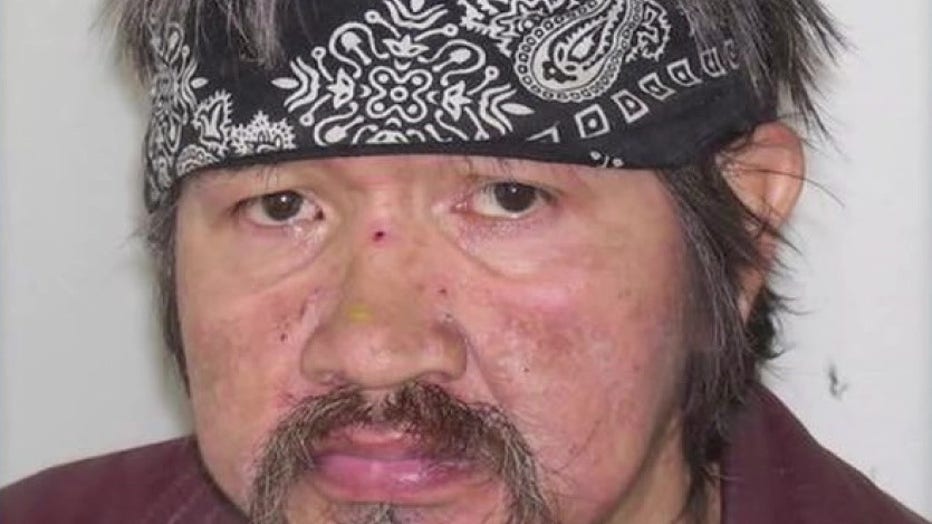
"He sat here almost every day," said Magic.
He says the two considered each other family because they were both Native Americans.
"Carving together and just comradery, fellow Natives," said Magic.
The friendship was cut short when Williams was killed by officer Ian Birk in August 2010.
Court records state Birk saw Williams walking with a knife and piece of wood, and seconds after telling him to drop the knife he opened fire.
Magic wishes things were different back in 2010.
"Anything that is done by the government or by the powers that be that’s in a positive way, that’s going to help people, I’m all for it," said Magic.
After his death, a totem pole was installed at the Seattle Center to remember Williams. Magic hopes new policies that have been instituted in the years since his death under the consent decree, honor Williams as well.
"If it’s going to help the police deal with mental health issues, out here on the street and stuff in a positive nonviolent, non-aggressive and understanding, humanistic way, I’m all for it," said Magic.
What's next:
The motions will need to be considered at a hearing that has not yet been scheduled.
MORE NEWS FROM FOX 13 SEATTLE
Earthquake swarm recorded at WA's Mount Rainier; largest since 2009
Miles Hudson sentenced 30 days for reckless driving in Seattle
New ICE reporting app sparks national debate over safety, free speech
Texas floods: Death toll rises to 109, 5 Camp Mystic girls remain missing
Father, 9-year-old daughter killed in Port Orchard house fire
The Source: Information in this story came from Seattle Mayor Bruce Harrell's Office and the United States District Court for the Western District of Washington.